
AJW KORAKUEN SUPER CHARGE |
Miori Kamiya & Kaoru Ito & Mayumi Yamamoto vs. Tomoko Watanabe & Kazue Saito & Akemi Torisu 12:58. This opening bout featured six young and relatively inexperienced workers. Miori Kamiya (the future Cooga) was the only one in this match who had started wrestling prior to 1989. Kamiya would end up having a pretty decent career, and she was easily the most convincing worker in this match. The three workers in this match you may not have heard of (Mayumi Yamamoto, Kazue Saito and Akemi Torisu) never really had much of a career at all and would retire in 1992. Yamamoto actually showed some potential. Saito did alright for herself, but overall didn’t show enough progress and seemed to struggle. Torisu was actually terrible, though. Of course, Kaori Ito and Tomoko Watanabe were the most notable names in this match, as they would go on to become two of the more recognizable names in joshi puroresu during the mid and late 1990s. Ito was a lot smaller and lighter than later in her career, and she stood out by jumping around a lot and showing enthusiasm in what she was doing. Watanabe showed some good intensity and incorporated some elements from her judo background. Watanabe also used the middle ropes for a springboard move at some point in this trios bout. This wasn’t a good match by any stretch of the imagination, but considering this was the opening match and that the young workers had to learn their craft properly before trying to act like an advanced star (which is how things worked back then), this basic yet entertaining bout was not below expectations. Yamamoto dropped Watanabe on her head just prior to the finish that saw Watanabe pin Yamamoto. Apart from the badly executed finish and Torisu’s performance, this wasn’t terrible. Mediocre match. *½
Mima Shimoda & Etsuko Mita vs. Takako Inoue & Mariko Yoshida 13:40. This was a battle between representatives of the class of ‘87 (Etsuko Mita and Mima Shimoda) versus the class of ‘88 (Takako Inoue and Mariko Yoshida). Inoue & Yoshida were the AJW Tag Team Champions (the secondary tag team title in AJW), but this was a non-title match. They would defend the title the next day (against Debbie Malenko & Sakie Hasegawa). This second bout was clearly a step up from the mediocre opening bout, as these four workers weren’t only showing more experience, they were also showing more talent and confidence in their ability. While the general consensus seems to be that early in their respective careers, Mita was the better of the future Cachorras Orientales, but, in this match, Shimoda gave the stronger performance. Shimoda’s selling was particularly impressive and effective. Shimoda’s precision and timing all contributed to her execution being surprisingly crisp. Mita was good at using her height and strength to her advantage when she was on offense, and she gave quite a solid performance, for sure. Takako showed particularly good chemistry when she was in there with Shimoda, and she also did a good job selling for Mita. Yoshida didn’t really stand out much, but in her defense, it felt like she didn’t really get a chance to. Overall, this was a fun match and the first match that was actually worthwhile on this card. However, they would have needed a few more minutes to really take this to the next level and/or they perhaps should have worked at a higher pace (and the second option probably wouldn’t have resulted in better quality work anyway) to make this an actual good match. All in all, considering the position on the card and the stage of the respective careers of these workers, the match was not a disappointment. Yoshida pinned Shimoda in a rather unconvincing fashion, but it was a win for her nonetheless. Decent match. **¾
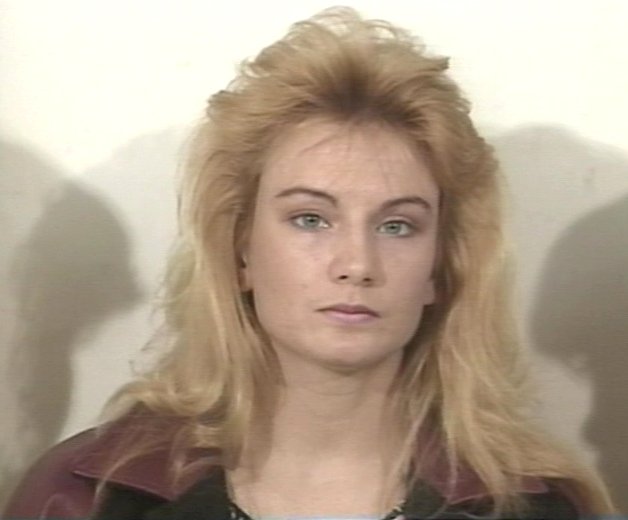 Sakie Hasegawa & Debbie Malenko vs. Suzuka Minami & Yumiko Hotta 15:45. Suzuka Minami & Yumiko Hotta was an interestingly solid tag team combination that went right to work and were pretty much a no-nonsense force all the way through this bout. Malenko, who used the Malenko name because she was trained by the Malenkos in Florida, was easily one of the best American women’s pro wrestlers at that time (if not the very best). In those days, there was no chance for her to really succeed as a women’s wrestler in the States, as mainstream American wrestling had pretty much abandoned the idea of a competitive women’s wrestling divisions ever since the Jumping Bomb Angels left the WWF in March of 1988 (and the final nail in the coffin of the WWF women’s division was the fact that WWF started using Sensational Sherri as Randy Savage’s manager/valet in April 1989 and didn’t renew the contract of their women’s champion Rockin’ Robin in the summer of ‘89 after having faced Judy Martin over and over again, which left the title vacant until 1993). By the way, I didn’t necessarily plan on namebombing the JB Angels, but it was actually fitting to mention them here since Noriyo Tateno was actually doing guest commentary at ringside for this event. Malenko was clearly willing and dedicated to continue to get better by fully immersing herself in AJW’s environment. Malenko’s work looked credible enough for someone like Hotta to be selling it as if she was another Japanese worker. Malenko seemed to particularly enjoy applying submission holds, which probably is due to her training by the Malenkos. Her tag team partner Hasegawa brought more speed and more dynamic elements to her game, so it was always a bit of a change of pace whenever Malenko and Hasegawa would tag in and out. It felt like Minami and Hotta were the more cohesive tag team that was better at following up whatever their partner had been brewing. AJW was grooming Debbie Malenko & Sakie Hasegawa for the secondary tag team championship (the AJW Tag Team Title), but they would lose this bout. This was the first actual good match on this show, and it’s worth a recommendation, for sure. Minami was such an underrated worker that she almost reminds me of a female version of El Samurai in the sense that a lot of people seem to overlook how effective she was during her prime. Hotta already showed a lot of that viciousness around this time, and she would become even more vicious later on in her career. This was an intriguing bout that managed to captivate the viewer due to the way these four were all so sincere about their execution of everything. Very good match. ***½
Bull Nakano & Bat Yoshinaga vs. Aja Kong & Bison Kimura 17:33. The issue with the workers in this match was that they were more busy trying to give the viewer the impression they were doing something effective than actually being effective. None of these four workers were very technically gifted, as all four could more or less quality as brawlers. Of course, since AJW and joshi puroresu in general was high-end pro wrestling at the time, even the “brawlers” were able to mix things up on the mat with some holds here and there. Aja Kong gave a particularly weak performance here, as this member of Jungle Jack acted like she was lost in the jungle. In the meantime, Bison Kimura was more welcome to the idea of being lost in the jungle, and put over the idea of survival and struggle by seeing the moves in this match as fun and games. In spite of knowing the names of these well-known AJW workers, we were not able to find whatever we needed, which was excellent wrestling. In fact, this was the first disappointing match of this show. And for those who wanted to see someone bleed, that also didn’t happen. Bison Kimura was the worker of the match, because she was the only one who really seemed to try to make this memorable. Bull Nakano was solid but certainly didn’t exceed expectations. In fact, since she was the holder of the Red Belt, she should have given a more spirited performance at this major show in spite of not being in the main event. Bat Yoshinaga was the obvious weak link of the match, but she wasn’t terrible and kinda wrestled like she was a smaller version of Aja Kong. We can’t really blame Yoshinaga much, as the other three should have been able to work around whatever shortcomings she may have had. This was a chaotic match, but in a disjointed way, not in an exciting way. Execution was often very slow and hesitant. The whole match lacked smoothness and actual good quality. The only thing that looked good in this match was Bull Nakano’s cool appearance (especially her awesome blue hair). This match wasn’t terrible, but it was certainly very underwhelming. Decent match. **½
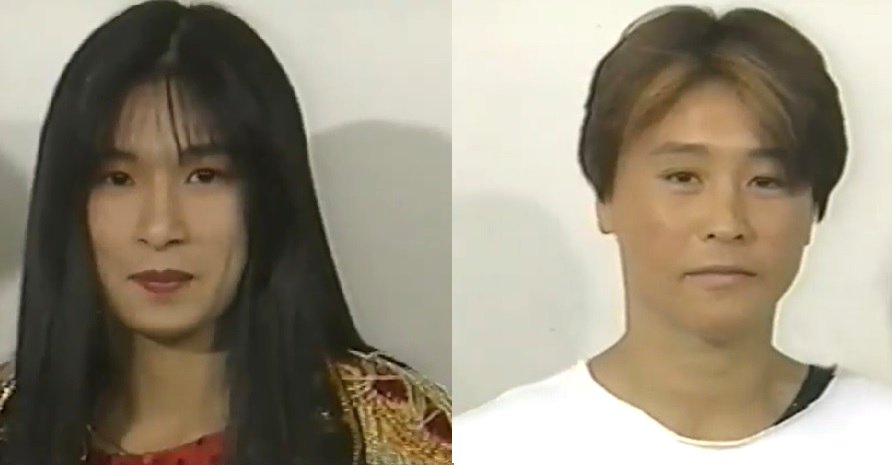 AJW 1/4/92 Tokyo Korakuen Hall: Manami Toyota vs. Toshiyo Yamada 30:00 + 5:00 + 5:00. The very beginning looked a bit rough, but it didn’t come off as bad because you could say they were just overwhelmed by each other’s spirited start. One thing that’s particularly awesome about this match is that it wasn’t obvious they were going twice the length of a normal match. They actually showed at least the same, and often far more speed, energy, intensity and urgency than all the wrestlers that preceded them on this show. In kayfabe, you could easily explain that they went this long due to the way they approached this match and were so evenly matched (and not because they were told to go super long and therefore didn’t do anything, which is always a cringeworthy situation when it comes to very long matches). There was a constant scramble for position shown by both combatants, which made it feel like they weren’t just going to have a very cooperative and playful match to impress the viewers. Because, yes, these two were more flashy and spectacular than many of the wrestlers at the time, but (perhaps contrary to common belief) they hadn’t forgotten their rigid roots of traditional joshi puroresu. Manami Toyota had been wrestling since 8/5/87, and to say that she was a ‘90s version of Kazue Nagahori and Itsuki Yamazaki with some Jaguar Yokota and Crush Gals flavor thrown in there would be a pretty good way to describe her. Toshiyo Yamada had made her debut only nine days prior to Toyota, so these two standouts of the class of ‘87 were pretty much equals in terms of experience. Yamada’s style could best be described as a ‘90s version of Chigusa Nagayo mixed with Jaguar Yokota influences as well. Both Toyota and Yamada took their craft very seriously. Regardless of what you may think of them at this stage of their career or their career in general, what they were doing was certainly in line with the progress joshi puroresu had been showing and more. It felt like Yamada and Toyota were very respectful of the ones that came before them, yet in a professional manner, they were not afraid to show they understood they were in a progressive era of (joshi) pro wrestling. They were not afraid to push the envelope, so to speak, and they weren’t afraid to challenge themselves to the point of exhaustion in order to give the best performance possible as a way to fulfill their sacred duty as heirs of the throne given to them by the likes of the aforementioned Yokota and Nagayo. And what Toyota and Yamada did so well was also, if we stay with this analogy of the throne, show they were both driven to show the world they were more worthy than the other to be the heir of the throne, in a professional and combative manner (I’m not talking about an egotistical backstabbing political kinda way, like we’ve seen so often in American pro wrestling). Now, I personally feel that heavy criticism of this match is a result of reverse analysis. Especially considering how in 1992, while the business was certainly progressing and changing in many ways, we hadn’t reached the wrestling = figure skating type mentality where we just no longer seem to care about whether or not it actually resembles an actual wrestling match or fight. In 1992, kayfabe wasn't completely dead yet. So with that in mind, what these two wrestlers did here was, to the best of their knowledge, both in kayfabe and in “reality” perform to the best of their ability. To me, that just seems obvious in the way they are constantly on top of each other and constantly responding to each other. Did they always give the “right” or “best” response? Maybe not, but do people always do that in real fights? No, right? What I’m trying to say is that if you follow what these two were doing in this match move for move, it makes sense from their respective perspectives. And even if you’d include the perspective of a critical viewer, then it still makes for a darn fascinating match. Yes, Toyota had her so-called “flaws”, but that was just part of her in-ring character. If every wrestler did the same thing, things would get pretty boring pretty quickly, right? Toyota had her preferences and specialities, and that could sometimes lead to “mistakes” and situations where the opponent could potentially turn things around in their favor. That’s wrestling, and not every wrestler has the same strategy. Even in MMA, there are very unusual and extraordinary approaches by fighters that simply reminds us that each opponent will have to be dealt with on a case by case basis; you can’t just have one strategy for every opponent ever and every situation ever, as humans are not robots (even if some appear to be robot-like). This wasn’t the smoothest or most beautifully worked match of the year, that’s for sure. However, it was an intriguing match because of the kind of unusual and raw approach they appeared to have had. Like, in the end, it was a satisfying match to have watched, because you could really feel that these two did the best they could within the context of the situations they put themselves in. Sure, they may not have wrestled the smartest fight, but within the context of what they did, it was enjoyable to watch. Roughly about halfway between this match and the start of their careers, they had a memorable singles match against each other on 12/9/89 (their first singles match against one another, in fact), and it was a very good one. I mention that here because I feel that this 1/4/92 match is a perfectly fine and clear progression when you look at their careers in general and their interactions with each other. Of course, better things would still come later in 1992, but we haven’t reached that point yet! I’m not claiming this is the 1992 MOTY. One of the reasons is that the middle portion of the match feels a bit messy at times, but not more messy than some of the stuff featuring other featured stars earlier on this show (just watch the Jungle Jack tag match, for example). An interesting detail was how they showed a bit of extra liveliness during the announcement of the 25-minute mark of the match. It’s a tiny detail, but it’s often during moments like that that wrestlers start showing more energy (in kayfabe, that’s because they are running out of time/in “reality,” that’s because they know it’s time for the finish). So that little detail really made you question as a viewer if they were now going to try to finish this and/or if this was going to go on even longer. They soon would start doing bigger moves and started to include near finishes, so there really was no telling this wasn’t going to end any time soon. What a beautifully wrestled match! And just when you thought it was over because they went to a time limit draw (just like in 1989 and 1991), it turns out they would go five more minutes! The crowd was super pleased with this decision, which is always a mark of a truly successful match. There have been matches in history that saw the crowd boo a decision like that, but this crowd knew they wanted to see more from these two, and I would have to completely agree. Toyota is at this point showing her frustration in such a beautiful and passionate way, as she just keeps trying to go all or nothing at this point (like a sports team that’s about to not make it to the next round of an important tournament and needs to absolutely score a win at all cost). Excellent match. ****¼
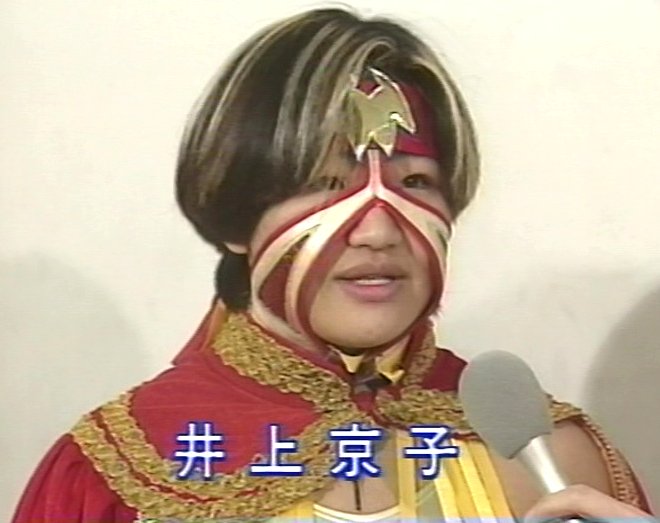 AJW 1/4/92 Tokyo Korakuen Hall, IWA World Women's Title: Kyoko Inoue vs. Akira Hokuto 24:53. This was the main event of this AJW Korakuen Super Charge show. The main issue with this match was that it is mainly the Hokuto show. As much improvement as Kyoko had shown at the time, she was still mainly an entertaining and charismatic character, not quite the top worker she would become in several months. After a brief spurt of excitement, the match slowed down a bit too quickly. Kyoko started limping around, which was either an injury and/or just really good selling on her part. The match went to the mat and stayed on the mat for quite a while. The problem with this matwork was that it didn’t seem to have any purpose other than to stall. So, unlike the previous match featuring Toyota vs. Yamada, it really felt like they were trying to kill time because they were going long instead of going long because they were so evenly matched. They were neither evenly matched nor doing anything that would warrant the match going nearly 25 minutes. While it’s nice to see Kyoko get the chance to main event, it feels like it may have been a few months too early. The match never really picked up steam again, at least not to the point to warrant calling this a great match. Kyoko winning this match certainly didn’t help matters, as that felt very unrealistic and implausible. It’s one of those upset wins that didn’t work. Technically, it remained excellent at all times, though. I know it’s totally fashionable and hip and cool to dislike Toyota these days, but to say that this Hokuto vs. Kyoko match was better than Toyota vs. Yamada seems a bit absurd (and that’s coming from a Hokuto fanatic). Very good match. ***¾
Show rating: 8.0/10.0. Excellent show.
Best Joshi Puroresu Matches YouTube Playlist