
Pro Wrestling 1991 Recommended Matches |
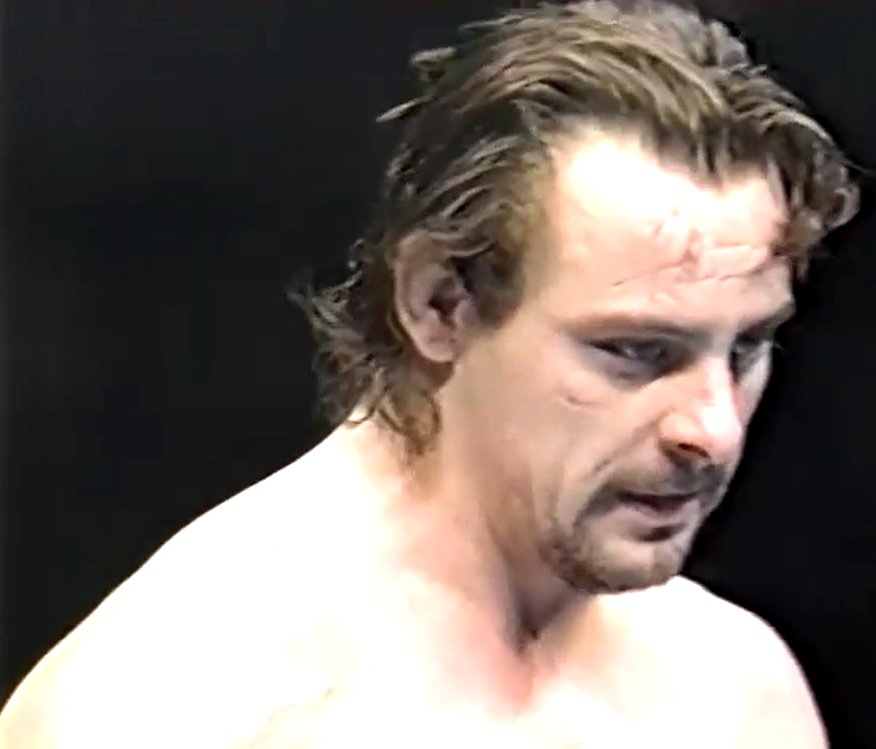 On the final day of the 1991 All Japan Pro-Wrestling World’s Strongest Determination Tag Team League tour, December 6, 1991, Dynamite Kid retired from pro wrestling in Japan (until he briefly returned in 1993 and 1996). His body was no longer able to do what he was so good at doing for so many years, since the wrestling and the lifestyle had taken its toll. Dynamite’s best match of 1991 was a good one, AJPW 3/29/91: Dynamite Kid & Johnny Smith vs. Toshiaki Kawada & Tsuyoshi Kikuchi.
1991 was a particularly big year for shoot-style wrestling. From the ashes of the second incarnation of the UWF (Newborn UWF) came three new shoot-style leagues: PWFG (Yoshiaki Fujiwara’s league), UWF-I (a league that had Nobuhiko Takada as a co-founder and its top star), and RINGS (Akira Maeda’s league). PWFG’s debut show on 3/4/91 featured Minoru Suzuki and Ken Shamrock delivering a great shoot-style classic that set the bar high for 1990s shoot-style wrestling. UWF-I’s Kiyoshi Tamura became the best pro wrestler in the world and delivered several memorable performances, including an all-time classic 4.75-star match against Yoji Anjo on 7/3/91. RINGS’ debut year was also the debut year of Volk Han, who ended up becoming an all-time great wrestler.
For joshi puroresu, it was a year that saw Akira Hokuto continuing the greatness she had shown in 1990, providing fans once again with memorable matches. As her feud with Manami Toyota continued, they once again had a high-level match, as their 1/11/91 bout was an excellent one.
In WWF, Bret Hart stood out as pretty much the only reason to watch this league (although wrestlers like Mr. Perfect, Shawn Michaels and Ted DiBiase were also worth watching). WWF finally pulled the trigger on the singles push of the Hitman, and it resulted in one of the best matches in WWF and New York’s Madison Square Garden history at 8/26/91 Summerslam, Bret Hart vs. Mr. Perfect.
In WCW, Brian Pillman was easily the most outstanding performer, and he even had a match against New Japan’s Jushin Thunder Liger on 12/27/91 that’s one of the 100 greatest pro wrestling matches ever.
For more information about pro wrestling from 1991, please read the reviews and lists below…
Please note: This project wasn't an attempt to rewatch every single good match that took place in 1991, but rather more of a nostalgic effort aimed at giving the feel of the year by revisiting the wrestlers and matches I remembered enjoying, while also checking out some things I'd never gotten around to. Thus, some lesser matches are included below, partly because reviews were already written for other projects, and some better matches probably fell through the cracks.
Selected 1991 Match Reviews |
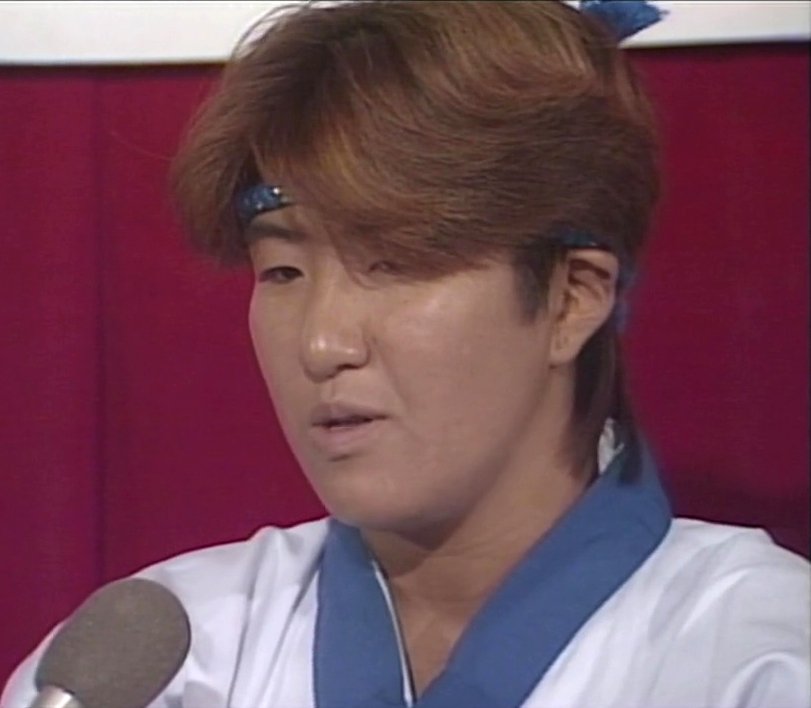 AJW 1/4/91 Tokyo Korakuen Hall, WWWA World Title: Bull Nakano vs. Akira Hokuto 19:46. Bull Nakano had been the holder of AJW’s Red Belt for exactly one year at the time of this match. As awesome as her Las Cachorras Orientales (LCO was originally a stable led by Akira Hokuto that also included Etsuko Mita and Mima Shimoda before LCO was just the great tag team of Mita and Shimoda) and Dangerous Queen years are, Hokuto’s work prior to mid-1992 shouldn’t be overlooked, even though the character she portrayed before mid-1992 could be considered somewhat bland in comparison. This match from 1/4/91, which was from an era before the date January 4 was all about NJPW Tokyo Dome shows, started off with a lot of action that briefly spilled to the floor where Hokuto got beat up by Nakano. When the action came back into the ring, Nakano kept dominating. Occasionally, Hokuto would be able to take Nakano down, but Nakano was quite dominating. This was not a surprise since Nakano had a big size advantage over the challenger. This was around the time the AJW audience had been seeing quite a major change. In the mid and late 1980s, the AJW shows mainly consisted of school girls due to the popularity of the Crush Gals, Chigusa Nagayo and Lioness Asuka. However, by the mid 1990s, the majority of the audience would appear to consist of middle aged men. This change in demographic subsequently meant there was less future joshi talent in the audience, which may or may not have played a big role in the decline of joshi puroresu after peaking in the 1990s based on that generation growing up idolizing Jaguar Yokota & Crush Gals. The school girls in attendance at this show were chanting in support of Hokuto, as Hokuto was getting destroyed. A small amount of blood appeared on Hokuto’s forehead. Nakano felt she had things fully in control, and the match slowed down a bit for a little while. Nakano was getting overconfident and/or was getting a little bit tired, as Hokuto was able to outmaneuver the champ and apply some holds on her. You could never really count Nakano out though, and she hit a couple of big moves seemingly out of nowhere, including a plancha off the top rope to the floor. Nakano also hit her signature guillotine leg drop, but Hokuto managed to kick out at two. Nakano went for another one, but Hokuto rolled away, and almost managed to pin Nakano via a tiger suplex. Hokuto hit several dropkicks off the top rope that all hit the mark. Still, Hokuto was not able to put Nakano away. Hokuto hit a somersault plancha to the floor. Both women showed a lot of desire. Kyoko Inoue interfered against Hokuto, but the referee wouldn’t allow the pinfall to happen right away. Nakano then hit a thunder fire bomb, but Hokuto kicked out. Hokuto suplexed Nakano off the top rope and hit her northern lights bomb. Nakano could not be defeated on this night though. Nakano hit a bridging backdrop suplex that got her the pinfall victory. Nakano showed great athleticism for someone of her size. Hokuto showed a lot of heart and determination. The action was exciting, and these two women showed early on in the decade that the 1990s would indeed be a very interesting decade for joshi puroresu fans. ****¼
JWP 1/6/91 Tokyo Korakuen Hall: Mayumi Ozaki & Rumi Kazama vs. Harley Saito & Shinobu Kandori 10:34. Rumi Kazama’s offense probably looked better than at any other time in 1991. There was a lot more intensity and accuracy shown by her in this match. Shinobu Kandori brought some of that intensity that makes her best performances memorable. Harley Saito’s work was super crisp in this match. And Mayumi Ozaki moved around super gracefully. In other words, everyone seemed to be on top of their game for this match. This was a very fun 10-minute match. Very good match. ***¾
JWP 1/6/91 Tokyo Korakuen Hall, UWA International Champion Decision Tournament 1st Round: Miss A vs. Itsuki Yamazaki 16:46. Miss A wasted no time, attacking Itsuki Yamazaki even before the time keeper had the chance to ring the bell. Despite Miss A’s display of urgency, Yamazaki was able to turn things around by using Miss A’s own momentum against her, thanks to Yamazaki’s use of leverage and knowledge of counters. Yamazaki started focusing on Miss A’s left leg, perhaps in an effort to try to ground the energetic Miss A, intuiting that the powerful Miss A probably will be a lot less dangerous whenever she’s not kicking or running. Miss A would occasionally try to interrupt Yamazaki’s assault with some kicks, but due to the damage done by Yamazaki, Miss A would always be back in trouble rather quickly. It appeared that Miss A didn’t have a real answer for Yamazaki’s strategic approach. Miss A was relying on the right moment arriving for her to literally get a grip on Yamazaki. That moment came when Miss A caught Yamazaki and dropped her on the canvas. Miss A realized she had to now stay on top of Yamazaki if she didn’t want to lose momentum again. Miss A applied some holds that focused on Yamazaki’s legs, perhaps out of inspiration of Yamazaki’s successful approach earlier in the match. The match had become a lot more competitive now, as it had become clear that this wasn’t going to be the easy win it looked like it was going to be for Yamazaki. Ironically, things didn’t get as exciting as expected once the match became more competitive. This was because the urgency from earlier in the match had become less prevailing, and both workers were selling the damage more and more. However, Yamazaki turned this into a more exciting match with her dropkicks, bodypresses and flying headbutts off the ropes. As the match approached the finish, both wrestlers were now more clear about their intention to finish each other off, which helped increase the drama. Miss A managed to hit a tombstone piledriver on Yamazaki. However, Yamazaki was able to roll away when Miss A went for a flying headbutt. Apparently enough damage had been done to Yamazaki though, as she was selling the effects of the tombstone and previous moves, which put her in the position to get caught off guard by a Miss A lariat. Miss A went for the cover and won the match via pinfall. The match was definitely at its most interesting whenever Yamazaki was on offense. Even though Miss A wasn’t quite the Dynamite Kansai we came to know during the interpromotional era of joshi puroresu, it was clear that Miss A was indeed a strong opponent and someone with a lot of promise in this sport. It’s always a treat to watch a Yamazaki singles match against a strong opponent, and these matches from JWP 1991 remind us this former Jumping Bomb Angel is a wrestler that has been rather overlooked and underrated for the most part. ***¾
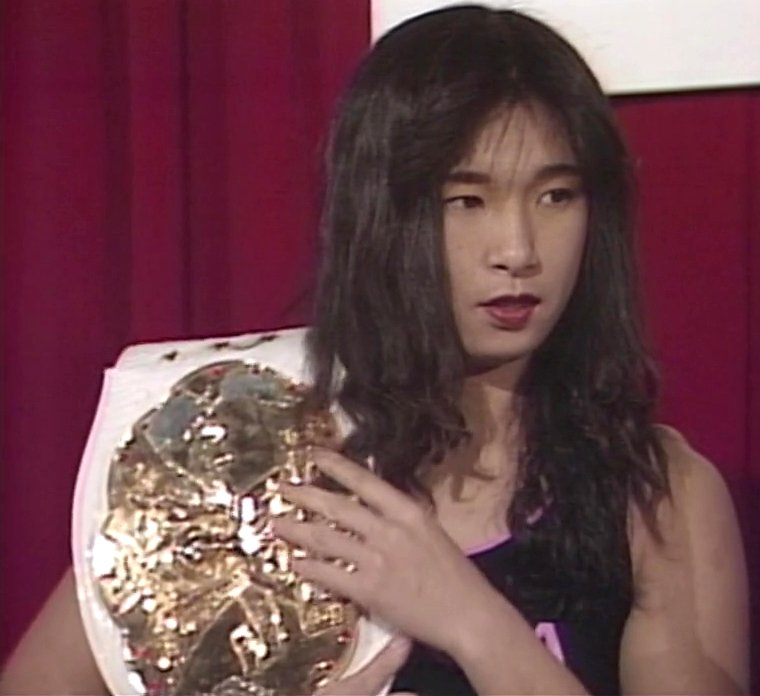 AJW 1/11/91 Kanagawa Kawasaki-shi Taiikukan, All Pacific Title: Manami Toyota vs. Akira Hokuto 16:20. Manami Toyota showed a lot of viciousness as she went right after Akira Hokuto’s taped up right arm, completely taking off all the tape so that she could do more damage to her opponent. Referee Daichi Murayama was not pleased, but he allowed things to continue, especially since Hokuto certainly didn’t want to let this opportunity to win the All Pacific Title slip away like this. This definitely was a very different side from Manami Toyota, as we’re not used to seeing her focus on a specific body part at all, much less in such a vicious manner. Hokuto rolled to the floor, and her arm got taped up again. Toyota didn’t seem to care too much about Hokuto’s well-being though, as she continued attacking Hokuto’s right arm as soon as she could. Toyota hit a tremendous tope suicida. Toyota then went for a plancha off the top rope, but Hokuto moved. Hokuto hit a wicked somersault plancha. What was particularly cool about these dives was that they were hit like they were firing off a weapon, purely launching themselves to do damage to their opponent. This is quite different from some of the high flying we see in today’s wrestling, where it sometimes seems the high flying is only done to score a higher star rating from people and/or just for the sake of it. The execution wasn’t always perfect here, but that only added more to the grittiness of the match. Suzuka Minami, who was the other half of the Marine Wolves along with Hokuto, was about to throw in the towel out of concern for the well-being of her tag team partner. Despite Hokuto still being in her spunky babyface years (as she still hadn’t reached her LCO/Dangerous Queen years), Hokuto already was able to add so much drama to her matches through amazing selling. Toyota hit a wonderful moonsault that we were able to view perfectly since they showed the move from the viewpoint of the turnbuckle corner camera. When Toyota went for a second one, Hokuto moved and hit a dropkick off the top rope. Hokuto executed a perfectly executed bridging German suplex, but Toyota was able to kick out. Hokuto went for a somersault kick off the top rope, but Toyota managed to move and immediately started twisting Hokuto’s arm relentlessly. Toyota was awarded the win when the ref felt Hokuto was apparently no longer able to defend herself. This was a great match that was quite different from the usual big Toyota matches Toyota would later become known for, since it really had more of a focus and a very consistent story throughout, which one would assume was due to the influence of the veteran Hokuto. This was the second great Manami Toyota singles match against Hokuto, and in general. Of course, Hokuto deserves a lot of the credit for showing so much courage, passion and emotion. Also, Hokuto deserves credit for ultimately guiding Toyota to a great and cohesive bout. ****½
LLI 1/13/91 Naucalpan El Toreo, Mask vs. Hair: Hijo del Santo vs. Brazo de Oro. First fall was nothing. Brazo de Oro being unconvincing on offense, and Hijo del Santo being very willing to just let Oro have his few minutes of fame. In the second fall, Santo was all business, hitting a tope suicida and being just all business in general. Blood was flowing, and we were now ready for the third fall. What hampered the match was the fact that Brazo de Oro wasn’t a very convincing opponent for Hijo del Santo, who was excellent here. Still, this was more than just a pretty good match, as it was indeed quite intense at times, which was emphasized by the blood. The dramatic near falls towards the end really added lots of drama, since it wasn’t done in every single match back then, and this was definitely way better than most of the CMLL matches that year. Brazo de Oro gave a good performance, but Hijo del Santo was the worker who made the match a recommendable one , as he gave one of his strongest performances ever. Very good match. ***½
AJPW 1/15/91 Tokyo Korakuen Hall: Toshiaki Kawada vs. Akira Taue. The match started off with Akira Taue attacking Toshiaki Kawada right away. After beating Kawada up for a bit, Taue launched himself with a tope suicida and then proceeded to clothesline Kawada over the guardrail. Taue was clearly mad. Kawada wasn’t a happy camper either, and he hit Taue over the head with a chair. Taue juiced, and his face was turning into a crimson mask. They would continue to beat the crap out of each other. Taue picked Kawada up and dropped his knee on a ringside table. Jumbo Tsuruta was watching from the entrance area, and he had a smirk on his face, as he was clearly enjoying the beating Taue was giving Kawada. When they returned to the ring, there was a vicious slap exchange. Taue was determined to destroy Kawada. However, Kawada hit Taue to the back of the head with an enzuilariat(o). It’s hard to imagine these two would end up becoming one of the best tag teams in pro wrestling history when you see how heated this battle was. This was a really fun match. The only downside was that Kawada won kinda out of nowhere after Taue had just been dishing out so much punishment. Excellent match. ****
WWF Royal Rumble 1/19/91 Miami, FL Arena: Shawn Michaels & Marty Jannetty vs. Pat Tanaka & Kato 19:13. Marty Jannetty was knocked off the top to the floor before the bell rang. Shawn Michaels took a big back drop bump. The Rockers (Shawn Michaels & Marty Jannetty) quickly fired back, though. They executed dual tope suicidas. The crowd was chanting “USA!” This was around the time the WWF was exploiting the Gulf War and WWF Champion Sgt. Slaughter was turned from a Real American Hero into an Iraqi sympathizer. Hawaiian wrestler Pat Tanaka was the son of a Japanese-American wrestler known as Duke Keomuka, and Tanaka was part of the New Japan dojo class of 1984. Tanaka mainly wrestled in the United States during his career though. Tanaka used to team with Japanese wrestler Akio Sato in WWF, but he had recently been teaming with his old Badd Company tag team partner, the Croatian-Canadian wrestler Paul Diamond (here masked and known as Kato, pretending to be Japanese). Tanaka’s flying cross body press is even more awesome than Mil Mascaras’ flying cross body press. Michaels sold it superbly. This was back when Michaels would sell just exactly right (as opposed to overselling like crazy in later years). Of course, it helped that he was in a match with guys that could work, so he didn’t have to dance with himself like he would in later years. The crowd was super excited, and this was about the best opener in WWF history up until that point in time. Roddy Piper was on color commentary, assisting Gorilla Monsoon, and Piper’s excitement added even more to the already overflowing energy. Say what you want about Piper, but he always was passionate about what he was doing. After a beautiful moonsault by Michaels, the Rockers double dropkicked the Orient Express. They followed up with dual planchas off the top to the floor. The middle portion of the match was a little bit dull, as Tanaka executed the hold that is mandatory for all Japanese wrestlers in WWF, the trapezius claw hold, a move that always slows things down (infamously made infamous by Yokozuna). After a long selling segment, Michaels tags in Jannetty, and Jannetty is “going bananas” (according to Gorilla Monsoon). Jannetty was about to launch Michaels off the top rope, but the Orient Express saw it coming and sent Michaels to the floor. However, soon after, the Rockers scored the win. This was a hot opener, but it could have used some near falls. Of course, that’s not a thing WWF did at the time, so this was about as good as it gets for January 1991 WWF. Very good match. ***¾
WCW 1/21/91 (aired 2/2/91) Atlanta, GA: Barry Windham & Arn Anderson vs. Brad Armstrong & Tim Horner. The Horsemen vs. The Lightning Express. Barry Windham and Arn Anderson did a very good job of bumping wildly for the energetic babyfaces. Windham and Anderson were really strong tag team workers, always making sure the match stayed interesting and making sure the match kept flowing smoothly, no matter who was doing what. Brad Armstrong and Tim Horner were two of the more fun to watch babyfaces in WCW at the time, as they were light on their feet and were able to move around quite well. Anderson isn’t the best singles wrestler out there, but he’s particularly strong as a tag team wrestler, as his unselfishness works particularly well in short doses in between his tag team partner taking over for him. Windham was acting less helpless than Anderson was acting, but Windham certainly also was very giving and was very unselfish, always trying to make sure his opponents looked good. Anderson’s spinebuster was an amazing move that could just completely turn the tide, as it was executed with such force. All four men worked hard and at all times did whatever was best for the match. They showed a lot of passion as workers and as characters. This was some really top-notch American rasslin’ displayed in an exceedingly good TV match. What they did really well that is missing from modern wrestling is that they really put over the idea that two teams were fighting to win a competitive bout. They understood how to keep the match exciting at all times. Anderson has the unique ability to act comically in a badass and relatively believable way. Windham showed once again he should have been the World Heavyweight Champion. Horner is a wrestler more people should be talking about. And Armstrong’s energy was a crucial factor in the success of this match. The match ended with some shenanigans as Doom (Ron Simmons & Butch Reed) showed up, but that didn’t stop this match from being a big success. Excellent match. ****¼
JWP 2/11/91 Tokyo Korakuen Hall, Tournament Final: Harley Saito vs. Miss A 17:15. Miss A would later become known as Dynamite Kansai. She gave quite a decent performance, but she ultimately dragged the match down a bit. The underrated Harley Saito was such a great wrestler during the early 1990s. She wasn’t quite able to carry Miss A to an excellent match here, though. Good match. ***
TWA Winter Challenge II 3/2/91 Philadelphia, PA Penn Hall, Falls Count Anywhere: Cactus Jack vs. Eddie Gilbert 12:23. This match took place on one of the bigger shows promoted by Tri-State Wrestling Alliance (TWA). Cactus Jack (Mick Foley) took a big bump over the guardrail into the crowd very early in the match. They give the fans exactly what they wanted, a brawl in the crowd before that was really a thing. Speaking of the fans, some of these fans would eventually be regulars at ECW shows, which was not a surprise, since TWA was basically a predecessor to ECW. At some point during this brawling in the crowd, Gilbert juiced, and a bit of blood was dripping from his forehead. Cactus’ selling was awesome, as it was typical pro wrestling but it somehow didn’t come across as silly, as the overall work was so intense and passionate. Plus, you have to keep in mind that at the time, this type of wild brawl wasn’t your every-day thing like it eventually became. Gilbert wasn’t necessarily a great wrestler, but he was just really cool, and he understood wrestling psychology very well. He was particularly good at brawling, as that would mask the fact that he wasn’t necessarily the most athletic guy out there (especially after what was supposed to be a career ending car accident in 1983) while emphasizing that he was one of the more intense guys in the business. Cactus was just totally crazy and willing to do crazy things not many others were even thinking of, and this made him quite a bit of a cult hero on the indy scene at the time. Cactus hit an elbow off the apron onto Gilbert on the concrete floor. Ouch! Gilbert then suplexed Cactus on the concrete floor! Gilbert went for a cover, but only got a two count. When you watch a bunch of stuff from 1990 and 1991 from all over the wrestling world, it’s easy to understand why the Philadelphia scene and wrestlers like these two were setting the indy scene on fire, as they provided a product that was bar raising, exciting, different… and dare I say, extreme! Cactus did a sunset flip off the apron onto the concrete for crying out loud! In my humble opinion, Calgary is the wrestling capital of the world, but I’d say that Philadelphia is the wrestling capital of the United States. Excellent match. ****
AJPW 3/3/91 Tokyo Korakuen Hall: Tsuyoshi Kikuchi vs. Richard Slinger 11:01. This is a hidden gem of which only hand-held footage is available. Tsuyoshi Kikuchi gave a really inspired performance, as this turned into quite a heated bout. Richard Slinger showed that he was an underrated worker not enough people talk about. Slinger’s kicks looked quite good, and his level of urgency as well. Things slowed down a bit as the match went on, but that didn’t stop it from being a memorable bout. Excellent match. ****
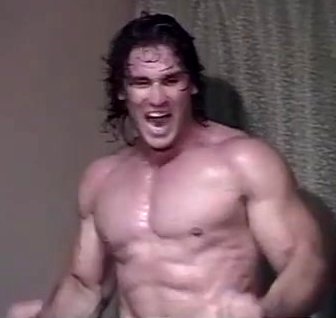 PWFG 3/4/91 Tokyo Korakuen Hall: Minoru Suzuki vs. Wayne Shamrock 30:00. This was the best match of PWFG’s debut show, and arguably the best PWFG match of the year. (Ken) Wayne Shamrock and his brothers had a rather rough childhood, but he excelled in college football and wrestling. He made his pro wrestling debut in the Carolinas in 1989. In October 1990, he made his debut for Newborn UWF in Japan, and that’s when he really got involved with shoot wrestling. UWF folded soon after his debut there, and he followed Masakatsu Funaki and others to Yoshiaki Fujiwara’s newly formed Pro Wrestling Fujiwara Gumi, and then to Pancrase. Of course, we know that Shamrock would go on to become one of the key names in early UFC history, and because of his success and name value there, he eventually made his way to the sports-entertainment business. His run in the circus from 1997 onwards was obviously when his career slowly would start taking a nosedive, as usually is the case with talented wrestlers ending up in what Mike Lorefice likes to refer as Chainsaw Vinnie’s morgue. And while not taking anything away from Shamrock’s success in UFC, one could make the argument that shoot style pro wrestling was the thing that Shamrock excelled at most. Certainly, his performance in this match was a great one. Minoru Suzuki had made his pro wrestling debut in 1988 in NJPW before he joined Newborn UWF 1989. After Newborn UWF folded, Suzuki became one of the co-founders of Pro Wrestling Fujiwara Gumi, along with Yoshiai Fujiwara and Masakatsu Funaki. Suzuki had some notable undercard matches in UWF, but this match between Suzuki and Shamrock was arguably the match that would put these two on the map as truly significant shoot style wrestlers. The match started off with both participants being tangled up in leg submission attempts. Then they went to some standup grappling that quickly resulted in more time spent on the mat. What’s so particularly excellent about this match is that they never really seemed to give each other an inch. They were constantly battling for position, making it harder for the other to get out of the current situation. Despite this going 30 minutes, they managed to keep things fascinating from start to finish. This is quite a feat in itself, but they also managed to keep things realistic all the way through. Shamrock really got this style, he truly understood it. Not only that, he even excelled in it. Suzuki is one of the greatest shoot style wrestlers ever, and that’s something that sometimes gets forgotten or even overlooked by those who are merely familiar with his more silly NJPW heel work of more recent years. At some point in the match, Shamrock executes a northern lights suplex, and it seems so realistic and so logical somehow, especially due to the way he follows up immediately by grabbing Suzuki’s arm in an attempt to get Suzuki to submit, and Suzuki’s subtle selling makes this sequence even more golden. Ironically, Suzuki’s subtle selling here is a stark contrast to his somewhat comical and corny overselling in NJPW. Towards the end of the match, they are taking more risks, which increases the drama and excitement. We got to see some good counters and escapes near the end. The urgency with which Shamrock escaped Suzuki’s attempted armbar was an amazing moment. Both wrestlers were serious and concentrated during the entire bout. They did such a great job of really emphasizing that they were pretty much evenly matched in terms of skill and position. It was super competitive all the way through, and everything flowed so organically and logically. The only thing that was less desirable about this match was the fact that it ended in a 30-minute time limit draw, as it would have been even more satisfactory to see a winner. However, perhaps this indeed the perfect ending after all, because this wound up being the most notable series PWFG produced. The execution in this match was superb. This was a great pro wrestling match. ****½
CMLL 3/8/91 Mexico City Arena Mexico, Mask vs. Mask: Fuerza Guerrera vs. Gallo Tapado 18:16. Gallo Tapado was not an amazing wrestler, but it was his understanding of how these mask vs. mask matches work that made his performance quite good. Fuerza was truly an amazing rudo worker, and he was the driving force behind this match being memorable. The technique in this match was good but not exceptional. However, the drama, timing and excitement was tremendous. The overall execution was superb. This was one of the best Mexican lucha libre matches of the year 1991, in spite of it being unlikely to be a really memorable match on paper. Fuerza Guerrera won the first fall very quickly. It seemed this was going to be a quick and easy victory for Fuerza, who was one of the best Mexican workers at the time. The second fall was more interesting. The rooster’s mask was ripped up a bit, and when he whipped Fuerza into the corner, Fuerza took a Harley Race-esque bump over the top rope to the floor. Gallo Tapado won the second fall, and all of a sudden, this had turned into a competitive bout in which Fuerza seemingly had to worry about potentially being embarrassed by this rooster. The third fall was the biggest and most dramatic fall, just the way it should be. All of a sudden, Gallo had newfound energy, as he understood this was the biggest match of his career. Fuerza was so good at making Gallo look exceptional, as his timing and bumping was top-notch. The match briefly lost momentum when Fuerza was selling and bleeding through his mask for Gallo, because Gallo was unsure how to play his role during this segment. It wasn’t like he did anything to mess things up, but he didn’t exactly add much either. Luckily, they soon went to some near falls, and this brought the excitement back. Fuerza was on top of his game in 1991, and his ability to make a match exceed expectations was clearly on display here. At some point he took a missed somersault plancha bump to the floor that Cactus Jack would have been proud of. In the end, Fuerza won this match (and deservingly so). Excellent match. ****¼
Universal 3/9/91 Fukushima: Gran Hamada & Yoshihiro Asai & El Hijo del Santo vs. Jose Luis Feliciano & Shu El Guerrero & Black Terry 6:55, 3:25, 5:00. This match had a lot of fast-paced and exciting lucha sequences. Hamada's team brought great offense that Los Temerarios were solid bases for, and took well. Jose Luis Feliciano hit a surprisingly cool tope con giro in the second fall. The third fall initially saw the rudos in control with some brawling, which slowed the match down a bit. Once the tecnicos were on offense again, things picked up again. Hamada hit a twisting middle-rope somersault plancha to the floor. Hamada's student, Yoshihiro Asai, hit a perfectly executed quebrada on El Guerrero. Just to make sure he would get the victory, Asai followed this up with a simple leg drop, which kinda seemed funny after executing a spectacular quebrada. The leg drop did give Asai the win though, just like the leg drop gave the champion of a certain sports-entertainment company lots of wins in the 1980s. But, of course, in the case of the 1980s sports-entertainment champion (Hulk Hogan), the leg drop was always preceded by a big boot, never a quebrada. ***¼
Universal 3/10/91 Tokyo Korakuen Hall, UWA Tag Team Tournament Semi-final: Gran Hamada & Perro Aguayo vs. Yoshihiro Asai & Solar I 8:25. The match was at its best when we had the battle between the teacher, Gran Hamada, and the student, Yoshihiro Asai. One of the highlights was Asai hitting the Asai moonsault on Hamada. Perro Aguayo didn't really play much of a role in this match, other than being by Hamada's side, which was ironic since he used to have heated battles with Hamada in the past. Solar I gave a good performance, but it would have been nice to see him wrestle Hamada a bit more, as he was mostly wrestling Aguayo in this match. It was a pretty good match, but it was mostly interesting because Hamada and Asai were wrestling each other. ***
LLI 1991 Nezahualcoyotl Arena Neza, UWA Middleweight Title: Negro Casas vs. Hijo del Santo 15:15 (3:22, 3:11, 8:42). This match was shown on a UWA Hijo del Santo commercial tape from the early ‘90s. It possibly took place in March 1991, but this is merely a guess on my part. Negro Casas really took to to Hijo del Santo on the mat during the first fall. However, being quite the accomplished technical wrestler himself, Santo was able to counter on several occasions. However, Casas was able to score a quick pinfall via la casita. In the second fall, Casas decided to keep going for a mat-based attack. Once again, Santo was able to turn things around, displaying his own grappling skills. After some more fast-paced action, Casas took a big bump, and Santo saw an opening to apply the camel clutch, which resulted in Santo winning the second fall. In the third fall, Santo was initially the aggressor, determined to make Casas submit once again. Towards the end of the match, Santo hit a tope suicida and a plancha off the top rope to the floor. Out of nowhere, Casas was able to find a way to apply a sasorigatame for the win. This was a very good match, but it wasn’t quite the classic you’d hope to see from these two. ***½
WWF Prime Time Wrestling 3/11/91 Pensacola, FL Civic Center: Shawn Michaels vs. Mr. Perfect 10:24. This match was mainly notable for being a Shawn Michaels singles match during his years as one half of the Rockers tag team with Marty Jannetty. And also notable because of Shawn’s tope con giro (which mostly missed the target), which was certainly a rare move in WWF. Good match. ***
NJPW 3/14/91 Nagoya Rainbow Hall: Hiroshi Hase & Kensuke Sasaki vs. Shiro Koshinaka & Takayuki Iizuka 24:10. Not much happened in the first few minutes, but the action picked up enormously when the energetic Shiro Koshinaka entered the ring. Koshinaka and Hiroshi Hase had been two of the best workers in NJPW for the past three years or so, and here they once again proved it. Iizuka was definitely a good worker, but he wasn’t quite on the level of Koshinaka and Hase. Even Kensuke Sasaki, in spite of arguably being a more limited worker than Iizuka, was more impressive, as he was more convincing in his role. In typical NJPW fashion, the match lost steam for a while and would occasionally pick up again. Either way, this was certainly worth watching. Good match. ***
JWP 3/17/91 JWP & UWA Junior Senshukenjiai: Mayumi Ozaki vs. The Scorpion 12:52. They really put over the struggle well, making it quite realistic for pro wrestling standards. A “this is wrestling!” chant would be justified here, but luckily, this JWP crowd didn’t care about putting themselves over and simply enjoyed the action while cheering on the competitors. A brief “come on Scorpion!” chant started, though. After lots of high-quality wrestling, Scorpion managed to win. Mayumi Ozaki wasn’t really a star yet, as it was in 1992 after JWP split that she really started being used properly by the powers that be. The work in this match was smooth, and it was one of the matches from early 90s JWP that was worth watching. Very good match. ***¾
NJPW 3/21/91 Tokyo Dome: Hiroshi Hase & Kensuke Sasaki vs. Scott Steiner & Rick Steiner 12:56. This is an excellent example of high-level heavyweight wrestling. This wasn’t pretty, and this wasn’t the most technically refined match, but it didn’t have to be. This was all about heavyweights throwing each other around and beating the crap out of each other. Very good match. ***¾
WWF WrestleMania VII 3/24/91 Los Angeles, CA Memorial Sports Arena: Shawn Michaels & Marty Jannetty vs. The Barbarian & Haku 10:41. The Rockers were the most reliable team when it came to delivering the hot opening match for a PPV. The energy was just off the charts thanks to Shawn Michaels and Marty Jannetty. The Barbarian and Haku are no slouches. When these two men were young, the King of Tonga sent them to Japan to study sumo. They both eventually ended up in the pro wrestling business, and their paths would eventually cross again. While The Barbarian and Haku deserve credit for being more convincing in their offense than most WWF heels. It was mostly the selling of the Rockers that made the match exciting, in addition to their offense, of course, which was a lot more interesting than the offense of virtually any WWF workers at the time. This was the perfect way to open a big PPV, but it’s a shame it all went downhill after this. Good match. ***¼
AJPW 3/29/91 Niigata Nagaoka-shi Kosei Kaikan: Dynamite Kid & Johnny Smith vs. Toshiaki Kawada & Tsuyoshi Kikuchi 10:08 of 14:08. This was a really fun match that was quite heated. One of the highlights of this match was Dynamite hitting a falling headbutt on Tsuyoshi Kikuchi through a ringside table. Kikuchi was in the role he was best in, the underdog who was in trouble. Toshiaki Kawada was on the apron, waiting for Kikuchi to finally tag him in. Kawada finally was tagged in, and he worked a bit against Dynamite. When Johnny was tagged in, he hit a dropkick off the top rope, followed up by a kick up, which was something Dynamite used to do. Johnny hit a superplex on Kikuchi. Dynamite hit the diving headbutt on Kikuchi for the pinfall win. Kikuchi gave a strong performance, which partially had to do with him being in the same match as his idol, Dynamite. Either way, Kikuchi was the worker of the match. Kawada was excellent during the brief moments he was in though. Johnny Smith gave a pretty good performance, and he worked the majority for his team. Dynamite did quite well in this match though, considering this was 1991 and he was quite broken down by then. Good match. ***
SWS 4/1/91 Kobe World Kinen Hall: Minoru Suzuki vs. Apollo Sugawara 9:03. Minoru Suzuki was awesome here, as he remained true to his shoot-style philosophy and approached this regular puroresu match against regular puroresu worker Apollo Sugawara, a mediocre midcard veteran. Suzuki showed no mercy and played his role as shoot-style Minoru Suzuki in an extremely sincere manner to the point Sugawara walked out! Excellent match. ****
WCW 4/9/91 (aired 4/27/91) Columbus, GA: Brian Pillman vs. Barry Windham 10:16. Barry Windham bumped big for Brian Pillman in spite of Pillman being much smaller than him. Pillman showed a lot of fire and determination. He also hit a nice plancha off the top rope to the floor. His athleticism was also very impressive, but that was a thing we had known from the start of his pro wrestling career, of course. Both men did a very good job of keeping the pace quite high and keeping things interesting as much as possible. The match ended with some shenanigans when Bobby Eaton and Arn Anderson showed up. Good match. ***¼
AJPW 4/14/91 Nagahama City Gymnasium, Champion Carnival: Danny Kroffat vs. Cactus Jack 12:52. The thing about a Cactus Jack match is that you can’t look away for a minute, as you never know what’s going to happen. This unpredictable worker was still an underrated performer with a cult following rather than the household character he would become later that decade. Danny Kroffat was one of the best tag team wrestlers in the world at the time, but he was also a reliable singles worker. This Champion Carnival Block B match wasn’t televised, but the fans in attendance and the fans watching this hand-held footage got their money’s worth, as these two worked a fun match. Cactus was definitely working harder than Kroffat here, but that was understandable since Cactus was trying to prove himself. For Kroffat, this wasn’t one of his biggest matches that year, so he didn't give one of his best efforts. This didn’t stop Cactus from trying to have a memorable match, as he was being his usual wild and crazy self, much to the delight of the audience. Good match. ***¼
WWF Saturday Night’s Main Event 4/15/91 Omaha, NE: Bret Hart vs. Ted DiBiase 9:56. This was the second singles match between Bret Hart and Ted DiBiase (their first one took place on 3/8/89), and this took place in DiBiase’s birthplace of Omaha, NE. He was certainly not a fan favorite, though, as he was one of the top villains in wrestling at the time. WWF had just pulled the trigger on Bret’s singles push after he and Jim Neidhart lost the tag team championship at WrestleMania VII to the Nasty Boys. It was clear WWF was very determined to give Bret this singles run, as only two days after WrestleMania, Bret started wrestling in singles competition on a regular basis. This was quite a big singles match for Bret, as it was a big opportunity to show where he stands in the packing order, as DiBiase had been one of WWF’s most recognizable heel characters for the past couple of years. In the pre-match promo, Sensational Sherri Martel, who was DiBiase’s valet at the time, claimed that money wasn’t just everything but the only thing. Bret proved that he was indeed ‘the excellence of execution’ as he executed his moves excellently. What makes Bret stand out in WWF is that his movements are significantly smoother and quicker than most of the WWF roster, which mainly consisted of large stiffs at the time. Bret’s singles push was certainly a refreshing thing, and it opened the door for WWF wrestlers that weren’t roided monsters to get a chance. Of course, this wasn’t something that would change overnight, as the WWF World Heavyweight Champion at the time was the Ultimate Warrior, the ultimate definition of roided stiff. This wasn’t one of Bret’s all-time best matches or anything, but it feels like it was a significant match in his career, as this was where he really got the chance to get a big singles match on a major TV show. When DiBiase was in control, Bret tried his best to sell as excellently as possible, but DiBiase didn’t do anything extraordinary while on offense, and relied on his character being one of the most over heels in history. The match ended in a double count-out, and in spite of the fact that DiBiase was no longer truly a steady main eventer and mainly feuding with midcarder Virgil, it was still quite a big thing for Bret to draw DiBiase. Very good match. ***¾
NJPW 4/17/91 Tokyo, Top of the Super Juniors II: Pegasus Kid vs. Owen Hart 11:04. The execution was very good, but it didn't really feel like there was anything at stake in spite of this being a tournament match. During the final minutes, however, Owen Hart, who had been particularly laid-back during this match, finally started showing some urgency and ended up winning. This definitely wasn’t as memorable as their match from 1990. Very good match. ***½
AJPW 4/18/91 Tokyo Nippon Budokan: Kenta Kobashi vs. Danny Kroffat 10:39. They kept the action going at quite a nice and consistent pace. The match went back and forth with neither man getting a real advantage for too long. It’s nice to see Danny Kroffat being able to shine in a singles match for a change. Very good match. ***¾
PWA 4/18/91 Minnesota: The Lightning Kid vs. Jerry Lynn. There are sources that say this was from April ‘90, but it’s actually from April ‘91. Anyway, this was wild! They just kept launching themselves at each other with such intensity. This wasn’t just another match, this was two of the most promising young talents at the time giving their best effort. This wasn’t pretty, this was RAW (and more raw than Monday Night Raw, which didn’t exist back then anyway, could ever be). They just cared about beating the crap out of each other, and they just happened to do it in a super spectacular way that was lightyears ahead of what pretty much everyone else was doing in the States at the time. These two were decades ahead of their time. They were able to incorporate spectacular stuff in a very intense manner. Sean Waltman would deliver some quality wrestling as The Kid/The 1-2-3 Kid/Syxx/X-Pac later in his career, but here in his early days as the 19-year old Lightning Kid, he was truly at his most amazing and most groundbreaking. Jerry Lynn, who was a bit more experienced and at 27 years old was quite a bit older than The Kid, has always been a super underrated talent that often has been overlooked over the years, but footage like this shows how ahead of the curve he was at the time as well. Great match. ****½
NJPW 4/19/91 Okinawa Ounoyama Gymnasium, Top of the Super Juniors II: Negro Casas vs. Jushin Thunder Liger 6:52. Negro Casas did several cool-looking moves, and he tried to be more hard-hitting while mostly still doing lucha style offense. When Jushin Thunder Liger was able to fight back, he hit a tremendous somersault plancha to the floor. However, Casas scored a flash pin by using the ropes less than seven minutes into the match. The work was very good and the execution for the most part as well, but it was just a really short spotfest that was fun to watch. Good match. ***¼
AJPW 4/20/91 Tokyo Korakuen Hall: Mitsuharu Misawa & Toshiaki Kawada & Kenta Kobashi vs. Jumbo Tsuruta & Akira Taue & Masa Fuchi 51:32. Akira Taue was still mad at Toshiaki Kawada and slapped him off the apron right away. Taue then hit a lariat to knock Kawada off the apron again. It really feels like Taue showed a lot more aggression during these years of 1990 and 1991, and he was a lot calmer when he teamed with Kawada in later years. Kawada spent a big part of the match selling for Taue and Jumbo Tsuruta. After a lengthy Kawada selling segment, Kobashi was tagged in, and did a bunch of moves. Mitsuharu Misawa then was tagged in. When he was back in, Kawada tried to make Taue submit. After some exciting minutes, it was now time for a lengthy Taue selling segment. Kobashi hit a plancha off the top to the floor. Kobashi spent some time selling for Masa Fuchi. In spite of his overselling being a bit comical, Tsuruta was arguably the worker of the match, as he brought a lot of intensity, and felt like he was a main driving force. Taue also deserves credit for bringing a lot of intensity to the match. Fuchi was the weakest performer of the match. Misawa’s team members showed some cool offense whenever they were on offense, but none of them truly stood out in this particular match. Though it should be mentioned that Kobashi got quite a lot of sympathy from the crowd during his selling segment, and he executed an impressive-looking moonsault near the finish. In the end, Misawa pinned Taue to win the match for his team. The main issue with the match was obviously the length. 51 minutes is just way too long. If it would have been shorter, perhaps the exciting segments would be even more exciting, since they wouldn’t be constantly interrupted by extensive selling segments. Very good match. ***½
AJW 4/21/91 Tokyo Korakuen Hall: Akira Hokuto & Mariko Yoshida vs. Suzuka Minami & Takako Inoue 14:24. This was one of only ten times that Akira Hokuto and Mariko Yoshida were in the same match together. The workrate was super high. These girls worked incredibly hard. However, if they would have done a better job in the storytelling department, this could have potentially been a great match. Excellent match. ****¼
JWP 4/23/91 Iwate, Pacific Coast Tag Team Title: Mayumi Ozaki & Rumi Kazama vs. Harley Saito & Miss A 11:41. This was worth watching, for sure, but it wasn’t quite as good as it looked on paper. Good match. ***
JWP 4/26/91 Tokyo Korakuen Hall: Mayumi Ozaki & Eagle Sawai vs. Harley Saito & Shinobu Kandori 15:02. The work was urgent and passionate. Especially Mayumi Ozaki and Harley Saito wrestled like it really mattered. The match ended when the referee didn’t approve of Eagle Sawai bringing in part of the ringside guardrail into the ring. Very good match. ***½
JWP 4/26/91 Tokyo Korakuen Hall: Itsuki Yamazaki & Miss A vs. Rumi Kazami & Devil Masami 16:30. Devil Masami’s best years were in the 1980s, but she’s generally an overrated worker who is more tolerable in tag team matches, and this was obviously a tag team match. Itsuki Yamazaki showed why she was a top 15 worker in all of the wrestling world at the time, as she really kept things going and tried to get the most out of the match. Miss A was a motivated worker who hadn’t quite reached her Dynamite Kansai peak years yet, but her energy was very useful in this bout. Rumi Kazama was in her prime in the year or two before the JWP split, and most of her kicks looked really cool. There were good moments in this match, but the match never seemed to fully click as a cohesive bout that was intriguing from start to finish. Good match. ***
NJPW 4/28/91 Omiya Skate Center, Top of the Super Juniors II: Negro Casas vs. Pegasus Kid 11:52. The work was very good, and this was almost twice as long as Negro Casas’ match with Jushin Thunder Liger nine days earlier, but the longer time didn’t result in more action. Pegasus Kid displayed some solid offense though. In spite of having already wrestled some great matches, (including the tremendous 8/19/90 match against Jushin Thunder Liger), Pegasus hadn’t quite hit his peak yet, and he missed some of the intensity he would become known for. Good match. ***
NJPW 4/28/91 Saitama Top of the Super Juniors II: Owen Hart vs. Jushin Thunder Liger 14:57. This was slightly more consistent in quality than their 1/30/90 match, and this match had a bit more of a feel of importance to it. Owen’s Canadian flag-inspired gear also looked very cool. At some point in the match, there was a wonderful Dynamite Kid-inspired sequence that had Stampede Wrestling written all over it. Very good match. ***¾
AJW 4/29/91 Tokyo Ota-ku Taiikukan, All Pacific Title: Suzuka Minami vs. Akira Hokuto 20:51. The first minutes were exciting. Then we got about 20 minutes of lacklustre action with them going through the motions before getting two or three minutes of inspired action. Very good match. ***½
AJW 4/29/91 Tokyo, WWWA Tag Team Title: Aja Kong & Bison Kimura vs. Manami Toyota & Esther Moreno 8:13, 5:25, 9:57. This was a super intense match. The workrate was just about as high as the intensity level, which meant this was a really exciting match from start to finish. Jungle Jack (Aja Kong & Bison Kimura) was determined to beat the crap out of their opponents. Manami Toyota and Esther Moreno prefer to fly around in a carefree manner, and that’s exactly what Jungle Jack was trying to avoid. Once Toyota & Moreno interrupted Jungle Jack’s flow, they immediately tried to launch themselves at Jungle Jack as much as possible. The loudly screaming Toyota was not so quietly becoming one of the most spectacular pro wrestlers in the world, and Moreno gave one of her most memorable performances here. Their determination got them the win in the first fall. In the second fall, they tried to keep the momentum going. However, Aja’s size and strength was often an obstacle that was hard to overcome. At some point in the second fall, Moreno started bleeding profusely, and her face quickly became a crimson mask. The second fall was won by Jungle Jack when Bison pinned Moreno. The third fall initially felt a bit chaotic with Jungle Jack’s attack feeling a bit scattered and disorganized. It seemed like they were constantly worried that Toyota & Moreno would make a comeback, which made their attack feel panicky and unfocused. This was understandable, since Toyota and Moreno had proven they could turn things around in a split second. And that is indeed what happened. The match instantly returned to being super spectacular when Toyota and Moreno once again kept leaping onto Jungle Jack. Everyone gave a strong effort in this match, and the match never really slowed down. Bison exceeded expectations. Aja showed she was a great base for Toyota’s flying. Moreno made the viewer wish she was in matches like this more often. And Toyota’s performance was superb, as she once again showed that she was one of the main joshi workers to keep an eye on. Even Jungle Jack started diving towards the end of the match. After a lot of exciting back-and-forth action, Jungle Jack retained the title. In spite of Jungle Jack being unsure of what to do in the beginning of the third fall, this was certainly one of the most memorable joshi puroresu matches of 1991. Great match. ****½
NJPW 5/6/91 Tokyo Korakuen Hall: Jushin Thunder Liger vs. Hiroshi Hase 28:07. This dream match is only available in hand-held version, since it took place at an untelevised event. Luckily, the video quality is excellent, and the camera angle is great, so it’s perfectly possible to fully enjoy this bout. The matwork was excellent, as it was the type of matwork that had a purpose, as they were challenging each other to show what they were capable of and also to come closer to victory. This wasn’t the type of matwork that was there just to kill time. That’s a good thing, since the match mainly consisted of matwork. These two showed they were capable of being creative and compelling through their grappling. The only downside of the match was that it was slightly too long, as the match would have benefitted from three minutes or so being cut off, as at some point, the match started losing some steam just before they picked things up with the finishing stretch. Great match. ****½
UWF-I 5/10/91 Tokyo Korakuen Hall: Kiyoshi Tamura vs. Masahito Kakihara 14:16. This was their second match together, and this was the first UWF-I match ever. Newborn UWF had folded, and that caused the creation of UWF-I, RINGS and PWFG. This was a really good way to start off a new league. It was a match with quite a good amount of stiffness. Kakihara showed a lot of energy and enthusiasm, but Tamura always seemed to be one step ahead. The match succeeded in trying to be kinda flashy yet somewhat realistic (especially for pro wrestling standards) at the same time. It appears that this was the philosophy of UWF-I in general. This match ended when Tamura scored the win via submission. Good match. ***¼
JWP 5/12/91 Tokyo Korakuen Hall: Mayumi Ozaki & Eagle Sawai vs. Miss A & Devil Masami 14:11. Mayumi Ozaki was such a talented performer. She hadn’t quite reached her absolute awesomeness quite yet back then, but you could tell that the signs were there. Devil Masami was past her prime, but she wasn’t terrible. Miss A tried hard to prove herself, and she once again showed a lot of energy. Eagle Sawai was okay and showed some potential. Good match. ***
JWP 5/12/91 Tokyo Korakuen Hall: Harley Saito vs. Rumi Kazama 9:14. They tried hard. The execution wasn’t always excellent, but it was quite an enjoyable match overall. Harley Saito was the more impressive of the two, but Rumi Kazama did a lot of good things as well. Good match. ***¼
PWA 5/13/91 Fridley, Minnesota: The Lightning Kid vs. Jerry Lynn. This was another really good match between these two. This wasn’t quite as intense as their previous match, but it was another example of how good these two were, and how advanced they were. They proved here that their previous match wasn’t just a fluke, as they were clearly able to deliver super memorable action on more than just one occasion. Like their other matches against each other, the match was ahead of its time, especially for American wrestling. However, this wasn’t their best match together, as it was a bit slower (relatively speaking). This was definitely more spectacular than anything in WWF or WCW at the time, though. Very good match. ***¾
PWFG 5/16/91 Tokyo Korakuen Hall: Naoki Sano vs. Wayne Shamrock 26:15. Naoki Sano’s road to PWFG is a rather unusual one, and we can in fact say that his entire career is quite an unusual one. Sano started out as a NJPW junior heavyweight in the 1980s, and he’s perhaps mostly known for his famous series of matches with Jushin Thunder Liger that culminated on 1/31/90 with a legendary great match. Sano then joined Tenryu's SWS, the infamous ‘money puroresu’ league, a league that didn’t last too long, but largely transformed into WAR. While he was working for SWS, Sano would also start competing for PWFG, as they shared financial backing, and this match we’re looking at right here was Sano’s first PWFG match, so it appears this was his first true shoot style match. It was particularly interesting seeing Sano here in action against (Ken) Wayne Shamrock, who just a little over two months prior had worked a great match with Minoru Suzuki on 3/4/91. Sano and Shamrock were both somewhat cautious in the beginning, but not in a non-intense kinda way, more in a manner where they conveyed that they respected each other's abilities and didn’t want to make a mistake early on. Shamrock seemed to be more aggressive than Sano though, as Shamrock was constantly looking for opportunities and openings to set up a vital submission hold. Sano was initially fine with just hanging in there and just not getting in a position that would give Shamrock too much of an advantage. Shamrock showed his wrestling skills with some nifty takedowns. Not only did his ability to hit takedowns make Shamrock dangerous, it was also his ability to follow them up with a threatening submission hold that basically meant Sano had to be very aware of every possible move Shamrock would attempt to go for. At some point, Shamrock started getting a bit too dominant, and it would have been nice if Sano would have become a bit more aggressive and daring. Shamrock was dangerous even in the stand-up, mostly because of his aggressiveness. Interestingly enough, Sano executed a DDT, which somehow didn’t seem too silly in this shoot style setting. Sano got a nice STF executed on Shamrock that showed that Shamrock couldn’t just get too confident yet. Shamrock hit a wonderful German suplex that almost caused Sano to not be able to get up in time for the ten count. This was a very good match, and the only real downside of the match is that it was just a little bit too one-sided due to Shamrock being clearly the superior fighter in every way. Of course, the shocking finish would tell a different story. While Sano’s victory seemed somewhat undeserving, at least based on how the match was wrestled overall, it made for a good ending of the match, and it shows that a win can come out of nowhere. Sano’s dragon suplex and the Fujiwara armbar were well executed, but the setup of the dragon suplex kinda looked a bit too showy and not as realistic as most of the things they were doing in this match. Either way, while this certainly wasn’t the memorable match Shamrock had with Suzuki two months prior, this match was never not interesting, and Shamrock really proved once again that he was a truly superb shoot style wrestler. Sano also deserves credit for holding up his own end. Very good match. ***¾
WWA 5/17/91 Tijuana Auditorio Municipal, UWA World Welterweight Title: El Hijo del Santo vs. Negro Casas. They didn’t rush things, as they took the time to really play out all the matwork sequences fully. Towards the end of the first fall, the pace quickened and they showed more of that tremendous chemistry they have together. Hijo del Santo ended up winning the first fall, and Casas won the second fall. In between the second and third fall, Casas gave Santo a low blow. Things got even more heated now. At some point in the third fall, Santo hit a tope suicida. Santo took revenge for what happened earlier and hit Casas with a low blow of his own. Santo tried to make Casas submit, but Casa showed his determination and hit a tope suicida. Both workers really put over the will to win. In the third fall, the referee disqualified Casas for repeatedly trying to choke Santo. Excellent match. ****
WCW 5/19/91 St. Petersburg, FL Bayfront Center, WCW World Tag Team Title: Scott Steiner & Rick Steiner vs. Sting & Lex Luger 11:09. Sting executed a tremendous dive over the top rope. Scott Steiner executed spectacular suplexes. They all did a good job to keep the action going, and they all worked hard. It was a very American-style match, but it was one of the best American matches of the year. The finish was silly, but it was overall quite an enjoyable bout. Very good match. ***½
LLI 5/19/91 Naucalpan El Toreo, Mask vs. Mask: Blue Blazer vs. Canek. Owen Hart wrestled under his old WWF gimmick, the Blue Blazer. This match was significantly more interesting than almost every Blue Blazer match ever, though. Owen got to show his stuff against the top guy of the LLI, Canek. Owen had previously shown his greatness in Canada, the United States, England and Japan. In 1991, he showed that he was able to not only fit in but enhance the Mexican lucha libre product by bringing his Stampede Wrestling style into the LLI ring. Owen showed his gracefulness and smoothness. His execution was consistently superb. His timing was also superb. He was truly on top of his game in 1991. Canek gave one of his most spirited performances as well. In the end, Canek won the match, and the Blue Blazer had to unmask. Very good match. ***½
AJW 5/26/91: Kyoko Inoue & Debbie Malenko vs. Esther Moreno & Mariko Yoshida 12:45. The gaijin workers tried their best. Technically this was just a 3-star match, but the effort makes it worthy of a quarter star more. Esther Moreno and Mariko Yoshida doing dual dives was really cool. Good match. ***¼
AJW 5/26/91: Suzuka Minami, Takako Inoue & Cynthia Moreno vs. Bison Kimura, Mika Takahashi & Miori Kamiya 13:49. Mika Takahashi isn’t the most well-known worker, but she was a very useful worker who understood the importance of working at a high pace. Good match. ***
AJW 5/26/91: Aja Kong vs. Manami Toyota 30:00. This was a world of difference compared to Toyota’s match from 1990 against Bull Nakano, who was the champion and presented to the public as someone who had a tough time against Aja Kong. This showed the rise in the packing order of Manami Toyota. Aja Kong was selling a lot for Toyota, and Aja treated Toyota like an equal who she had to try to wrestle instead of a bug she had to squash. The downside of this approach is that Aja isn’t a very exciting wrestler on offense, so there wasn’t really anything gained from this sense of equalness. Toyota’s exciting flashy comeback spurts and spectacular bumping made the match. But, we had to sit through Aja’s dull offense and wait for Toyota to be on offense quite a lot. Luckily, Toyota is an excellent seller, so even the duller portions with Aja on offense were bearable. Aja did the standard pro wrestling offense like camel clutches and stuff like that. Toyota’s offense and defense were all very athletically-based and exciting to watch. That being said, credit to Aja for hitting a dropkick off the apron! That was awesome, for sure. However, the match lasted too long, which exposed the fact that Aja wasn’t capable of having a match this long against a more spectacular opponent. Toyota was showing Aja all the tips and tricks she had learned from her battles with the great Akira Hokuto. This was an important match for both these wrestlers, and it was quite a good one for the viewers as well. Good match. ***¼
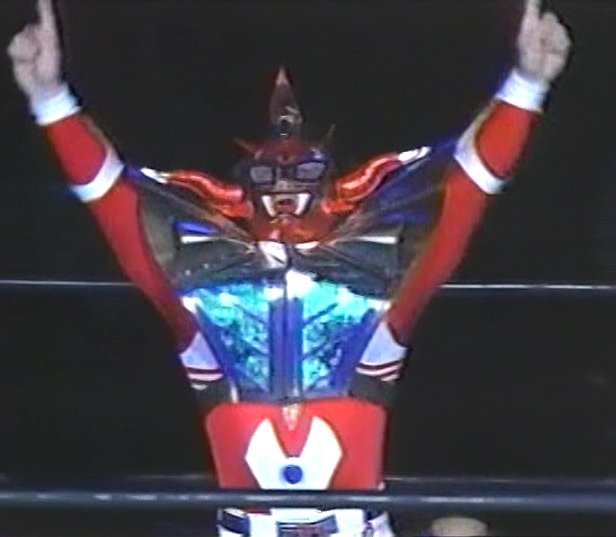 NJPW 5/31/91 Osaka-jo Hall, IWGP Junior Heavyweight Title: Norio Honaga vs. Jushin Thunder Liger 12:32. This was a surprisingly good match considering Norio Honaga isn’t exactly known for having a lengthy resume of memorable singles matches. This was and really felt like a grudge match, however, and it’s one of the few times that Liger’s face was completely exposed (of course, revealing the face of Keiichi Yamada). It was an intense brawl, and Honaga juiced. They didn’t do these types of matches often in the NJPW junior heavyweight division, so this really was a match that was able to catch the viewer’s attention as something unique and different. Honaga deserves credit for being able to be in a match this good, and Liger once again showed why he was the top junior heavyweight wrestler in the world. Very good match. ***¾
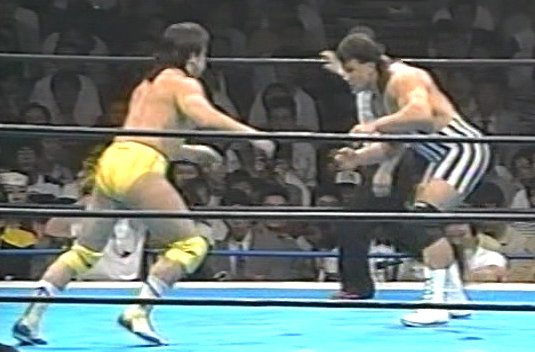 NJPW 5/31/91 Osaka-jo Hall, IWGP Tag Team Title: Scott Steiner & Rick Steiner vs. Hiroshi Hase & Kensuke Sasaki 16:48. Even Antonio Inoki was at the edge of his seat, waiting in anticipation for this match. The match started off with Scott Steiner and Hiroshi Hase giving everyone a reason to care through their compelling work against each other. Scott was quite patient for his standards, and this match wasn’t just all about bombs. All four workers contributed to the storytelling in this match, but Hase and Scott certainly stood out as the two main characters of this story. Rick Steiner was awesome in his role as well, though, as he hit a tremendous suplex on Kensuke Sasaki, who kinda sold it too much, but that would be considered really good selling in regular puroresu back in 1991. Rick then threw Hase overhead. Sasaki seemed to enjoy this type of match, and he was a lot more on point than usual. All four workers did a good job of making it seem like a competitive bout that had to be won at all costs, as they showed quite a bit of urgency (especially for NJPW heavyweight standards), and they showed frustration and despair when things weren’t going their way. Rick and Scott continued to throw their opposition around like rag dolls. This match wasn’t just all about throws, though, as there was a nice balance of people throwing each other around and good storytelling, which meant this match was a lot more satisfying than their Tokyo Dome match, which was lots of fun, but left you wanting a bit more substance. The selling in this match was done in a serious old school pro wrestling way, which meant there was quite a bit of emphasis on the selling, but it was at least not done in an overdramatic or pretentious way. The final minutes had some sick moments, including Scott top-rope DDT’ing Hase off of Rick’s shoulders! Excellent match. ****¼
AJPW 6/1/91 Tokyo Nippon Budokan: Kenta Kobashi & Tsuyoshi Kikuchi vs. Danny Kroffat & Doug Furnas. Everything made sense and was so much more realistic than most of today's wrestling. Can-Am Express are really good at working tag matches with AJPW psychology. The match built well, and the finishing stretch was exciting. Very good match. ***¾
AJPW 6/4/91: Toshiaki Kawada & Tsuyoshi Kikuchi vs. Terry Gordy & Richard Slinger. Tsuyoshi Kikuchi vs. Richard Slinger was such a good pairing in 1991. It seemed that whenever they met, they would do more interesting stuff than the usual Pillars stuff. Kikuchi was the worker of the match, but Slinger deserves credit for hanging in there and bringing the best out of Kikuchi. Slinger’s intensity and the way he really grabs holds like he’s out there to win make him stand out amongst the more ‘let’s warm up for 15 minutes and then do stuff’ type of workers. Kikuchi was truly spectacular in those days, as he was superb in his role as spectacular underdog who enhanced the matches through his exciting offense and especially his ability to take offense excitingly. Slinger’s uncle, Terry Gordy, wasn't as spectacular as Kikuchi and Slinger, but he was good in his no-nonsense tough Southern brawler role. Toshiaki Kawada was really good, but he was arguably the least memorable worker of this particular match. This was a really fun match, and it left me wanting more Kikuchi vs. Slinger. What Kikuchi and Slinger were doing was a lot faster and more exciting than what Gordy and Kawada were doing. In a year that had UWF-i and PWFG happening, a lot of the more ‘nothing happening’ type workers would be exposed as overrated, while others would be seen in a new light as underrated and overlooked. Slinger is one of those workers that has seemingly been underrated and overlooked pretty much all the time. Slinger almost scored an upset win over Kawada, but it was Kawada who eventually pinned Slinger via the Tenryu top-rope falling backwards elbow. Very good match. ***¾
UWF-I 6/6/91 kickboxing: ‘Bad Boy’ Rudy Lovato vs. Makoto Ohe. This kickboxing match wasn’t a pro wrestling match, but it took place at a shoot-style pro wrestling show, so it deserves to be mentioned, especially since it was a great one. It was probably the best match not involving Kiyoshi Tamura to take place in a UWF-I ring that year. Great fight.
UWF-I 6/6/91 Tokyo Korakuen Hall: Kiyoshi Tamura vs. Tom Burton 9:08. Kiyoshi Tamura did a really good job of carrying this match. Tamura moved around a lot and kept showing aggression. Tom Burton wasn't nearly as refined of a fighter as Tamura was, but he gave a pretty good effort here despite only sticking to relatively basic stuff. Tamura's understanding of how to carry an opponent and his knack for working an entertaining bout really shone through here. It was also once again clear that Tamura was a talented wrestler who kept improving during these early years of his career. Very good match. ***¾
PWA 6/10/91 Minnesota: The Lightning Kid vs. Wellington Wilkins Jr. The Lightning Kid was so lightning-like quick at the time! The monkey flip sequence he was able to execute was so smooth and fast. Wellington Wilkins Jr. was never an exceptional wrestler, but he was definitely a good wrestler around this time until he started slowing down midway through the decade and was relegated to comedy material in Michinoku Pro. Forget about Wilkins’ later years, as here he was challenging The Kid to work a different kind of match than the Kid was used to. Wilkins had wrestled on the 1st two PWFG shows in 1991, and this was almost like a continuation of that, yet still allowing The Kid to do his stuff. Wilkins was doing some shoot-style stuff, and The Kid went along with it and was still able to do his thing from time to time. The best part was that The Kid, in an act of desperation, started trying to do shoot-style on Wilkins, since he realized that was the only way the match was going to go. This is unique stuff. Technically it’s only a very good match, but when considering just the time and place and uniqueness of it all… it deserves to be called an excellent match. Excellent match. ***¾
NJPW 6/12/91 Tokyo Nippon Budokan: Shiro Koshinaka & Osamu Kido vs. Kuniaki Kobayashi & Kengo Kimura 13:04. Shiro Koshinaka was the driving force of this match. The match slowed down a lot whenever he wasn’t on offense. Kengo Kimura was still useful in 1991, but his work was a bit too deliberate to be worthy of extensive praise. Osamu Kido never was a good worker, and he didn’t really contribute much. Kuniaki Kobayashi did some good things, but his prime was the mid 1980s. In other words, this match is mainly recommended for those interested in seeing how good the underrated Koshinaka still was in 1991. Good match. ***
AJW 6/18/91: Manami Toyota, Mariko Yoshida & Takako Inoue vs. Cynthia Moreno, Esther Moreno & Mika Takahashi. Good match. ***
NJPW 6/20/91 Tokyo Korakuen Hall: Jushin Thunder Liger & Shiro Koshinaka vs. Kuniaki Kobayashi & Kengo Kimura 12:14. Jushin Thunder Liger was the top Japanese junior heavyweight at the time, but he could hang in there with these heavyweights, especially since Koshinaka, Kuniaki Kobayashi and Kengo Kimura used to be junior heavyweights back in their younger years and were relatively small heavyweights anyway. Koshinaka and Kobayashi did some sequences together that saw them channeling their 1980s selves. Kobayashi then was surprisingly able to work some spectacular sequences with Liger. It was definitely nice to see Kobayashi be so relevant again. Kimura was useful, but he contributed least to the match, and mainly was in there during the down periods of the match. The finishing stretch of this match was relatively short, but it was a truly spectacular one. Excellent match. ****
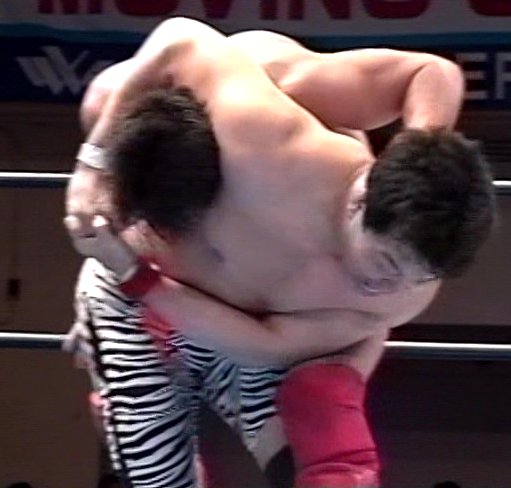 UWF-I 7/3/91 Tokyo Korakuen Hall: Kiyoshi Tamura vs. Yoji Anjo 17:35. These two really worked this as a heated battle. The matwork was amazing, as it was not only urgent, but it was also very intense. The selling was great, as they only sold whenever it was necessary to sell, while focusing at all other moments on making the other struggle for position. This match was not only never dull, but it was intriguing at all times. They really put over so well here that they didn't want to give the other any opportunities to find openings that could lead to any sort of offense. They were constantly very concentrated and focused on every detail the other was doing or planning to do. This was the first time Kiyoshi Tamura was really tested to go beyond any sort of fight he'd been having thus far in his career, and this challenge seemed to really help him blossom and reach new levels of excellence not discovered previously by him. His natural talent helped him dig deep within and come up with solutions that he previously possibly wasn't aware of knowing. Tamura more than living up to his potential was the nicest surprise about this match, but we shouldn't undervalue Yoji Anjo's role in this match. Anjo wasn't as explosive and quick as Tamura, but he certainly showed that he wanted to get the job done and give as strong a performance as possible. In the end, it was Anjo's maturity as a wrestler that helped him get the win here. Great match. ****¾
NJPW 7/4/91 Fukuoka, Mask vs. Mask: Pegasus Kid vs. Jushin Thunder Liger 16:22. This wasn't on the level of their great matches from 1990, but it was an excellent match nonetheless. It seemed like maybe a bit more of a dramatic last few minutes would have been nice, and maybe a bit more urgency overall would have been welcome as well. In spite of Pegasus Kid trying hard to beat Jushin Thunder Liger, it was Liger who after quite a bit of selling, somehow didn't have too much trouble putting Pegasus away. Pegasus unmasked and was revealed to be Chris Benoit. Excellent match. ****
GWF 7/12/91 Dallas, TX Sportatorium, GWF Light Heavyweight Title Tournament Final: The Lightning Kid vs. Jerry Lynn. Their PWA matches were more raw and more all-out extreme wrestling. Their GWF matches, while really good and better than most TV matches at the time, were clearly more catered towards a TV audience, as they were trying to wrestle in a more accessible manner, which included acknowledging the crowd and pacing themselves in a more mainstream-approved way. There’s not necessarily anything wrong with that, but it definitely was a noticeable difference from their PWA matches, which were more relentless. Still, this was quite spectacular when you compare it to what most American wrestling fans were exposed to at the time. Other than Brian Pillman and Owen Hart, there weren’t any other North American wrestlers who were THIS spectacular. This was likely slowed down a bit due to the whole tournament being taped over two days, with their final 3 matches all taking place today. Kid, who was more committed to GWF, and one of the first stars they created with this tournament, becamse the inaugural champ. Very good match. ***½
PWFG 7/26/91 Tokyo Bay NK Hall: Minoru Suzuki vs. Naoki Sano 30:00. The match starts off with some exciting grappling that was worked in an urgent manner. While Minoru Suzuki is the one who truly made this great, Naoki Sano was clearly more up to the task here than in his match against (Ken) Wayne Shamrock, which was Sano’s first PWFG match. One of the best things about this match is that it was truly intense at all times. Neither Suzuki nor Sano was giving the other an inch. Sano was really a lot more fired up and gutsy than in his first PWFG match. This made this match feel super competitive and quite even. Because they made each other struggle so much to get even the slightest advantage, every big move felt even bigger than they would normally. This is one of those matches where it’s just totally intriguing from start to finish, and you almost can’t wait to see what happens next due to the way they’re able to draw the viewer in through their super focused approach. When wrestlers show they care so much about everything they do in the match, it makes the viewer remember this match for a long time. There are so many moments that show that shoot style wrestling is so much more interesting than standard pro wrestling (at least in general). For instance, when Sano takes Suzuki down with a double-arm suplex, and Sano tries to follow up, Suzuki doesn’t just go along with whatever Sano is going for next, and Suzuki tries to block and fight it off with all his might. The match never stops being a massive display of struggle. This super competitive match eventually came to an end when the 30-minute time limit expired. This was a match that did a great job at being quite realistic yet dramatic at the same time. Of course, the great crowd heat helped as well. Great match! ****½
JWP 8/4/91 Tokyo Korakuen Hall: Harley Saito & Shinobu Kandori vs. Dynamite Kansai & The Scorpion 15:46. About five years into her career, Miss A finally became Dynamite Kansai. It’s usually only die-hard joshi puroresu fans who have heard about The Scorpion, a relatively unknown wrestler who was part of the original JWP but retired before the creation of JWP Project (and thus, missed the interpromotional era). The Scorpion always seemed to try to do something flashy and memorable. In spite of that, she was probably the least impressive overall performer in this match due to her execution not always being the best. Harley Saito and Dynamite Kansai were the most outstanding performers in this match, due to them putting over this match as an intense battle better than the others, especially whenever they were fighting against each other here. Shinobu Kandori was her usual no-nonsense self, but she lacked the urgency and speed shown by the others. Saito vs. Kansai was the best part of the match, as the two were quite relentless in their assault on each other. And, unlike their somewhat disappointing singles match on 2/11/91, they did some more of the striking that you’d hope and expect to see from them. What was the best thing about this match was that everyone really seemed to show at all times the intention to beat up their opponent in order to come closer to a chance of victory. This wasn’t just wrestlers doing stuff for the sake of it. After lots of fast-paced action, Kansai almost pinned Saito via a flying headbutt. Scorpion used Kansai’s back as a springboard, as she leaped to the floor and landed on top of Kandori. There was some brawling on the floor, and in this case, it didn’t feel random, as it felt that the emotions had overflowed out of control and caused some of this chaotic brawling on the floor. Once the match returned to the ring, they were able to get a grip on their emotions and focus on the task at hand. Everyone was trying to pin each other whenever the opportunity presented itself. Kansai hit several stiff kicks to Saito’s back, but Saito caught Kansai’s leg and temporarily stopped the assault. The action never really slowed down, and the final minutes were a satisfying conclusion to an energetic match. The actual finish came when Kandori had Scorpion stuck in a submission hold on the mat. This was an excellent match that was interesting all the way through. ****
JWP 8/8/91 Osaka: Harley Saito & Itsuki Yamazaki vs. Dynamite Kansai & The Scorpion 18:30. Itsuki Yamazaki threw Dynamite Kansai in the guardrail so hard that the guardrail fell apart, leaving a trail of destruction. The match continued at this frantic and urgent pace. Harley Saito was particularly impressive, because she was constantly doing something that seemed to make sense if you were trying to portray this being an actual contest, not just offensively, but also when she was on the receiving-end of action. Saito didn’t just bump and sell wildly for everything like a lot of wrestlers generally tend to do. Instead, Saito sold in a manner that felt appropriate. If a move didn’t seem to have much impact, there was more of an uncooperative feel to Saito’s selling/reaction. Sometimes this would mean simply countering a move, and sometimes this meant underselling a move or attempted move by the opponent. In this match, there was no silliness, and there was no stalling. There was a brief portion that saw them go to the floor and brawl for a bit. It felt a bit random, but they were able to put forth the idea that this happened because of the adrenaline rush they were feeling in the heat of the contest. Even the high flying moves in the match were done in a way to give the impression they were done in a way to do further damage to the opponent, not to show off. Yamazaki gave a really smooth performance in this match that confirmed she was one of the top women’s wrestlers at the time. Kansai was the most powerful and the most stiff performer in this match, and she wisely relied on those strengths. She also did a really good job of putting over her war with Saito through lots of intensity. The Scorpion tried to go for flashier moves more often than the other participants, but it didn’t seem to work out for her that well. In the end, Saito scored the pinfall over Scorpion via a beautifully-executed dragon suplex. This was a truly excellent match that was intriguing from start to finish. ****¼
NJPW 8/11/91 Tokyo Ryogoku Kokugikan: Brian Pillman vs. Jushin Thunder Liger 13:54. Brian Pillman had teamed up with Keiichi Yamada a couple of times in Stampede Wrestling in 1987. The two would also team up in WCW a couple of times in 1992, including an excellent match against Pegasus Kid & Biff Wellington on 6/16/92. However, the two are more known for their series of matches against each other in WCW, including the great 12/27/91 & 2/29/92 matches, the pretty-good-but-disappointing 6-minute 9/4/95 first-ever Nitro match and also four lesser known house show matches of which there's probably no footage available. Of course, by the early ‘90s, Yamada had already established himself as Jushin Thunder Liger, one of the best junior heavyweights in professional wrestling. What not enough people perhaps realize, though, is that the first-ever singles matches between Pillman and Liger took place in NJPW. One of the reasons for this is that in spite of this 8/11/91 match taking place on the same show as the 1991 G1 Climax Final, it was never televised. The hand-held footage was very good, however, so we were able to have a proper look at this match. It's a shame these two never really had another match together in NJPW, because that could have potentially been very interesting. Pillman showed urgency from the start, clearly aware of Liger's reputation, as he attacked him with some high-flying offense. Unfortunately, apart from a hot start to the match, things slowed down and never really picked up again until the final minutes. There were some memorable spots though, including Pillman piledriving Liger on the floor and Pillman hitting Liger with a splash off the top rope. Towards the end of the match, Liger almost pinned Pillman after a Dynamite Kid-like flying headbutt. Pillman tried another top-rope move himself, but Liger greeted him with a dropkick in mid air. Liger then hit yet another flying headbutt, and this time it meant victory. All in all, this match was quite good and fun to watch, but it never came close to reaching the groundbreaking levels their great 12/27/91 and 2/29/92 matches would reach. Very good match. ***½
UWF-I 8/24/91 Shizuoka Sangyokan: Kiyoshi Tamura vs. Yuko Miyato 9:42. The matwork was mostly very interesting, especially when Kiyoshi Tamura's explosiveness shone through. What kept this from being great was that Yuko Miyato, while giving a very good performance, wasn't quite on the level of Tamura in basically every way. Tamura once again proved his excellence though, and he was on quite a roll when it came to providing high-quality work in memorable matches. Excellent match. ****¼
WWF SummerSlam 8/26/91 New York City Madison Square Garden, WWF Intercontinental Title: Mr. Perfect vs. Bret Hart 18:04. One of the most exceptional things about Bret Hart is that he’s one of the very few of the ‘80s tag team workers that ended up having a better run as a singles wrestler than as a tag team wrestler. Bret Hart & Jim Neidhart, the Hart Foundation, was a really good tag team, but mainly for Bret, and it was ultimately his singles run starting this year that truly made him a household name, while Neidhart dropped down the card and never captured another major title after they dropped the WWF Tag Titles to the Nasty Boys on 3/24/91. Right from the start in this match, Bret Hart showed that he was very eager to win his first singles title in the WWF. Winning really feels like the most important thing in the world for Bret, and that’s what makes his matches very easy to get into as a fan. His fighting spirit and determination are key factors in the success of this match. ‘Mr. Perfect’ Curt Hennig was hurt going into this match, and he was wrestling with a back injury here, but he was determined to have this final match before taking a break and was clearly determined to give as strong a performance as possible because of his respect for Bret. The respect was mutual, as Bret has mentioned on more than one occasion that Hennig was his favorite opponent to wrestle. Having Bret as a championship-level singles wrestler was certainly a very good move by the WWF, as it meant the potential for more interesting matches than the average WWF matches. The near falls in this match were dramatic and helped build this match to an exciting finish. This was an exceptional match, and it was arguably the best match in WWF history up until that point in time. In this match, Bret certainly proved that his push as a singles superstar in the WWF was warranted. This was the best match between these two that’s available on video, but according to Bret himself, they had an even better match in Alaska at some point in 1989, but that match was unfortunately not filmed by anyone. Great match. ****½
TWA 9/21/91 Philadelphia, PA Original Sports Bar: Owen Hart vs. Takayuki Iizuka 21:40. NJPW’s Takayuki Iizuka battled Owen Hart, who was pretty much wrestling for all kinds of leagues all over the world in 1991 (UWA in Mexico, NJPW in Japan, CWA in Germany, ASW in England, and he wrestled for WCW, TWA and WWF in the United States that year). Owen’s technique set him apart from most wrestlers, and 1991 was a particularly excellent year for him. Wherever he went, it was clear that he was ahead of the curve compared to most wrestlers in the world at the time. Owen used graceful-looking headscissors and bridging escapes early in the match. Iizuka was a solid but unspectacular worker in NJPW, but here on a show featuring mainly American indy workers, Iizuka’s solidness made him stand out as one of the best workers on the card. What made this match particularly interesting was that they pretty much worked it the same way they otherwise would have on a NJPW show, as the fact this TWA card mainly featured average garbage wrestlers didn’t seem to make them change their gameplan. These two having about as good a match they probably could have had together at the time was a nice reward for the TWA league who actually spotlighted this match more than NJPW probably would have, as these two ended up having a 21-minute match. That being said, this match was only booked on the middle of the card, yet it felt like a main event, partially due to the effort by the wrestlers and partially due to the positive reactions from the vocal Philadelphia crowd. The match was wrestled at a steady pace from the start, with both men constantly trying to stay on top of their opponent and constantly either trying to attack or counter. After lots of spectacular action, including a plancha off the top to the floor by Owen, it was Owen who managed to pin Iizuka for the win. The crowd showed their appreciation by giving a standing ovation. This match was very rare, because it was one of the earliest examples of an excellently worked international-style junior heavyweight match on an American wrestling show. Owen was ahead of his time, and this meant he wasn’t always able to show what he was capable of, but here on this show, Owen definitely got to shine as one of the brightest stars in wrestling. This was easily the best match on this show, but another noteworthy match was Terry Funk vs. Kevin Sullivan, which was a decent 11-minute brawl that unfortunately randomly ended when the ref all of a sudden called for a double DQ after pretty much all the action took place outside of the ring. Excellent match. ****
NJPW 9/21/91 Yokkaichi Municipal Central Green Park Gymnasium: Pegasus Kid vs. Black Cat 13:48. Since he had lost a mask vs. mask match to Jushin Thunder Liger, Pegasus Kid was now wrestling in Japan without a mask. He didn’t need it anymore anyway now that his reputation was getting stronger. Black Cat was a lower midcard luchador, who was mainly useful backstage due to his ability to speak Japanese and Spanish. As an in-ring worker, he was a solid hand who you could put in there with anyone, since he was an experienced wrestler. As a worker, he mainly just got put on the card so that his opponent could have a match. He was a smaller heavyweight, so that was useful since he was kinda used like a Takayuki Iizuka, in the sense that the booker would alternate between having him wrestle junior heavyweights and heavyweights since he fell in a sort of grey zone. Black Cat himself was almost never the attraction, and he was pretty much never involved in a title match. While this was a random house show match, Pegasus wrestled in a way that showed he wanted to take it seriously, since he was very passionate about the pro wrestling business. Also, now that he was wrestling without a mask, that brought some freshness to his approach. Initially, this match seemed to be just designed to put Pegasus over, so Black Cat mainly let Pegasus do his thing while sort of waiting for the right moment to strike back. Since Black Cat spent most of the time selling on the mat, Pegasus kinda was forced to try to apply some submission holds, which helped to pass a bit of time. All of a sudden, Black Cat nailed Pegasus with a clothesline and that turned things around. Black Cat was now in full attack mode with his newfound momentum. Black Cat even bodyslammed Pegasus on the ring announce table and hit Pegasus with a chair. The match was good, but it would have been even more interesting if it wasn’t just, like, here’s your half of the match and then my half of the match kinda thing. At least the match got gradually more interesting with the final minutes being the most exciting, as that’s when there was more back-and-forth action combined with bigger moves. It was nice to see Pegasus re-establish himself again after having lost his mask in Japan. And it was nice to see the veteran Black Cat clearly enjoying the fact that he was part of a memorable singles match. Very good match. ***½
PWFG 9/28/91 Minoru Suzuki vs. Wayne Shamrock 16:34. This was the much anticipated rematch of the great Minoru Suzuki vs. (Ken) Wayne Shamrock match. They had a great 30-minute draw on PWFG’s debut show on 3/4/91, and in this one, everyone was looking forward to a winner. They approached the match more urgently, as you’d expect from two wrestlers now looking for a decisive victory. The intensity level was high, and they knew each other still quite well from their previous battle, so they were moderately cautious yet relatively aggressive at the same time. It’s a small little detail, but I felt that in the 3/4/91 match, they were more concentrated, while in this match they were more willing to take risks. While their slightly more adventurous approach here made for a more action-packed match, somehow it didn’t feel quite as rewarding watching it as the 3/4/91 match. Normally, you’d think that a 16-minute match would be an improvement over a 30-minute match because they would go harder, but in this case, their 30-minute match was so superbly worked that it feels like we didn’t get as much bang for our buck from them this time around. The 3/4/91 match felt more like it was a shoot style match ‘extraordinaire.’ This match felt more showy than the 3/4/91 match. Perhaps showy isn’t the right work, but it’s certainly more flashy, and while that sounds initially like a good thing, it also seems to take away the realistic and intriguing constant battle for position that made the 3/4/91 match so great. That being said, this was truly an excellent match in its own right. However, it occasionally felt like they weren’t being as organic and realistic as they potentially could have been. After 16 minutes, Shamrock won this bout via KO, and while it was a really fun match to watch, it didn’t feel quite as fulfilling as the great 3/4/91 match. Excellent. ****
FILL 9/91 Monterrey Arena Coliseo: Jerry Estrada vs. La Fiera. This was a rough lucha brawl, nothing fancy. A chain was being used as a weapon, which made things even more violent. This was arguably La Fiera’s best performance in years, and Jerry Estrada is quite an underrated worker in general. This crazy brawl is truly a hidden gem. One of the things that helped make this work as well as it did was the light selling, they didn’t oversell things. Great match. ****½
UWF-I 10/6/91 Tokyo Korakuen Hall: Kiyoshi Tamura & Yuko Miyato vs. Tatsuo Nakano & Tom Burton 18:48. Kiyoshi showed his tremendous mat wrestling skills, and it was whenever he was on the mat that he was most dominant, significantly more so than whenever he engaged in stand up striking, at least in this particular match. Miyato was quite fired up in this match and gave a surprisingly strong performance. Everyone really put over the struggle quite well. Yuko Miyato and Tatsuo Nakano were testing each other out during the stand up fighting early on. Tom Burton was the only gaijin in the match, but he blended in quite well, and clearly tried his best to contribute. Nakano and Tamura had quite a fascinating battle on the mat for a bit. Nakano's matwork wasn't nearly as fancy as that of Tamura, but Nakano's fearlessness made up for whatever he was lacking in finesse. Near the end of the match, Nakano caught Tamura by surprise with an ankle hold, but Tamura survived. Nakano continued to give Tamura a run for his money, and he hit Tamura with a strike that knocked Tamura down. Burton hit a nice double arm underhook suplex on Miyato, and Burton also hit a nice German suplex against Tamura, even though Tamura was trying his best to get out of this situation. Things were looking rough for Tamura, but Tamura's quickness and mat wrestling talent eventually got him a victory, as he countered Burton's next attempted move and applied an ankle hold that made Burton tap. It was quite a competitive tag team match, and this is a really good example of how to work a shoot style tag team match. Excellent match. ****
JWP 10/10/91 Hair vs. Mask, JWP/UWA Double Junior Title Match: The Scorpion vs. Cuty Suzuki 15:29. They were able to show they were fighting for victory. This didn’t feel contrived. It seems like during this part of Cuty Suzuki’s career, she put a bit more thought into what she was doing, instead of relying on getting carried and being along for the ride. The Scorpion was a smooth worker, and one of the best on the JWP roster at the time. The stipulation kinda revealed the winner even before the match started, but they were able to make it somewhat plausible things could go either way through their quality work. Cuty won via a Liger Bomb. Very good match. ***¾
WCW Pro 10/15/91 (aired 11/2/91) Huntsville, AL: Barry Windham vs. Arn Anderson 16:14. This battle between former tag team partners was very well performed. That being said, these two facing each other is less interesting than seeing them wrestle two energetic tag team wrestlers, especially since Arn Anderson isn’t a very strong singles wrestler. When Anderson is in a tag team match, he seems to get extra energy and inspiration by being there for a tag team partner and part of a greater picture. When he’s in there in a singles match with the spotlight on himself, it seems like he doesn’t quite know how to deal with it. While it’s nice to see that he’s so unselfish and is better at being there to back up a tag team partner, this also means that his singles matches are more often than not skippable. Apart from being a tag team specialist, the reality simply is that Anderson isn’t exciting enough to have a singles match that’s more than just good. This match was expectedly disappointing, which I know sounds funny, but it’s a match that looks good on paper until you realize that Anderson in singles matches is almost never worth recommending (even though his opponent here, Windham, is a strong singles wrestler). Good match. ***
NJPW 10/18/91 Hiroshima Sun Plaza: Pegasus Kid vs. Jushin Thunder Liger 13:07. Liger’s Asai moonsault looked cool. Pegasus was quite vicious, which made the commentators namedrop the great Dynamite Kid. This was an excellent display of pro wrestling. However, these two had set the standard so high in 1990, that this didn’t quite live up to their title bouts from 1990. Still, this was an excellent match. ****¼
CMLL 10/29/91: Fuerza Guerrera vs. Octagon. Earlier that year, EMLL had changed its name to CMLL, but Fuerza Guerrera remained one of their leading lights. He was the master at orchestrating things. This match was his masterpiece. He was at the right place at the right time, selling and bumping wonderfully, and turning the tide when appropriate. He was able to dictate the pace of the match and make the opponent look great while still pushing the opponent to work hard and have a memorable and dramatic match. Both men juiced. Excellent match. ****¼
JWP 11/2/91 Tokyo Korakuen Hall, UWA International Title: Harley Saito vs. Miss A 14:51. This was a mid-paced match that lacked conviction. It seems these two just couldn’t quite have a really good match together. Good match. ***
NJPW 11/5/91, IWGP Tag Team Title: Scott Norton & Rick Steiner vs. Hiroshi Hase & Keiji Muto 17:53. Scott Steiner & Rick Steiner were the tag team champions, but for this match, Scott Norton was taking the injured Scott Steiner’s place. Norton did a good job of playing his role as big powerhouse, and he was for a large part responsible for keeping the action going, since he constantly wanted to do something. Rick was a bit out of his element without his brother being there, but he adapted well to teaming with a different Scott, and was a solid partner. Keiji Muto did a good job of bumping and selling for Norton, they two had quite a bit of chemistry working against each other. In these days, Muto was actually willing and able to do a lot more than a bit later on in his career. Hase was a top 20 worker in the world at that time, and his understanding and ability certainly played a big role in this match being good. ***½
WCW Pro 11/5/91 Gainesville, GA, WCW Light Heavyweight Title: Brian Pillman vs. Richard Morton 13:50. Brian Pillman had become the first WCW Light Heavyweight Champion after defeating Ricky Morton (known as Richard Morton now that he was a heel focusing on a singles career managed by Ms. Alexandra York aka Terri Runnels) in a tournament final at Halloween Havoc. Jim Ross was hyping New Japan’s Jushin Thunder Liger coming to tour WCW soon. This may be an unpopular opinion, but Morton may actually be better as a heel than as a babyface. It was quite unusual seeing Morton as a heel, since most people know him as one half of the very popular Rock n Roll Express. It feels like his understanding of American wrestling psychology is better put to use with him in the heel role, since he is an old school Southern wrestler. The match wasn’t very fast, mainly because the heel, Morton, was in control for quite a bit. Pillman did a good job selling Morton’s attack, and Morton did a good job staying on top of Pillman. It was the way they did things that made everything feel like it had meaning behind it. They managed to have a good ol’ American rasslin’ match without doing anything that was really cheesy or corny. Morton being in control for a long time, with some hope spots for Pillman here and there, really made the fans anxiously awaiting Pillman’s potential comeback in the match. They were teasing that Morton was about to win via some cheating, but Pillman turned it around and managed to score the win. This was a memorable match, as they really were able to be captivating throughout the match. That being said, it probably would have been even more memorable if they would have drawn out Pillman’s comeback in the match a bit more with some near falls. Either way, the storytelling was strong, and the overall execution was quite good. Good match. ***¼
Universal 11/7/91 Tokyo Korakuen Hall: Gran Hamada & MASA Michinoku & Monkey Magic Wakita & El Matematico vs. Dr. Wagner Jr. & Canelo Casas & Blue Demon Jr. & El Sismo 15:10. MASA Michinoku (the future Great Sasuke), had made his debut at Universal's first ever show on 3/1/90, and this was one of the very first (if not the first) of many times that he would be teaming with Gran Hamada. MASA and Monkey Magic (the future Super Delfin) gave quite a decent showing for workers of their experience level. It was interesting to see Hamada battle Dr. Wagner Jr., and whenever they wrestled each other, it resulted in some of the best moments of the match. Canelo Casas (the future Heavy Metal) was fun to watch, as he moved around the ring quickly and showed a lot of potential. El Sismo, a mediocre rudo, was the least impressive worker in the match. El Matematico was a luchador who had quite a good amount of success in the 1970s and 1980s. Here in 1991, he was a 48-year old luchador who was no longer in his prime, and it didn't help he was mostly facing Sismo. Blue Demon Jr. didn't really play much of a role in this match, but his father, Blue Demon (Sr.), was the man who had unmasked El Matematico in Mexico in 1989. Here for this Universal tour in Japan, Matematico was wearing his mask, which more than likely would have been considered blasphemy in Mexico. Near the finish, we got to see several dives, as Hamada hit a pescado, Wakita hit a top-rope plancha to the floor, and the most impressive dive was MASA's tope con giro. The match ended soon after those dives when Canelo scored a pinfall over Matematico after a moonsault. Overall, this was a pretty good match that was fun to watch, and the action ranged from okay to really good, depending on who was in the ring. ***
Universal 11/14/91 Tokyo Korakuen Hall: Silver King & El Texano & Dr. Wagner Jr. vs. Gran Hamada & MASA Michinoku & Monkey Magic Wakita 9:52; 4:18; 5:02. Dr. Wagner Jr. was quite decent in this match. He brought a lot of force to this match. MASA Michinoku was a green and maskless Great Sasuke. Monkey Magic Wakita was a green and maskless Super Delfin. El Texano was a solid tag team partner for Silver King, as usual. We didn't get to see much of King until the second half of the match though. Even though King didn't quite hit his peak as an overall worker yet by this time, he did enough good things that clearly indicate that he was at least good or even very good at the time. King won the match after a beautiful moonsault. Gran Hamada was the best worker of the match, as he showed a lot of intensity and performed some nice-looking spectacular moves. Despite being inexperienced, MASA was eager to impress and executed a tremendous space flying tiger drop. Overall, this was a very good lucharesu trios match that perfectly embodied the enjoyable wrestling this league presented. The fans enjoyed the match so much that they threw money into the ring after the match was over! ***½
CMLL 11/15/91 Mexico City Arena Mexico: Love Machine & Black Magic & Mascara Sagrada vs. Blue Panther & Jerry Estrada & Pierroth Jr. This was the CMLL TV debut of the masked ‘Love Machine’ Art Barr, an American wrestler from Portland, OR who was the son of PNW promoter Sandy Barr and brother of Jesse "Jimmy Jack Funk" Barr. Black Magic was Northampton-born English wrestler Norman Smiley. Barr and Blue Panther would have a long and heated feud, but this was the very first time they ever met in the ring. Barr’s teams were the tecnicos (babyfaces), and Panther’s team were the rudos (heels). The match started off with Mascara Sagrada and Pierroth Jr. doing some standard and uneventful lucha stuff. Barr and Panther were tagged in, and they did some countering on the mat, which was right up the alley of ‘El Maestro’ (Panther). Smiley and Jerry Estrada were tagged in next, and they also did some lucha stuff on the mat that looked quite decent. These pairings all had another quick session until it became more of a free-for-all. Magic pinned Pierroth, and Barr pinned Panther. This meant the tecnicos won la primera caida (the first fall). The first fall was all about the feeling out process, but la segunda caida (the second fall) was just a quick equalizer, which is pretty much the case with 90% of the 2-out-of-3 falls matches in lucha libre Mexicana. And then la tercera caida (the third fall) is basically the big blow out and conclusion to the match. Barr and Estrada started things off in the third fall, and this was a really cool pairing, and things became more spectacular in this bout. People tagged in and out, and we got to see different pairings, but other than the occasional cool highspot, not much had really been established in this match so far. Things got way more exciting during the final minutes. Pierroth took a shoulder-first bump into the ringpost that sent him to the floor, and he was met by a torpedo-esque dive by Sagrada. Estrada then hit a wild tope suicida on Magic. Barr then really annoyed the heck out of Panther by pinning ‘El Maestro’ once again. Barr’s pinfall meant a victory for his tecnicos team. Good match. ***
WCW Power Hour 11/23/91 Submit or Surrender: Cactus Jack vs. Sting 12:57. This was basically an ‘I Quit’ match, and it was a wild brawl. Cactus Jack was wearing a Sting shirt with Sting’s image crossed out with a big black cross. You gotta love a detail like that. Sting isn’t the most interesting wrestler, but he was solid and decent enough to have good matches with guys that would work hard and go beyond the norm like Cactus. This wasn’t the most memorable match of the year by any means, but this is a really good example of Cactus once again working hard and enhancing the quality of the match he’s in. And in spite of Sting not being super interesting, at least he was better than Hulk Hogan or Ric Flair. Both men tried to have as good a match as possible, and this was certainly well worth watching. The match ended when Cactus took a big bump off the apron to the floor and was deemed as being knocked out. Good match. ***¼
NJPW 12/5/91 Chiba Koen Taiikukan: Negro Casas & Katana vs. Jushin Thunder Liger & Akira Nogami 13:48. Negro Casas and Jushin Thunder Liger started this match off at a fast pace. Katana was a Mexican wrestler who was also known as Leon Chino. Katana was getting involved while not being legally involved in the match, so Liger challenged him to face him man to man. Katana didn’t back down from this challenge and tagged in. Liger vs. Katana was fun, but Katana wasn’t anywhere near the level of Casas as a worker. Akira Nogami has always been an underrated worker, and he worked quite well against Casas. Casas and Liger worked hard. Nogami was a solid hand as well. Katana dragged the match down. This meant that this was quite an entertaining match overall, and they did a good job of making the final minutes the most lively ones, but the match suffered whenever Casas wasn’t in the ring. Pretty good match. ***
AJPW 12/6/91 Tokyo Nippon Budokan, '91 Sekai Saikyo Tag Kettei Leaguesen: Mitsuharu Misawa & Toshiaki Kawada vs. Terry Gordy & Steve Williams 25:24. The World Tag Team Title had been vacated by Mitsuharu Misawa & Toshiaki Kawada prior to the tournament. This gave the already prestigious tournament even more prestige, as the winner would indeed be the undisputed World Tag Team Champions. You could tell from the way they wrestled that this match really was a big deal. The American team kept putting pressure on the Japanese team. Kawada whiffed a spin kick, and I like that Gordy didn’t really sell it. The match became increasingly more dramatic with lots of intense near falls and lots of urgency in general. Very good match. ***¾
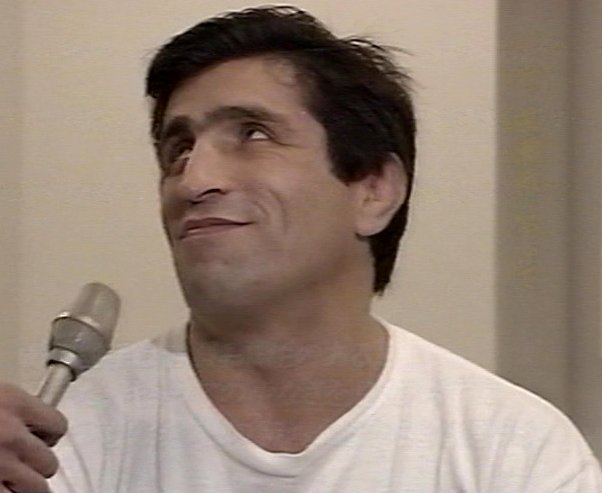 RINGS 12/7/91 Tokyo Ariake Coliseum: Volk Han vs. Akira Maeda 12:16. This was the pro wrestling debut match of 30-year old Volk Han. It was an impressive debut, and probably the best debut performance I’ve ever seen. Obviously Han had experience in freestyle wrestling and sambo, but this was his first puroresu match, taking on the top star and draw in the worked shoot world. Han made a quick impression, causing Maeda to need a rope escape pretty quickly. Han displayed strong technical skills here, but he would become even better in later years. Maeda seemed to work this match cautiously, which kinda makes sense since Han is an unknown opponent. Maeda went for a big spinning kick, but Han avoided it. Han’s strikes looked cool, and the crowd seemed to think so as well. Han slowed down a bit during the final minutes of the match, perhaps selling fatigue or simply still getting used to a full-length shoot style puroresu match (sambo matches are only 5 minutes). Maeda hit a big spin kick and this time he hit Han, who went down. Han went for a submission hold, but Maeda managed to put enough pressure on Han’s leg to make Han tap out. Maeda got the submission victory, but Han proved that he was someone to keep an eye on. It was not an easy match for Maeda. Perhaps next time, the result of the match will be different. ***¼
CMLL 12/8/91 Mexico City Arena Mexico, NWA World Welterweight Title: Fuerza Guerrera vs. Misterioso 19:26. The workrate and intensity were high all the way through. Fuerza Guerrera was really on a roll in 1991, as he was easily the best worker in Mexican lucha libre that year. He kept pushing the pace and constantly tried to make sure something interesting was going on, which included cool moves, working the crowd, acting like a rudo, etc. He did whatever it took to give the fans their money’s worth. That’s the sign of a truly great professional wrestler. He was so into what he was doing. Excellent match. ****¼
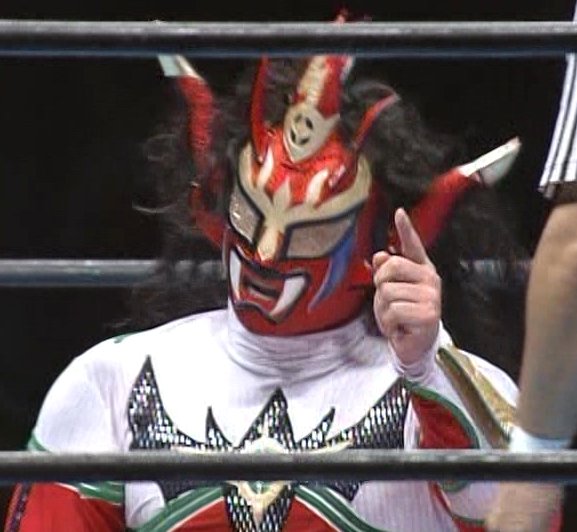 NJPW 12/16/91 Osaka Furitsu Taiikukaikan: Negro Casas vs. Jushin Thunder Liger 9:43. Negro Casas wasted no time, and started attacking Jushin Thunder Liger right away. What was cool about these Casas vs. Liger matches was that they were so different from Liger’s usual matches. Liger was in lucha mode here and did a bunch of lucha armdrags. Casas did his backflip off the top rope where he lands on his feet and tried to pin Liger with a surprise pin, but Liger kicked out. After a tombstone piledriver, Liger went for a flying headbutt, but Casas moved and went for la casita, but Liger kicked out. Liger hit a tremendous Asai moonsault. Soon after, Liger hit a top-rope huracarrana for the win. This was arguably their most action-packed match together, and it was probably their best match together. It was shorter than their 12/26/90 match, but it feels they made better use of their time here in this 12/16/91 match. Very good match. ***¾
LLI 12/22/91 Naucalpan El Toreo: Silver King & El Texano & Gran Hamada vs. Headhunter I & Headhunter II & Rambo 3:50, 2:27, 4:00. This match was way better than it looked on paper, since the rudos in this match weren't exactly known for their workrate, but they were able to give an exceptional performance here (at least for their standards). They were all able to keep up with the pace and help with keeping the action going. The Headhunters gave one of their best performances, as they worked hard and did a bunch of cool spots that looked impressive, especially considering their size. Even Rambo, who was usually mediocre at best, was quite okay here and wasn't in the way like he usually would have been, as he clearly tried his best and gave one of his better performances. Instead of the dull brawling we'd usually see from these rudos, they actually tried to wrestle to the best of their ability. The tecnicos in this match, Gran Hamada, Silver King and Texano were obviously the best workers in this match, and they all gave a strong performance here, which was the main reason this match was pretty good, as without them being as sharp as they were, this wouldn't have been this enjoyable. King and Texano, Los Cowboys, showed why they were a top-notch tag team, and Hamada fit in excellently. All three tecnicos were excellent, but Texano was arguably the worker of the match (with Hamada and King not far behind). ***
GWF 12/27/91 Dallas, TX Sportatorium, 2/3 Falls GWF Light Heavyweight Title: The Lightning Kid vs. Jerry Lynn 12:57. This was a 2-out-of-3 falls hold vs. hold match. The Lightning Kid had to win via the Lighting Strike, and Jerry Lynn had to win via the Sleeper hold. Apart from the fact that these two were so ahead of their time, especially for American standards, what makes this feud so exceptional is that each match is memorable yet so different. Here in this match, they were telling more of a cohesive in-ring story than ever before. Their PWA matches were some of the most spectacular and intensely raw matches ever seen in America. Their previous GWF match was cleverly adapted for a bigger audience. And in this 2-out-of-3 falls match, they showed not only their progress in the feud, but also how quickly they were maturing and learning as workers. They were pretty much maturing as fast as their hair was growing out, and they were looking more like stars with each match. What they presented here was more advanced on so many levels than most veteran wrestlers were capable of at the time, and that’s not even factoring the futuristic offense they were incorporating. In a very disciplined manner, they were able to show determination and focus, while spreading out the spectacular moments. This shows these two were able to deliver the type of match a mainstream audience could appreciate, as their more relentless and extreme bouts that they had in PWA are more suitable for hardcore fans. Unfortunately, the American wrestling world of the early 1990s wasn’t ready for wrestlers under 225 lbs to receive a proper push at the main stage. Still, GWF deserves credit for giving these guys a chance to display their ability in somewhat of a main event role. Towards the end of this match, the future Raven interfered. Craig Johnson and Bruce Prichard did a very good job calling the action and explaining to the audience the excellence of this bout. Overall, this was an excellent match, as these two combined elements from their previous matches and combined them in a well-mixed manner that resulted in a wonderful dish well served. Excellent match. ****
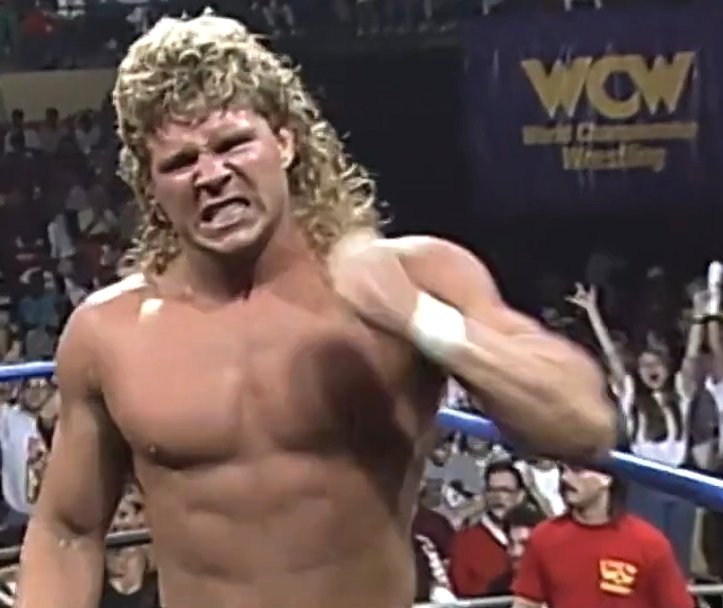 WCW 12/27/91 East Rutherford, NJ Brendan Byrne Arena, WCW Light Heavyweight Title: Jushin Thunder Liger vs. Brian Pillman 15:45. Jushin Thunder Liger had won the title on Christmas Day in Atlanta, GA. Here in this match on 12/27/91, Pillman had the opportunity to try to regain the title. There is only hand-held footage available of this house show match, but it’s clear that this was quite an exciting match, especially for a North American house show match from 1991. What they did here was definitely less cheesy and corny than what most of the WCW wrestlers were doing at the time. Liger executed a really nice moonsault off the second rope for a near fall. He then tried to go for another pinfall attempt after hitting Pillman with a somersault off the top. Liger was definitely showing off his high flying skills here. Liger landed on his feet after a monkey flip and then powerslammed Pillman when Pillman came charging at him. Liger took a big bump to the floor when Pillman dropkicked him. Pillman quickly tried to follow up on the floor, but it was Liger who manage to regain the advantage and hit Pillman with a beautiful Asai moonsault. Pillman hit a springboard clothesline. Pillman then suplexed Liger to the floor. Pillman and Liger then did the double dropkick spot as Liger attempted to dropkick Pillman while Pillman came off the top rope for a flying dropkick attempt. After Liger missed a spin kick, Pillman quickly managed to hit a spin kick. Liger was still hopeful in spite of Pillman’s momentum and his determination allowed him to powerslam Pillman. Liger went for a tombstone, but Pillman reversed the tombstone attempt and tombstoned Liger. Pillman came off the top rope with a flying cross body press, but Liger used Pillman’s momentum against him and rolled over for the pinfall victory. What a match! Not only was this match very advanced and modernized for American wrestling standards, but it was a super exciting, high workrate match for any and all standards of pro wrestling, especially considering this was a WCW house show from 1991. This was easily Pillman’s best match up until that point in time, and it was actually one of Liger’s best matches as well. This match was a harbinger of the greatness they were about to show in February 1992. Great match. ****¾
WWF 12/29/91 New York City Madison Square Garden, WWF Intercontinental Title: Bret Hart vs. Ted DiBiase 20:00. This wasn’t quite as good as their match from April, but it was still one of the most memorable matches that took place in WWF that year. The match didn’t have as much urgency as the April match, and that was largely due to the time limit draw result. Good match. ***¼
Pro Wrestling 1991 Top 75 Wrestlers |
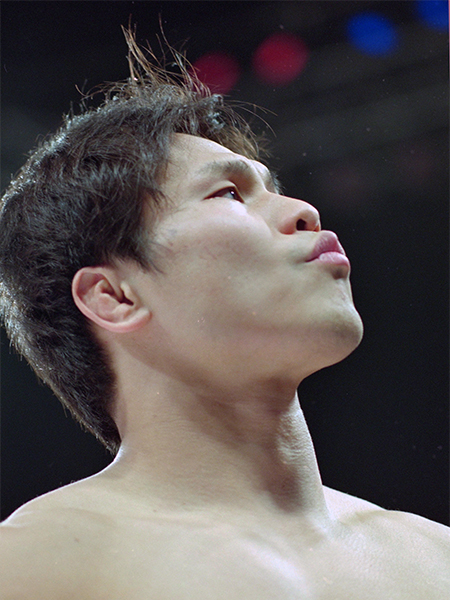 1. Kiyoshi Tamura (UWF-I). 1991 was the year that Kiyoshi Tamura became the greatest wrestler in the world (which would eventually lead to his path to becoming arguably the G.O.A.T. of pro wrestling).
2. Akira Hokuto (AJW). She was the best women’s wrestler of 1991. Her explosiveness and high workrate made her stand out. Her 1/11/91 match vs. Manami Toyota is one of the five best matches of 1991.
3. Minoru Suzuki (PWFG). Other than Kiyoshi Tamura, Minoru Suzuki was the best shoot-style wrestler. His sense of realism and dedication to stick to it is what made him so awesome. His 3/4/91 match against Ken Shamrock was a great match that’s highly recommended.
4. Jushin Thunder Liger (NJPW). In spite of NJPW giving Norio Honaga a somewhat surprisingly big push that came out of nowhere and was arguably unwarranted, Jushin Thunder Liger managed to still show his awesomeness and have high-level matches thanks to getting the opportunity to feud with WCW’s Brian Pillman. On 12/27/91 in East Rutherford, NJ, Liger and Pillman wrestled one of the 100 greatest matches ever.
5. Brian Pillman (WCW). Flyin’ Brian was arguably the best American pro wrestler of 1991.
6. Fuerza Guerrera (CMLL). Fuerza Guerrera was arguably the best Mexican pro wrestler of 1991.
7. Manami Toyota (AJW). Manami Toyota was really starting to come into her own in 1991 after showing signs of greatness in 1990.
8. The Lightning Kid (GWF/PWA). The Lightning Kid was a reckless daredevil and one of the most promising young talents in the United States.
9. Jerry Lynn (GWF/PWA). Jerry Lynn is one of the most overlooked wrestlers ever, and his work against Lightning Kid is highly recommended.
10. Hiroshi Hase (NJPW). Hiro Hase was a great tag team wrestler who wrestled in several high-quality tag team matches, but to really get an idea of his greatness, you should watch his 5/6/91 match vs. Jushin Thunder Liger.
11. Cactus Jack (WCW/TWA)
12. Itsuki Yamazaki (JWP)
13. Harley Saito (JWP)
14. Owen Hart (NJPW/CWA/UWA/WCW/TWA/WWF)
15. Pegasus Kid (NJPW/CWA/UWA)
16. The Scorpion (JWP)
17. Mayumi Ozaki (JWP)
18. Yoji Anjo (UWF-I)
19. Bret Hart (WWF)
20. Ken Wayne Shamrock (PWFG)
21. Tsuyoshi Kikuchi (AJPW)
22. Barry Windham (WCW)
23. Brad Armstrong (WCW)
24. Shiro Koshinaka (NJPW)
25. Yuko Miyato (UWF-I)
26. Naoki Sano (SWA/PWFG)
27. Suzuka Minami (AJW)
28. Negro Casas (UWA/NJPW)
29. Jerry Estrada (CMLL)
30. Eddie Gilbert (USWA/GWF/TWA/W*ING)
31. Danny Kroffat (AJPW)
32. Tim Horner (WCW)
33. Arn Anderson (WCW)
34. Akira Taue (AJPW)
35. Bull Nakano (AJW)
36. Hijo del Santo (UWA/Universal/CMLL)
37. La Fiera (CMLL)
38. Yoshihiro Asai (Universal/UWA)
39. El Texano (UWA/Universal)
40. Gran Hamada (UWA/Universal)
41. Scott Steiner (WCW/NJPW)
42. Richard Slinger (AJPW)
43. Blue Panther (CMLL/UWA)
44. Silver King (UWA/Universal)
45. Mr. Perfect (WWF)
46. Toshiaki Kawada (AJPW)
47. Volk Han (RINGS)
48. Rick Steiner (WCW/NJPW)
49. Misterioso (CMLL)
50. Mariko Yoshida (AJW/Universal)
51. Shinobu Kandori
52. Steve Williams
53. Dynamite Kansai
54. Bison Kimura
55. Jumbo Tsuruta
56. Kenta Kobashi
57. Mitsuharu Misawa
58. Esther Moreno
59. Rumi Kazama
60. Dynamite Kid
61. Tatsuo Nakano
62. Tom Burton
63. Takayuki Iizuka
64. Johnny Smith
65. Akira Nogami
66. Takako Inoue
67. Terry Gordy
68. Ted DiBiase
69. Shawn Michaels
70. Marty Jannetty
71. Kuniaki Kobayashi
72. Aja Kong
73. Kensuke Sasaki
74. Octagon
75. Kengo Kimura
Pro Wrestling 1991 Top 35 Matches |
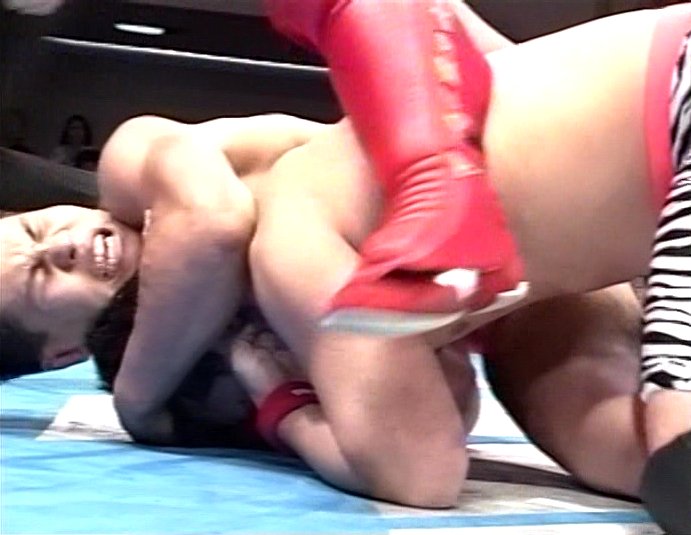 1. UWF-I 7/3/91 Tokyo Korakuen Hall: Kiyoshi Tamura vs. Yoji Anjo 17:35. ****¾
2. WCW 12/27/91 East Rutherford, NJ Brendan Byrne Arena, WCW Light Heavyweight Title: Jushin Thunder Liger vs. Brian Pillman 15:45. ****¾
3. PWFG 3/4/91 Tokyo Korakuen Hall: Minoru Suzuki vs. Wayne Shamrock 30:00. ****½
4. AJW 1/11/91 Kanagawa Kawasaki-shi Taiikukan, All Pacific Title: Manami Toyota vs. Akira Hokuto 16:20. ****½
5. PWA 4/18/91 Minnesota: The Lightning Kid vs. Jerry Lynn. ****½
6. FILL 9/91 Monterrey Arena Coliseo: Jerry Estrada vs. La Fiera. ****½
7. AJW 4/29/91 Tokyo, WWWA Tag Team Title: Aja Kong & Bison Kimura vs. Manami Toyota & Esther Moreno. ****½
8. PWFG 7/26/91 Tokyo Bay NK Hall: Minoru Suzuki vs. Naoki Sano 30:00. ****½
9. WWF SummerSlam 8/26/91 New York City Madison Square Garden, WWF Intercontinental Title: Mr. Perfect vs. Bret Hart 18:04. ****½
10. NJPW 5/6/91 Tokyo Korakuen Hall: Jushin Thunder Liger vs. Hiroshi Hase 28:07. ****½
11. NJPW 5/31/91 Osaka-jo Hall, IWGP Tag Team Title: Scott Steiner & Rick Steiner vs. Hiroshi Hase & Kensuke Sasaki 16:48. ****¼
12. UWF-I 8/24/91 Shizuoka Sangyokan: Kiyoshi Tamura vs. Yuko Miyato 9:42. ****¼
13. JWP 8/8/91 Osaka: Harley Saito & Itsuki Yamazaki vs. Dynamite Kansai & The Scorpion 18:30. ****¼
14. WCW 1/21/91 (aired 2/2/91) Atlanta, GA: Barry Windham & Arn Anderson vs. Brad Armstrong & Tim Horner. ****¼
15. AJW 1/4/91 Tokyo Korakuen Hall, WWWA World Title: Bull Nakano vs. Akira Hokuto 19:46. ****¼
16. CMLL 11/1/91: Fuerza Guerrera vs. Octagon. ****¼
17. CMLL 3/8/91 Mexico City Arena Mexico, Mask vs. Mask: Fuerza Guerrera vs. Gallo Tapado. ****¼
18. CMLL 12/8/91 Mexico City Arena Mexico, NWA World Welterweight Title: Fuerza Guerrera vs. Misterioso 19:26. ****¼
19. AJW 4/21/91 Tokyo Korakuen Hall: Akira Hokuto & Mariko Yoshida vs. Suzuka Minami & Takako Inoue 14:24. ****¼
20. NJPW 10/18/91: Pegasus Kid vs. Jushin Thunder Liger 13:07. ****¼
21. NJPW 6/20/91 Tokyo Korakuen Hall: Jushin Thunder Liger & Shiro Koshinaka vs. Kuniaki Kobayashi & Kengo Kimura 12:14. ****
22. WWA 5/17/91 Tijuana Auditorio Municipal, UWA World Welterweight Title: El Hijo del Santo vs. Negro Casas. ****
23. TWA 9/21/91 Philadelphia, PA Original Sports Bar: Owen Hart vs. Takayuki Iizuka 21:40. ****
24. TWA Winter Challenge II 3/2/91 Philadelphia, PA Penn Hall, Falls Count Anywhere: Cactus Jack vs. Eddie Gilbert. ****
25. JWP 8/4/91 Tokyo Korakuen Hall: Harley Saito & Shinobu Kandori vs. Dynamite Kansai & The Scorpion 15:46. ****
26. NJPW 7/4/91 Fukuoka, Mask vs. Mask: Pegasus Kid vs. Jushin Thunder Liger. ****
27. GWF 12/27/91 Dallas, TX Sportatorium, GWF Light Heavyweight Title: The Lightning Kid vs. Jerry Lynn. ****
28. AJPW 3/3/91 Tokyo Korakuen Hall: Tsuyoshi Kikuchi vs. Richard Slinger. ****
29. SWS 4/1/91 Kobe World Kinen Hall: Minoru Suzuki vs. Apollo Sugawara 9:03. ****
30. PWFG 9/28/91 Minoru Suzuki vs. Wayne Shamrock 16:34. ****
31. AJPW 1/15/91 Tokyo Korakuen Hall: Toshiaki Kawada vs. Akira Taue. ****
32. UWF-I 10/6/91 Tokyo Korakuen Hall: Kiyoshi Tamura & Yuko Miyato vs. Tatsuo Nakano & Tom Burton 18:48. ****
33. NJPW 5/31/91 Osaka-jo Hall, IWGP Junior Heavyweight Title: Norio Honaga vs. Jushin Thunder Liger 12:32. ***¾
34. NJPW 3/21/91 Tokyo Dome: Hiroshi Hase & Kensuke Sasaki vs. Scott Steiner & Rick Steiner. ***¾
35. AJPW 12/6/91 Tokyo Nippon Budokan, '91 Sekai Saikyo Tag Kettei Leaguesen: Mitsuharu Misawa & Toshiaki Kawada vs. Terry Gordy & Steve Williams 25:24. ***¾
The Best Shoot Fight in a Pro Wrestling Ring of 1991:
1. UWF-I 6/6/91 kickboxing: ‘Bad Boy’ Rudy Lovato vs. Makoto Ohe. Great fight.
Pro Wrestling 1991 Top 7 Promotions |
1. UWF-I. This shoot-style league provided a better product that was generally an upgrade over that of the regular pro wrestling leagues. The best wrestler in the world, Kiyoshi Tamura, had the MOTY against Yoji Anjo on 7/3/91.
2. AJW. Joshi puroresu was about to hit its peak, and AJW’s 1991 definitely was an indication of that with workers like Akira Hokuto, Manami Toyota, Suzuka Minami and Bull Nakano were amongst the best joshi workers of 1991.
3. PWFG. Yoshiaki Fujiwara’s shoot-style league was an important one, as it featured some wrestlers that would be amongst the most influential when it came to the development of combat sports and eventually MMA, including Minoru Suzuki, (Ken) Wayne Shamrock and Masakatsu Funaki. The 3/4/91 Suzuki vs Shamrock match was definitely a great one.
4. JWP. The original JWP was not as famous and popular as AJW, but it featured some of the best wrestling of the time. Itsuki Yamazaki, Harley Saito, The Scorpion and Mayumi Ozaki were all outstanding performers. The shows weren’t always super memorable by any means, but there were a bunch of good matches that were worth watching from JWP’s 1991.
5. CMLL. Fuerza Guerrera had a tremendous year in 1991. He carried Octagon and even Gallo Tapado to arguably the best singles bouts of their respective careers.
6. Universal. This league was so much fun! Just like in the year prior, this league once again provided authentic Mexican lucha libre in Japan.
7. NJPW. A bit of a mixed bag, as usual. Their junior heavyweight division wasn’t as strong as the year prior, mainly due to Norio Honaga receiving a big push. The heavyweight division featured top workers like Hiroshi Hase and the underrated Shiro Koshinaka, though.