Pro Wrestling 1976 ~ Year in Review |
World of Sport was the name of the famous Saturday afternoon British sports TV show, and World of Sport Wrestling was one of their features, which presented some of the best and most famous professional wrestling bouts of the time. Back in 1976, all wrestling matches that made it to WOS Wrestling TV were the ones promoted by the Joint Promotions league, which was at the time the main pro wrestling league in the United Kingdom. The Joint Promotions league was created when six separate leagues decided to form a confederation. The era from the mid ‘70s until the early ‘80s is considered the second boom period of Join Promotions (the first boom period was apparently from the mid ‘50s until the early ‘70s).
World of Sport Wrestling truly was THE best wrestling TV show of 1976 if you wanted to see the best wrestling of that year. WOS Wrestling displayed some of the finest wrestlers of the era, which included wrestlers like Mark Rocco, Marty Jones, Bobby Ryan, Mike Marino, John Naylor, Maurice Hunter, Terry Rudge, Johnny Saint, Lee Bronson, Pete Roberts, Vic Faulkner, Bert Royal, Count Bartelli, etc.
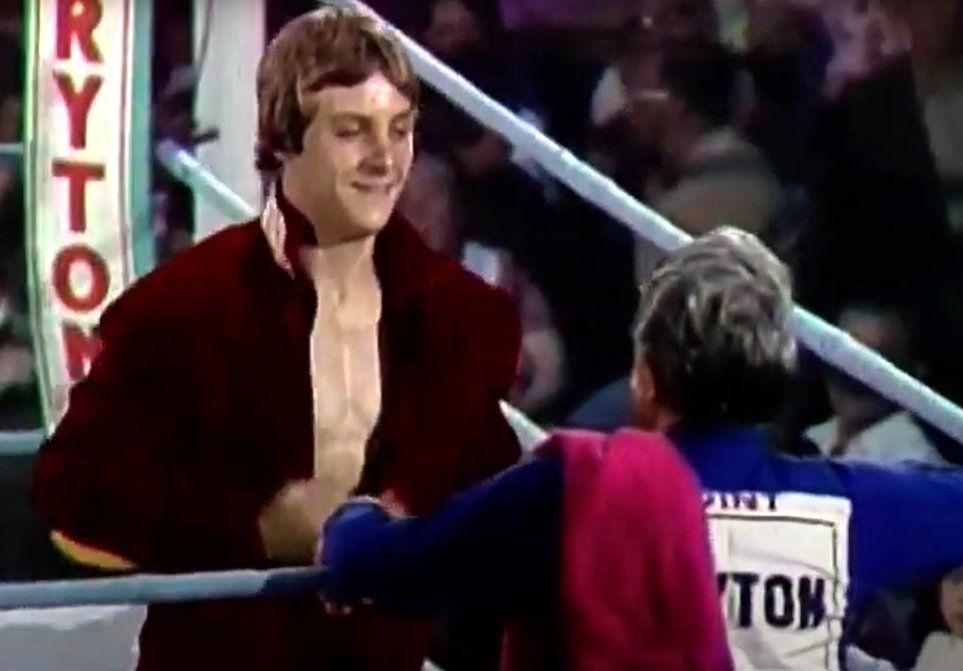 One of the most legendary pro wrestlers of all time, Dynamite Kid, had made his pro wrestling debut in late 1975. His first televised match took place on the same day as arguably the greatest match in British wrestling history, the 6/30/76 Mark Rocco vs. Marty Jones match. The Rocco vs. Jones match is an all-time great masterpiece. At the time it was wrestled, it was arguably the most perfectly worked pro wrestling bout from a technical wrestling perspective, due to the competitiveness and the high quality of the execution. It was a great example of the type of historical classics that were shown on World of Sport. It really feels like the wrestling shown on WOS in 1976 was what traditional British/European pro wrestling had evolved to by that point, with guys like Rocco and Jones being great examples of wrestlers who stood out as particularly advanced, were ready to take things even further stylistically and had proven themselves capable of elevating performances of their opponents more often than not.
All Japan Pro-Wrestling was another successful league in 1976. Giant Baba’s league had the honor of featuring one of the most legendary Japanese puroresu matches in history, the truly great and truly important 7/24/76 match between Giant Baba and Billy Robinson, which was a match that set new standards for (heavyweight) puroresu. AJPW was still relatively new, as the league had been formed in 1972. The overall quality was hit and miss to say the least, but the league certainly managed to provide fans with some high quality wrestling from time to time.
New Japan Pro-Wrestling had also been formed in 1972 by Baba's former tag partner Antonio Inoki. What made this league stand out during 1976 was Inoki’s desire to experiment with ‘different style fights,’ and these matches were essentially proto-Mixed Martial Arts, as they featured Inoki taking on fighters from different disciplines. An excellent example of a ‘different style fight’ that was an intriguing proto-MMA experiment was the 2/6/76 Inoki vs. Willem Ruska match (and we’ll be having a closer look at the Inoki vs. Ruska match in more detail a bit later on in the match review section of this write-up), which was truly an extraordinary bout. Unfortunately, we can’t really say the same about the infamous Inoki vs. Muhammad Ali fight, which was essentially a major disappointment to fans of either fighter or sport, mainly due to unusual rule changes that never allowed the fight to live up to its potential.
We are fortunate enough to have a decent amount of WOS Wrestling and AJPW available for viewing. However, as of this writing (more than 50 years after 1976), we can’t really say the same for the majority of wrestling. The available footage generally is quite sparse (compared to what’s available of present-day wrestling). Therefore, whatever conclusions we may draw from this project are strictly based on whatever footage is currently available to us. It still feels useful to do a Year-in-Review article on 1976, because we don’t want the great wrestlers and matches from 1976 to be overlooked or completely forgotten.
Some of the ‘76 stuff that isn’t included here was, for example, WWWF, because it was mainly just mediocre stuff.
With that in mind, let’s have a look at the following:
—>A list of the top 40 wrestlers of the year 1976.
—>A list of the top 25 matches of the year 1976.
—>Reviews of noteworthy matches from the year 1976.
Pro Wrestling 1976 Top 40 Wrestlers |
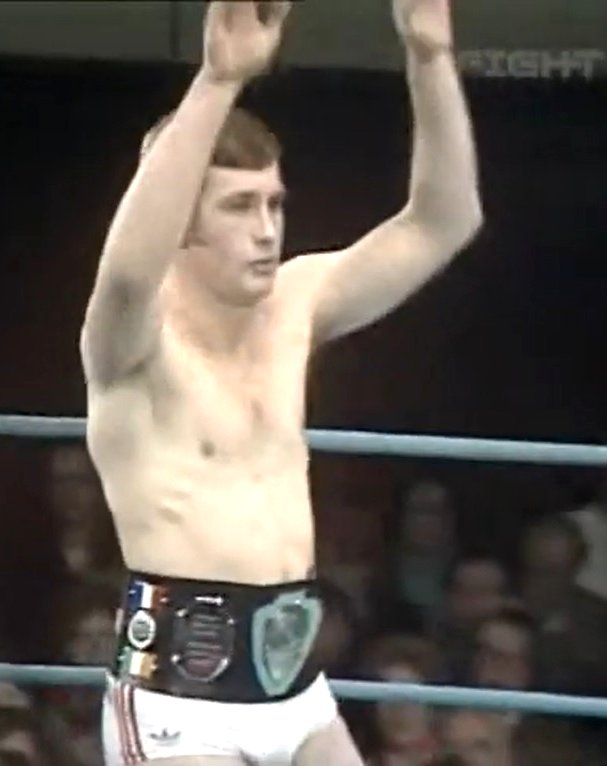 1. Marty Jones (Joint Promotions) [10.0]. He was probably the best in the world in 1976. His ability to tell a story in the ring through his wrestling was tremendous. Not only did he have the actual technical skill to make his work interesting, but he understood the utmost importance of timing, selling and intensity. He also understood so well that you don’t wrestle a match by yourself. Even though he was certainly able to carry just about anyone to better matches, he realized it would be far more productive and interesting if he would be able to bring out the best out of his opponents by giving them a chance to help co-create a bout that would stand the test of time. His feud with Mark Rocco is one of the best in-ring feuds in British pro wrestling history. The 6/30/76 match is arguably the greatest match in British wrestling history. This match really was a bout that incorporated traditional elements with a new flavor that resulted in a progressive masterpiece. It’s only fitting that the future all-time great Dynamite Kid made his TV debut on the same day. Jones also put his amazing technical skills on display on 8/3/76 against Alan Wood.
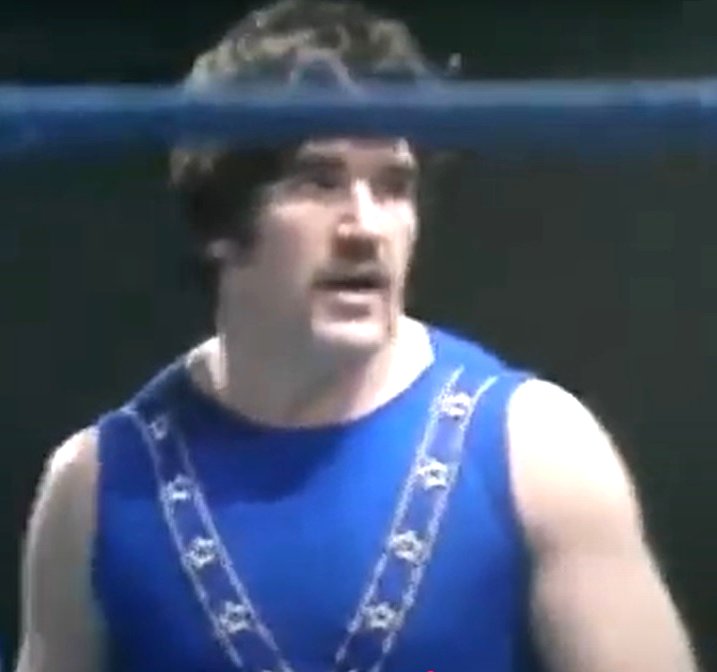 2. Mark Rocco (Joint Promotions) [10.0]. One of the very best wrestlers in the world in 1976. He was incredibly versatile, as he was able to carry matches in different ways. He excelled at carrying opponents to better matches, but on 6/30/76, he faced a man he could craft an all-time great masterpiece with on an equal level, as Marty Jones and Mark Rocco were arguably the two greatest pro wrestlers in the world at that moment in time. Rocco even carried the average Kung Fu to a good match that year.
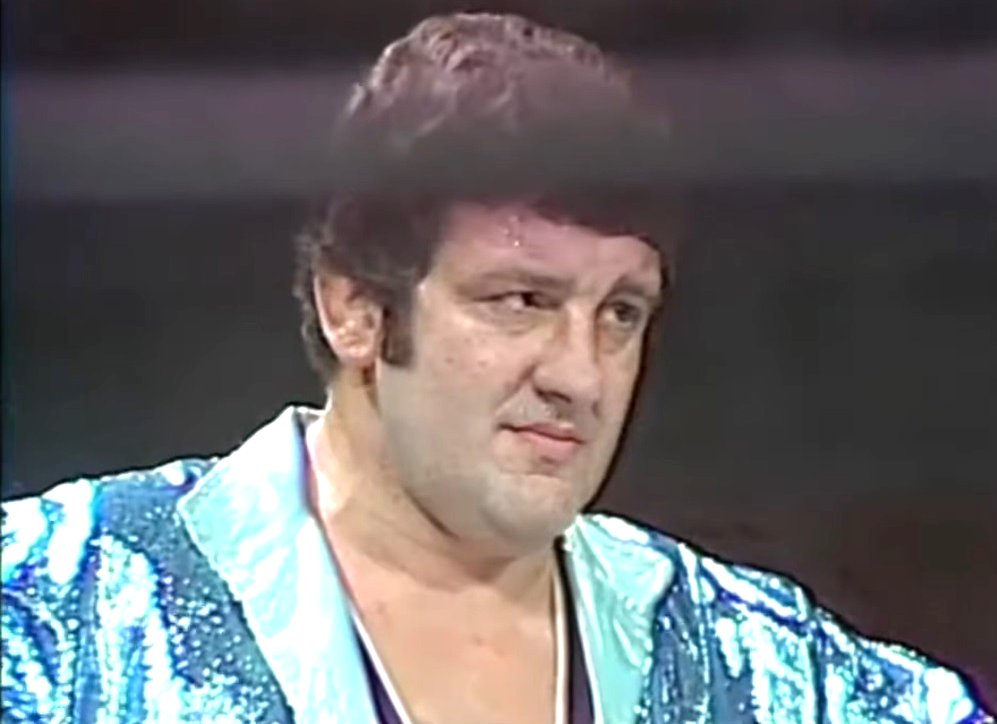 3. Billy Robinson (CWF/AJPW) [9.5]. With his help, Antonio Inoki’s NJPW got a tremendous boost in 1975. This time, in 1976, Robinson gave Giant Baba’s AJPW a tremendous boost. The legendary Baba vs. Robinson match is one of the most important matches in Japanese puroresu history. The bout combined British, American and Japanese heavyweight pro wrestling styles and basically was the start of the King’s Road style of puroresu, which was eventually perfected in the 1990s by the Pillars of AJPW. At the time of the 7/24/76 Robinson vs. Baba match, it was still not the norm for a Japanese match to be that great. Baba may have had the vision, but Robinson had the skill to help pull off the truly great 7/24/76 match. In 1976, Robinson, who had left the UK to work full time in America for AWA in 1970, was the best wrestler to not appear on WOS.
4. Bobby Ryan (Joint Promotions) [9.0]. He’s kinda like a proto-version of Dynamite Kid in the sense that he was a young, small and fast working guy.
5. Mike Marino (Joint Promotions) [9.0]. Very skilled old school technician. Great at carrying a match.
6. John Naylor (Joint Promotions) [9.0]. Yet another very enjoyable WOS worker. Impressive technical skills.
7. Verne Gagne (AWA/AJPW) [9.0]. He was still such a skilled pro wrestler in the mid ‘70s. He knew very well how to elevate the in-ring performance of his matches.
8. Maurice Hunter (Joint Promotions) [9.0]. Another skilled World of Sport technician. Very enjoyable worker.
9. Terry Rudge (Joint Promotions) [9.0]. Very impressive no-nonsense grappler. His match with Marty Jones was one of the very best of the year.
10. Nick Bockwinkel (AWA) [9.0]. Not enough footage is available, but I really enjoyed his performance against Andre the Giant.
11. Harley Race (St. Louis/Central States Wrestling) [9.0]. Judging from the small amount of available footage, his execution was great and so was his in-ring psychology and ability to carry an opponent.
12. Alan Serjeant (Joint Promotions) [9.0]. What’s available of his 1976 work looked great, as he displayed his tremendous technical wrestling skills and his ability to elevate his opponent’s performance.
13. Johnny Saint (Joint Promotions) [9.0]. Unfortunately, only one 1976 match is available of his and it’s against the overrated Mick McManus. If more was available, he possibly would have ranked higher. At least he managed to carry McManus to a good match in the one match that was available of his.
14. Vic Faulkner (Joint Promotions) [8.5]. Enjoyable worker who always seemed to try to make his matches interesting to watch. He seemed to genuinely care about the matches he was in.
15. Giant Baba (AJPW) [8.0]. He may not have been the best athlete, as he was an awkwardly moving giant, but he was a master of pro wrestling psychology. His match with the great Billy Robinson really paved the way for the future of great heavyweight pro wrestling in Japan.
16. Terry Funk (CWF/AJPW) [8.0]. 1976 may have been his best year. That was his year as the NWA World Heavyweight Champion, and he wrestled like a serious champion, being sincere in his role as the #1 champion in the pro wrestling world.
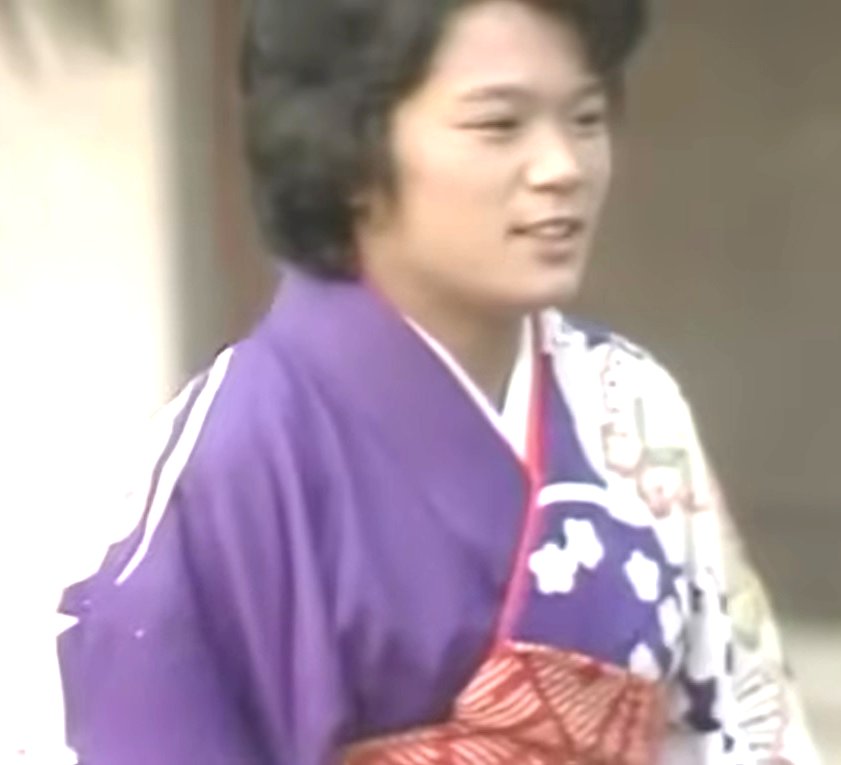 17. Yumi Ikeshita (AJW) [8.0]. The best women’s pro wrestler in the world at that time, back when women’s wrestling was still evolving and viewed as less important than men’s wrestling. So, for her to go out and give a strong performance was certainly crucial. She was one half of the Black Pair tag team (along with Shinobu Aso).
18. Shinobu Aso (AJW) [8.0]. The other half of the Black Pair. Her importance shouldn’t be understated, as she was just as important as Yumi Ikeshita was in terms of elevating the in-ring product of AJW. She brought a good amount of intensity and seemed quite capable of boosting the quality of a (tag team) match.
19. Lee Bronson (Joint Promotions) [8.0]. A high-effort wrestler. Particularly good for a relatively inexperienced wrestler.
20. Pete Roberts (Joint Promotions/NJPW) [8.0]. It seems 1976 was roughly the peak of his career.
21. Count Bartelli (Joint Promotions) [8.0]. The wily veteran gave good performances on World of Sport that would occasionally result in good matches.
22. Jumbo Tsuruta (AJPW) [8.0]. He was still some years removed from his best years, but he already was capable of having recommendable matches with some of the top names of the time. At the time, he was definitely a very promising up-and-coming star (and as we know now, he would indeed play a big role in AJPW for the next 15 years).
23. Bert Royal (Joint Promotions) [7.5]. A solid worker who was able to really put over the emotional and psychological aspects of the match.
24. Roy St. Clair (Joint Promotions) [7.5]. Energetic babyface, who managed to enhance the quality of the matches.
25. Tony Costas (Joint Promotions) [7.0]. He was a skilled old school wrestler from Cyprus.
26. Alan Wood (Joint Promotions) [7.0]. Technically quite capable but needed a great opponent to help him have an excellent match.
27. Bill Ross (Joint Promotions) [7.0]. He was capable of giving a very strong effort, but he lacked the athleticism to really stand out more.
28. Willem Ruska (NJPW) [6.5]. He understood what shoot-style pro wrestling was years before pro wrestling understood what shoot-style pro wrestling was. However, that lasted only for one match. Then, he learned how to be a regular pro wrestler (including how to sell like a regular pro wrestler) and his matches were no longer interesting at all.
29. Antonio Inoki (NJPW) [6.5]. His proto-MMA experiments were important. And his first match against Willem Ruska was extraordinary. However, for the majority of the year, he wasn’t that interesting to watch.
30. Steve Grey (Joint Promotions) [6.5]. When he wrestled guys who could carry him, he would often give good performances.
31. Jon Cortez [6.0]. Unfortunately, the only 1976 match available of his was against the super overrated Jim Breaks.
32. Dynamite Kid (Joint Promotions) [5.5]. 1976 was the first year on World of Sport TV for 17-year old rookie Dynamite Kid. He definitely showed potential, but he obviously wasn’t quite the all-time great wrestler he would eventually become. It was certainly interesting to see his humble beginnings, though. It seemed he was mainly focusing on spectacular flips and escapes, which showed that he had a knack for trying to go for a spectacular approach.
33. Zoltan Boscik (Joint Promotions) [5.5]. A heel who could give a strong performance from time to time when in there with the right opponent.
34. Bob Backlund (CWF/St. Louis) [5.5]. He worked hard and was a capable wrestler. His selling wasn’t that great, though. And he needed someone to carry him to a recommendable match. Very useful worker for the American territories, though.
35. Sid Cooper (Joint Promotions) [5.5]. An effective heel. Not very consistent, though.
36. Tony St. Clair (Joint Promotions) [5.5]. I wish there was more than just his match against Mick McManus available, as that potentially would have moved him up the list more.
37. Kendo Nagasaki (Joint Promotions) [5.5]. Decent worker in spite of mainly being a TV character and gimmick.
38. Mariko Akagi (AJW) [5.5]. Not much available of her work, but she was quite decent from what I saw.
39. Jumbo Miyamoto (AJW) [5.5]. For someone who was just a decent women’s wrestler (for ‘70s standards) yet positioned as one of the main girls, she did a reasonably good job carrying opponents, especially when you consider AJW as a whole was still in its developing stages.
40. Maki Ueda (AJW) [5.5]. One half of the Beauty Pair (along with Jackie Sato) and quite a decent worker (for ‘70s standards).
Honorable mention: Jackie Sato (AJW) [5.0]
Pro Wrestling 1976 Top 25 Matches |
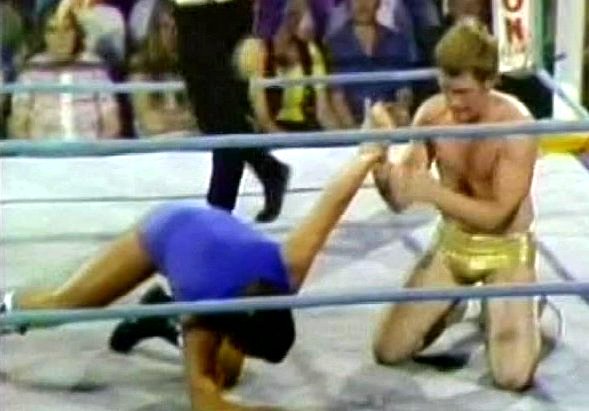 1. Joint Promotions WOS Wrestling TV 6/30/76 Lincoln, England: Mark Rocco vs. Marty Jones 22:31 (5:00, 5:00, 5:00, 0:37, 5:00, 0:57, 0:57). *****
2. AJPW 7/24/76 Tokyo Kuramae Kokugikan, PWF Heavyweight Title Match: Giant Baba vs. Billy Robinson 21:17 [9:24, 6:08, 5:45]. ****¾
3. Joint Promotions WOS Wrestling TV 11/30/76 Solihull, England: Marty Jones vs. Terry Rudge. ****½
4. Joint Promotions WOS Wrestling TV 4/21/76 Woking, England: Mike Marino vs. Lee Bronson. ****½
5. Joint Promotions WOS Wrestling TV 11/30/76 Solihull, England: Bobby Ryan vs. Maurice Hunter. ****¼
6. Joint Promotions WOS Wrestling TV 6/30/76 Lincoln, England: John Naylor vs. Bobby Ryan. ****¼
7. Joint Promotions WOS Wrestling TV 8/3/76 Bedworth, England: Marty Jones vs. Alan Wood. ****¼
8. AJPW 3/10/76 Tokyo: Verne Gagne vs. Jumbo Tsuruta 42:57. ****
9. NJPW 2/6/76 Tokyo Nippon Budokan, Different Style Fight: Antonio Inoki vs. Willem Ruska 20:35 ****
10. Joint Promotions WOS Wrestling TV 12/29/76 Woking, England: Alan Serjeant vs. Zoltan Boscik. ***¾
11. AJPW 6/11/76 Tokyo Kuramae Kokugikan, NWA World Heavyweight Title: Terry Funk vs. Jumbo Tsuruta 26:37. ***¾
12. Joint Promotions WOS Wrestling TV 2/25/76 Sheffield, England: John Naylor vs. Bill Ross. ***½
13. St. Louis 9/10/76 St. Louis, MO Kiel Auditorium, NWA Missouri Heavyweight Title Lumberjack: Bob Backlund vs. Harley Race 6:06 of 17:35. ***½
14 AJW 12/8/76 Koshigaya, WWWA Tag Team Title: Maki Ueda & Jackie Sato vs. Yum Ikeshita & Shinobu Aso 6:00 shown. ***½
15. Joint Promotions WOS Wrestling TV 2/4/76 Southend, England, Middleweight Title: Mark Rocco vs. Kung Fu. ***¼
16. Joint Promotions WOS Wrestling TV 2/10/76 Solihull, England, Commonwealth Heavyweight Title: Count Bartelli vs. Pete Roberts. ***¼
17. Joint Promotions WOS Wrestling TV 6/30/76 Lincoln, England: Bert Royal vs. Sid Cooper. ***¼
18. Joint Promotions WOS Wrestling TV 5/8/76 Woking, England: Ivan Penzecoff vs. Mel Stuart. ***¼
19. Joint Promotions WOS Wrestling TV 11/30/76 Solihull, England: Johnny Saint vs. Mick McManus. ***¼
20. Joint Promotions WOS Wrestling TV 3/23/76 Nottingham, England: Vic Faulkner vs. Phil Pearson. ***
21. Joint Promotions WOS Wrestling TV 5/26/76 London, England Royal Albert Hall: Roy St. Clair vs. Bert Royal. ***
22. Joint Promotions 11/3/76 Bolton, England: Dynamite Kid & Vic Faulkner & Bert Royal vs. Tally Ho Kaye & Black Jack Mulligan & Kenny Hogan. ***
23. Joint Promotions WOS Wrestling TV 5/26/76 London, England Royal Albert Hall: Vic Faulkner vs. Zoltan Boscik. ***
24. Joint Promotions WOS Wrestling TV 8/25/76 Catford, England: Steve Grey vs. Vic Faulkner. ***
25. Joint Promotions WOS Wrestling TV 1/13/76 Leicester, England: Kendo Nagasaki vs. Roy St. Clair. ***
Honorable mentions:
26. AJPW 5/1/76 Tokyo, Champion Carnival: Giant Baba vs. Jumbo Tsuruta 26:15. ***
27. AJPW 7/17/76 Kitakyushu Mihagino Gymnasium: Billy Robinson vs. Jumbo Tsuruta 21:14 of 70:00. ***
Pro Wrestling 1976 Top 3 Leagues |
1. Joint Promotions. This was the league featured on the World of Sport Wrestling TV show, and it basically had the best televised pro wrestling in the world at the time. Most of the best wrestlers and the best matches of 1976 all were in this league. There’s a good amount of WOS matches available from ‘76 (about five dozen), so it seems like a fair assessment to say they were indeed worthy of the #1 spot.
2. All Japan Pro-Wrestling. A reasonable amount of AJPW from ‘76 is available. And, based on the available footage, it seems that the best matches of 1976 that weren’t on WOS Wrestling TV all took place in AJPW.
3. All Japan Women’s Pro-Wrestling. They were kinda by default the #3 league, as they were probably the only place in the world that would occasionally provide good women’s wrestling and were constantly evolving towards what eventually would be more memorable years for them. Not much AJW footage from 1976 is available, but what is available is fascinating for historical purposes.
Note: There wasn’t enough footage available of the American territories to really justify putting any of them in the top 3 leagues list. Championship Wrestling from Florida (CWF) was quite enjoyable for what it was, but it’s hard to say if it was indeed the best American territory, as the footage of the American leagues was very incomplete.
Pro Wrestling 1976 Reviews of Noteworthy Matches |
Joint Promotions WOS Wrestling TV 1/13/76 Leicester, England: Kendo Nagasaki vs. Roy St. Clair. Kendo Nagasaki was one of the most famous wrestling TV characters in World of Sport history. Just to be clear, this was the character portrayed by English wrestler Peter Thornley. American and Japanese wrestling fans, however, will possibly associate the name Kendo Nagasaki with Kazuo Sakurada’s version of the gimmick. Roy St. Clair was the older brother of Tony St. Clair. The wrestling in this heavyweight bout wasn’t as advanced as what generally was shown in bouts from the lighter weight divisions. That’s why it’s only a mild recommendation. Still, it was good enough to be enjoyable and interesting to watch. Nagasaki was arguably the top heel appearing on WOS at the time. His gimmick was that of a mysterious Eastern warrior. As an interesting contrast, he had an outrageously flamboyant openly gay manager known as ‘Gorgeous’ George Gillette, who added to the heel heat. By the way, Thornley was bisexual, but he wouldn’t reveal that until 2018 due to societal pressures of the time. In this match, the action was steady and interesting enough for the most part. They both played their roles well. Roy St. Clair was good at being the eager babyface when he was on offense. St. Clair didn’t let any of the heelishness of the opposition throw him off and continued to wrestle a fair wrestling contest. Nagasaki was good at the heel psychology aspects of making this match work while balancing character work with wrestling quite well. Nagasaki won this match via KO. Good match. ***
Joint Promotions WOS Wrestling TV 2/4/76 Southend, England, Middleweight Title: Mark Rocco vs. Kung Fu. Kung Fu (Ed Hamill) was a Northern Irish wrestler who was masked at the time. Mark Rocco was 24 years old, and had over 5 years of pro wrestling experience by the time of this match. Rocco had been appearing on World of Sport Wrestling since 1970. Mark Rocco was like a machine, as he just kept going and going. Kung Fu would occasionally fight back, which would result in Rocco bumping and selling like crazy to make the crowd go wild for Kung Fu. Rocco would let Kung Fu do just enough to please the crowd, but he was in control enough to make the match good. Kung Fu was perhaps hindered by the gimmick, as it felt like he wasn’t wrestling very freely. Still, this was quite an action-packed match by 1976 standards. Near the end of the match, Rocco even executed a tope suicida. Kung Fu got his nose bloodied. Of course, six years later, Rocco would end up battling a far more famous masked wrestler. Good match. ***¼
NJPW 2/6/76 Tokyo Nippon Budokan, Different Style Fight: Antonio Inoki vs. Willem Ruska 20:35. To truly understand the uniqueness of this match, there are a few things you should know. Antonio Inoki, who was trained by Rikidozan (the ‘father of puroresu’), was the founder of New Japan Pro-Wrestling, and he is one of the most iconic and legendary names in Japanese pro wrestling history. Now, as a wrestler, when it came to regular pro wrestling matches, he really wasn’t too exceptional. However, what you really need to know about Inoki is that in 1976, he fought people from other combat sports and thus basically fought in several proto-MMA fights. There was no such thing as what we know as modern MMA prior to 1993 when Pancrase and UFC were formed (with guys like Masakatsu Funaki, Minoru Suzuki and Ken Shamrock being top pioneers of modern MMA, who had all been heavily involved in Japanese shoot-style wrestling, and early Pancrase was definitely at least partially worked fighting and not full-on shoot fighting). There was no blueprint or example for such MMA organizations prior to 1985 when Satoru Sayama created the fighting system Shooto. And there really was no such thing as what we call shoot-style pro wrestling prior to U.W.F. being formed in 1984 with guys like Satoru Sayama (who would found the Shooto MMA league in 1989, which was the first-ever MMA league), Akira Maeda (who would found RINGS in 1991), Yoshiaki Fujiwara (who would found PWFG in 1991) and Nobuhiko Takada (who would found UWF-I in 1991) as the main shoot-style wrestling pioneers. With the exception of Shooto and UFC (which were full-on shoot fighting leagues), basically all of the aforementioned leagues were more or less blurring the lines between works and shoots at some point. The first man to really experiment with the blurring of fiction and reality on a big stage seemingly was Inoki, though. Inoki wanted to prove that he, the top star of what he felt was the #1 pro wrestling league in Japan (NJPW), was a serious fighter who could beat fighters from other disciplines, which would then give further credibility to pro wrestling. This was a unique concept, and the very first ‘different style fight’ (which is basically a proto-MMA fight) fought by Inoki was this bout with Willem Ruska, a famous judoka from Amsterdam, The Netherlands. You see, RINGS wasn’t the first to bring in foreign fighters from countries where pro wrestling wasn’t really a thing and let them do pro wrestling with a shoot fighting mentality (as RINGS brought in sambo fighters and kickboxers from Russia and The Netherlands), as it was Inoki who brought in Dutch judoka Willem Ruska to face him in a ‘different style fight.’ Ruska is considered an all-time great judoka, and in 1972 became the only judoka to win two gold medals at the same Olympics. Furthermore, Ruska was the second non-Japanese judoka (after Anton Geesink, also a Dutchman) to be considered a great judoka (as all great judoka prior to Geesink and Ruska were all Japanese). So, Ruska was definitely a big deal in combat sports, and for Inoki to face him in this ‘different style fight’ was truly something worth anticipating. In fact, this show, headlined by Inoki versus Ruska, was the first time NJPW ran a show at the famous Tokyo Nippon Budokan. With all the historical facts out of the way, let’s focus on the actual match. Inoki, who wanted to prove he was indeed the real world martial arts champ in this wrestler vs. judoka bout, fought cautiously yet confidently at the same time. Ruska showed absolutely no fear and seemed very sure of his ability to show he was the superior fighter. Contrary to what some people believe, judo is not purely a defensive sport, as it is indeed a proactive combat sport. That’s why Ruska was very capable of giving Inoki a run for his money here pretty much for the duration of the entire fight. Now, for those of you who might think this doesn’t look as advanced as what RINGS would do in the 1990s, remember this is from 1976. Also, this was a lot like RINGS, as you had a Dutch fighter who had never had a pro wrestling match in his life prior to this, not fully understanding pro wrestling yet understanding what to do in this match. The main difference is that Ruska was way more of a high-profile name than any of the RINGS gaijin ever were. Inoki deserves credit for allowing Ruska to approach this in his natural way from a judoka perspective while always looking to be ready to go for the ‘kill.’ Inoki was obviously the one ‘leading’ the match, but in a very loose way, as he allowed this to look and feel natural and organic. The spot where Inoki gives Ruska to go for the jujigatame was really well done. Sure, this may not have been an actual shoot, but there was definitely a blurring of the lines between work and shoot here, as Ruska wasn’t familiar with traditional pro wrestling and probably approached this like a fight that was supposed to look real yet also entertain the crowd and make Inoki look good. In other words, in some ways, they were trying to undo years of overly theatrical and showy interpretations of pro wrestling and were going back straight to the roots of pro wrestling; it’s supposed to be a fight. And to those who say this doesn’t resemble a good pro wrestling match, let me remind you that what they were trying to do here wasn’t to have a traditional pro wrestling match that followed whatever patterns pro wrestling had been following by that point in the ‘70s (especially considering Ruska would have no idea what that would even look like), they were literally trying to have a ‘different style fight’ and that’s exactly what they accomplished. Did it look awkward at times? Sure. Was it unique and different? Hell yeah! Just keep in mind once again that there was no MMA at the time, so there was no set technique or set approach to a truly unique match like this. The final minutes definitely looked more like a work than the earlier portions of the match, though, which could be explained as Ruska letting Inoki do his thing for the planned final minutes that featured more regular pro wrestling stuff. Excellent match. ****
Joint Promotions WOS Wrestling TV 2/10/76 Solihull, England, Commonwealth Heavyweight Title: Count Bartelli vs. Pete Roberts. Joined in progress in round three. Interestingly enough, Count Bartelli used to be a masked wrestler but had lost his mask to Kendo Nagasaki (Peter Thornley) in 1966 in a mask match (which supposedly also ended Bartelli’s 20-year undefeated streak). Based on this match, Pete Roberts was a lot more of a lively wrestler in 1976 than he would be in the 1980s. He was definitely the more dynamic of the two wrestlers. Count Bartelli was quite an interesting and solid no-nonsense type of wrestler, though. Bartelli was quite good in his role as the champion who wasn’t easily phased. Roberts showed the will to win and kept trying. In the end, Bartelli retained the silver belt. Good match. ***¼
Joint Promotions WOS Wrestling TV 2/25/76 Sheffield, England: John Naylor vs. Bill Ross. I was familiar with English wrestler John Naylor from his matches with Steve Grey in 1975. Here, in this match from 1976, Naylor once again showed that he was quite a good grappler. I wasn’t familiar with Scottish wrestler Bill Ross, but he appeared to be quite a solid grappler. This was definitely the typical old school WOS grappling bout in which both competitors were simply trying to outwrestle each other and challenge each other and themselves to have a competitive grappling bout. Ross showed determination and gave a pretty good performance. However, it was Naylor who was the far more impressive of the two, as Naylor moved smoother and was quicker at attacking and countering. While what they did was nothing that was beyond what others were doing at the time, it certainly was quite a good match. What was disappointing was that after Ross scored the equalizing fall, the match kinda ended abruptly when he took a crotch-first bump on the ropes. Very good match. ***½
Joint Promotions WOS Wrestling TV 3/1/76 Catford, England: Steve Grey vs. Tony Costas. 4 minutes shown. Joined in progress. Judging from what was shown, this was a pretty good match.
AJPW 3/10/76 Tokyo: Verne Gagne vs. Jumbo Tsuruta 42:57. As far as I’m aware, this was the only singles match these two had against each other. They had wrestled in a tag team match a couple of days prior, so at least they weren’t completely unfamiliar with each other. While the wrestling in this match was generally good, this definitely wasn’t on the level of the best WOS Wrestling of the time. Jumbo Tsuruta was still quite basic and limited as a worker, but what made his work enjoyable nonetheless was that he displayed a good amount of sincerity in his approach. This match was part of the ‘Jumbo Tsuruta test series,’ which presumably meant that they were trying to show everyone that Tsuruta was going to be the next big thing. Verne Gagne, the wily veteran, who was generally a much respected name in the pro wrestling business, did a good job of carrying the bout and making Tsuruta look like a future star. Gagne certainly did a much better job than Rusher Kimura did on 3/28/76 in what turned out to be merely a decent match against Tsuruta (which was the second of many times Kimura and Tsuruta would be in the ring together). For a 50-year old guy, Gagne was quite fast and light on his feet, performing dropkicks with great ease and moving around fast enough to be a realistic threat in Tsuruta’s quest to become the victor. Gagne won the first fall via a sleeper hold. In the second fall, Tsuruta would continue to show his fighting spirit while Gagne would use his expertise to turn this into an intriguing bout through all the subtle things that were second nature to his experienced wrestling mind. The story of the second fall was that in spite of Gagne’s experience, Tsuruta’s untamable desire enabled Tsuruta to score the pinfall via a German suplex. It was a long match, but a 40-minute match certainly wasn’t out of the ordinary at the time. And considering the time and place, they definitely did quite a strong job in making this match work. Gagne perhaps relied a bit too much on acting like he was overwhelmed and was perhaps too cautious (which was his way of putting over Tsuruta’s fighting spirit), but that was still a better alternative than endless lying around in holds (which was seemingly common practice for long matches of the time, based on some of the other footage from the era), which we luckily weren’t subjected to here. The match had a free-flowing vibe to it, which played a big role in this match being able to avoid coming across as boring or contrived. The third fall ended in a draw when they both couldn’t get up before the count of ten just before the 43-minute mark. All in all, everything considered, I would say this is a match that definitely contained way more positive aspects of ‘70s wrestling than it did negative aspects. It wasn’t a MOTYC, but it’s still worthy of a solid recommendation. Excellent match. ****
AJW 3/15/76 Tokyo Ota Ward Gymnasium, WWWA World Title: Jumbo Miyamoto vs. Mariko Akagi 1:15 of 27:33. The work looked decent, but only 75 seconds is available. Mariko Akagi threw a pretty good dropkick, and she seemed to be relatively quick. Jumbo Miyamoto appeared to be focused on using her size and strength advantage. The finish was an odd one, as Miyamoto attempted a backdrop driver, but Akagi landed on top of her and then managed to crawl on top of Miyamoto to win the title. On 3/31/76, Akagi would defend the title in a 60-minute draw against Vivian Vachon (Luna Vachon’s aunt) before losing the title back to Miyamoto again on 4/17/76. Miyamoto would have a successful title defense against Mexican luchadora Chela Salazar on 4/21/76.
Joint Promotions WOS Wrestling TV 3/23/76 Nottingham, England: Vic Faulkner vs. Phil Pearson. This was part of a series of matches between two teams. Vic Faulkner was a good worker. His much heavier opponent was Phil Pearson, who was quite a dull and basic worker. Faulkner made the match interesting and worth watching. Faulkner ended up fooling his slow opponent quite a few times. This would have been better than merely pretty good if Pearson would have been more capable. Good match. ***
Joint Promotions WOS Wrestling TV 3/23/76 Nottingham, England: Bobby Ryan vs. Jim Breaks. This was part of a series of matches between two teams. This was a battle between the European Lightweight Champion and the British Lightweight Champion respectively. Jim Breaks was the captain of the heel team. Breaks was an overrated douchebag, but he was definitely over with the crowd. The atmosphere was top-notch for this bout. Bobby Ryan was an excellent worker, but the problem with this match was that Breaks matches always need to have him as the center of attention with his exaggerated theatrics. WOS matches were generally quite serious and treated like sports contests, so that’s why it was understandable that the crowd reacted in complete outrage when Breaks would continuously cheat like a sneaky coward. Decent match. **½
Joint Promotions WOS Wrestling TV 4/21/76 Woking, England: Mike Marino vs. Lee Bronson. Mike Marino was an English wrestler of Italian heritage and had been wrestling since 1951. He was far more experienced than his opponent, Lee Bronson, who was relatively new. This was a very well-worked wrestling match, as they really put over the struggle. Bronson was really trying to do his best here, and at some point even earned a handshake from Marino, who was impressed with the determination of his younger opponent. This was a very straightforward old school bout, but the quality of the wrestling was very good due to both combatants displaying a good amount of intensity and desire. It was Bronson’s will to impress and passion to succeed that made the veteran Marino realize that he had to be on top of his game in this match. Marino showed his experience and toughness, but Bronson kept pushing and kept moving forward, which made this bout be filled with non-stop high-quality grappling action. As the match progressed, Marino stepped up his game and tried to trick Bronson into making mistakes. In spite of the valiant effort by Bronson, it was Marino’s experience that got him the win. This bout featured tremendous technical wrestling and tremendous storytelling. Great match. ****½
AJPW 5/1/76 Tokyo, Champion Carnival: Giant Baba vs. Jumbo Tsuruta 26:15. By the mid 1990s, these two would have ended up being in the same match together (either as partners or as opponents) for over 1,000 times in total. At the time of this match, Giant Baba and Jumbo Tsuruta were a regular tag team and had only had one singles match against each other. So, this was quite a big match, as AJPW’s top star Giant Baba faced off against his future successor. This match was doomed from the start, though, as both men needed someone to uplift the match to make it memorable. Tsuruta would later be able to do the uplifting himself, but in 1976, he wasn’t quite there yet. He executed a really nice dropkick, though. Baba was truly a master of pro wrestling booking and had a great vision for pro wrestling psychology, but he lacked the physical ability to make it work without a top-notch worker giving him a helping hand. The great Billy Robinson would be able to deliver an all-time classic with Baba on 7/24/76. And in 1976, Tsuruta had two really good matches thanks to the guidance of two well-respected Americans, Verne Gagne (3/10/76) and Terry Funk (6/11/76). Baba vs. Tsuruta was good, but it clearly didn’t reach the excellence they were aiming for. This happening on the 27th day of the Champion Carnival tour probably didn’t help much either. There just wasn’t enough memorable action happening, as both men seemed spent, and the majority of the match saw them looking exhausted on the mat. Good match. ***
Joint Promotions WOS Wrestling TV 5/8/76 Woking, England: Steve Grey vs. Zoltan Boscik. Zoltan Boscik took a nice bump to the floor off a Steve Grey dropkick. Boscik was very focused on his heel character, and his exaggerated selling was quite comical. Grey was very focused on playing the small and weak babyface. In spite of neither giving an actual good wrestling performance, it was at least quite entertaining to watch. Decent match. **½
Joint Promotions WOS Wrestling TV 5/8/76 Woking, England: Ivan Penzecoff vs. Mel Stuart. Ivan Penzecoff liked to incorporate cartwheels into his offense and defense, which was cool. And he did some cool old-school British escaping. He had some Russian heritage on his grandmother’s side, which is why he wore a ring jacket with the Soviet flag on it. It took Mel Stuart a little while to get warmed up, but once he did, this match became quite competitive. Execution was quite good overall, and the work looked quite stiff. At some point, Penzecoff, in an attempt to be creative, went for a bizarre-looking leg submission that caused him to get tied up in the process, so he had to ask the referee to help break the hold. This wasn’t a technical masterpiece, but I really appreciated the snugness and the effort displayed by both participants. Quite an entertaining bout, for sure. Good match. ***¼
Joint Promotions WOS Wrestling TV 5/8/76 Woking, England: Klondyke Jake vs. Romany Riley. Klondyke Jake was usually billed from either Alaska or ‘The North’ even though he was actually just from the West Midlands of England. He had quite a striking look, as he was a big guy with a beard and long hair. He looked like the typical tough guy you don’t want to mess with. The cool thing about Klondyke Jake was that, even though he was a big guy and more of a character than a serious wrestler, he was able to move and take bumps, so he was actually capable of working. Romany Riley did a good job of acknowledging and selling for the size of his opponent yet still showing that he was willing and able to outmaneuver the big man. The crowd seemed to really enjoy this bout in a special attraction kind of way, as they were all giggly about it, possibly because this certainly didn’t quite resemble the top technical masterpieces the viewers had been accustomed to. Romany Riley scored the first pinfall because he was able to outwrestle the big character. This wasn’t an actual good match, but it was fun and memorable. Decent match. **¾
Joint Promotions WOS Wrestling TV 5/26/76 London, England Royal Albert Hall: Roy St. Clair vs. Bert Royal. Both these workers showed their grappling skills, which were certainly better than average. This was a competitive bout that was wrestled in a fair manner. The quality of the wrestling was such that you’d respect them for what they did. However, they didn’t do anything that would make you think this is a top 10 bout of the year or anything like that. This match is an example of the WOS Wrestling product simply being more advanced and evolved than virtually any other wrestling in the world at that time, as even a preliminary bout like this one is still better than most of what was happening in other places in the world. Good match. ***
Joint Promotions WOS Wrestling TV 5/26/76 London, England Royal Albert Hall: Vic Faulkner vs. Zoltan Boscik. Vic Faulkner’s eagerness to have an enjoyable bout forced Hungarian wrestler Zoltan Boscik to step up his game. The dynamic between the two made for an entertaining match. Faulkner did a particularly good job when it came to allowing Boscik to do his heel stuff that he loves to do yet also making sure the match would mainly be about actual wrestling. Good match. ***
AJPW 6/11/76 Tokyo Kuramae Kokugikan, NWA World Heavyweight Title: Terry Funk vs. Jumbo Tsuruta 26:37. Terrence Funk had the honor of being the NWA World Heavyweight Champion for the entirety of the year 1976, and at the time, this was the most prestigious title in the professional wrestling world. On 12/10/75, Funk had defeated Jack Brisco in Miami Beach, Florida to win the ten pounds of gold. During his 424-day reign as The Heavyweight Champion of the World, Funk defended his title on many occasions against many different opponents all over Northern America. And on this one occasion, he even defended the title in Japan as well against Tomomi ‘Jumbo’ Tsuruta. Terry Funk and Jumbo Tsuruta certainly were no strangers to each other. Tsuruta was trained in Amarillo, Texas, hometown of the Funks. Tsuruta’s main trainer was Dory Funk Jr. (Terry’s older brother), and the Funk brothers wrestled Tsuruta on numerous occasions in singles and tag team matches over the years. AJPW founder Giant Baba had been the top star of AJPW ever since the league’s beginnings in 1972, and what was so special about this match was that Tsuruta was now the one chosen over Baba to take on the visiting World Heavyweight Champion, which showed that Tsuruta was seen as ready enough to have a shot at the biggest prize of them all. In 1974, Baba had been able to hold the NWA World Heavyweight Title for a week when he was able to beat then champion Brisco (until losing the belt back to Brisco). So, it definitely was plausible that a (brief) title change could happen here in this match. Terry did an excellent job carrying this bout in a subtle manner, as he was able to be a dominating champion while making Tsuruta look like a credible challenger. If anything, Terry was micromanaging a bit too much, which automatically caused Tsuruta to rely a bit too much on Terry’s guidance. In the end, what we got was an enjoyable and memorable title bout, and that’s all that matters, of course. In fact, this is probably the most seriously wrestled big wrestling match that’s available of Terry’s entire career. And the match also is an excellent example of Tsuruta already being a solid worker back in the mid 1970s. The work was really good all the way throughout this bout, but the reason it’s not a MOTYC is that they played it a bit too safe and didn’t push boundaries enough. Perhaps if no WOS footage of 1976 would have been available, this match would have been standing out more. When it comes to big Tsuruta matches in 1976, this match was technically and structurally arguably even better than Tsuruta’s match against Verne Gagne, but it felt like Gagne allowed his match to be more creative and free-flowing (which ultimately made the Gagne match a bit more interesting and memorable). Very good match. ***¾
Joint Promotions 6/30/76 Lincoln, England: Dynamite Kid vs. Alan Dennison. R3 2:00. This was Dynamite Kid’s first televised match, in which he showed his great potential. The match aired 10/30/76 on ITV’s World of Sport Wrestling, the famous wrestling show that was popular in the United Kingdom from the mid 1960s through the mid 1980s. This was a 6-round match with 5-minute rounds. The Kid was 17 years old at the time and only about 158 lbs. He had only been a pro wrestler for six months. The Kid started the match off with some quick moves, including a couple of arm drags and a couple of front flips. The Kid executed a nice cartwheel among other moves. After being on the receiving-end of a monkey flip, the Kid landed on his feet. The Kid also did some of the typical old school European escapes when he was locked in a hold. The Kid seemed to rely on his speed and agility here against his far more experienced opponent. Dennison, a mediocre worker, was in his 40s here. In a funny moment, after the first round, Dennison tried one of those front flips the Kid has been doing, but he failed miserably (much to the delight of the spectators). This wasn’t the most graceful match, but it succeeded in its purpose of introducing the talented Kid to a television audience. In the third round, the Kid went for a move, but landed throat first on the top rope. This was sold in dramatic fashion and they ended the match. After the match, Dennison went on the mic and praised the Kid. He also asked for this match to be determined a no contest because he didn’t want to win the match this way. Referee Brian Crabtree allowed Dennison’s request and the match ended in a no contest. This was a promising start for the young Kid! Okay match. **
Joint Promotions WOS Wrestling TV 6/30/76 Lincoln, England: John Naylor vs. Bobby Ryan. The wrestling displayed was of really good quality. Because they were smaller and faster than the average worker on WOS, it feels they were definitely more advanced than most. It was interesting to see how they were very competitive on the mat and really put over that they were trying to outwrestle each other. And when the opportunity was there, they would accelerate the tempo briefly for some speedy flashes of spectacle, which showed the urgency to capitalize on a perceived opening that could potentially lead to a pinfall. Technically, they did everything right, but what prevented this match from reaching true greatness was that it lacked that extra bit of intensity that made the most famous WOS bouts so great. So, while this was truly excellent, it felt at times a bit too playful compared to the MOTY (Rocco vs. Jones), which took place on this very same show and had more of a feeling of importance to it. Excellent match. ****¼
Joint Promotions WOS Wrestling TV 6/30/76 Lincoln, England: Bert Royal vs. Sid Cooper. This was quite a heated and passionate bout that was over with the crowd. Bert Royal put a lot of importance on his selling to make the opponent look strong. Sid Cooper wasn’t bad, but he definitely was quite basic. Cooper’s main strength was that he at least showed some viciousness and came across as a mean rulebreaker who was trying to win at all costs. Royal played the role of the sympathetic veteran quite well, and he really put over the idea he wasn’t going to give up trying to overcome Cooper’s roughness. This certainly wasn’t a technical masterpiece, but it was pretty good for what it was and served its purpose. Good match. ***¼
Joint Promotions WOS Wrestling TV 6/30/76 Lincoln, England: Mark Rocco vs. Marty Jones 22:31 (5:00, 5:00, 5:00, 0:37, 5:00, 0:57, 0:57). An all-time great match. Judging from the footage currently available, this was one of the best matches of the 1970s, if not the best. This bout was scheduled for eight three-minute rounds. Like many great wrestlers from that era, they were both from the Manchester area. This was their third televised bout against each other. They had previously met in matches on 11/21/73 and 3/17/76, but unfortunately this footage doesn't seem to be available. In general, both men displayed some great athletic skills, and they were solid technicians. There was enough sense of a true rivalry between these two men that everything they did had roughness behind it, as if they just wanted to show the opponent they really wanted to beat them. Rocco started wrestling rougher and rougher as the bout progressed. The heat between the two escalated to the point that both men received public warnings. The referee tried to keep control of this, but it felt like it could get out of control any second, and at some point he even tripped over Jones. In the first round, it all started with them trading technical wrestling holds. They didn't allow the opponent to catch much of a breather, and they were very evenly matched, as both were of similar size at the time. Rocco had a couple of years more experience than Jones. In round 3, Rocco was a lot more aggressive than in the previous two rounds. Jones wasn't too concerned about Rocco's attitude and was ready to fight. Jones's arm wasn't in good shape by the end of round 3. In round 4, Rocco immediately went back to working over Jones' left arm and shoulder. The action went back and forth. Rocco was great both in being in control and being the aggressor yet making Jones look as good as possible in the process. Jones was great at showing fighting spirit, and had great chemistry with Rocco. Both had excellent timing and execution. All-time great match. *****
AJPW 7/17/76 Kitakyushu Mihagino Gymnasium: Billy Robinson vs. Jumbo Tsuruta 21:14 of 70:00 [29:05 (1:00 shown), 21:52 (8:14 shown), 9:03 (7:00 shown), 10:00 (5:00 shown)] Billy Robinson wrestled Jumbo Tsuruta to a 70-minute draw on a hot summer day that saw the sweat not only drip off the wrestlers, but also drip off the fan-waving fans in attendance. These two had previously wrestled each other three times in the United States the previous month, but this was their first singles meeting in Japan. The match initially ended as a 60-minute draw, but they got 10 more minutes. It was not a bad match, but it was not anywhere near the quality of their best matches, because there wasn’t nearly as much going on as in their best matches. It was a very disappointing match considering who was involved. It is mostly memorable for being their first singles meeting in Japan. ***
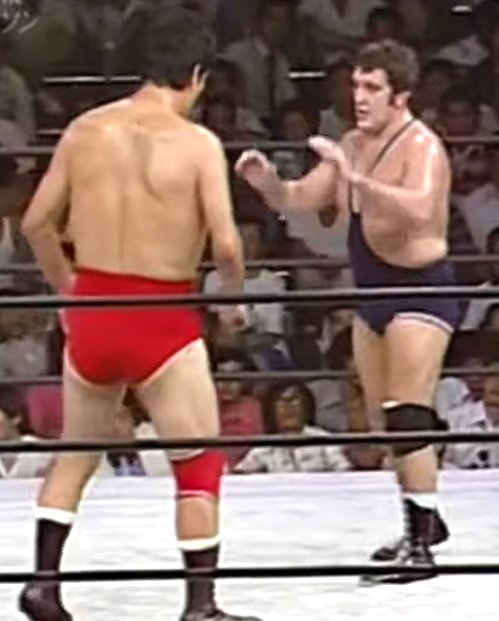 AJPW 7/24/76 Tokyo Kuramae Kokugikan, PWF Heavyweight Title Match: Giant Baba vs. Billy Robinson 21:17 [9:24, 6:08, 5:45]. This match featured a great performance by Billy Robinson, showing why he was the best wrestler in the world at the time. Robinson’s technical wrestling ability, selling, bumping and overall wrestling psychology was magnificent. While Robinson was the best worker, Giant Baba deserves a lot of credit for his great effort, as he clearly really wanted this match to be special. Baba worked super hard and tried his best, not only physically, but also through great storytelling. Their combined efforts made the match flow in a great way. The first fall saw them both taking the fight to each other. There was some blocking, countering and a lot of struggling. Baba won the first fall, because he managed to stay focused and kept fighting off Robinson’s attacks. In the second fall, in an effort to try to take the 6’8” Giant Baba down as effectively as possible, Robinson immediately started focusing on working over Baba’s leg, which is something Robinson had attempted to do in the first fall, but Baba had been able to avoid it for the most part. This time, Robinson managed to push through and get this strategy to eventually give him the win in the second fall. In the third fall, Robinson initially continued working over Baba’s leg, but Baba fought off Robinson’s attempts to score another leg submission as well as he could. Robinson had been on the receiving-end of Baba’s big boot earlier in the match, and it was actually the set up move for the backdrop suplex that got Baba the pin in the first fall. Here in the third fall, Robinson was able to block the big boot. This moment of relief was only temporary, however, because when Robinson kept coming at Baba during the final minute of the match, it was Baba who anticipated Robinson charging at him and surprised him with a running neckbreaker drop that got Baba the win. The in-ring psychology and human chess-like storytelling that had them building the match towards a climax with emphasis on learning from past reactions and anticipating certain actions resembled the 1990s main event style of AJPW. That’s why this match can be considered the birth of the King’s Road style that really put AJPW on the map as one of the greatest leagues of all time. In the 1980s, Jumbo Tsuruta and Genichiro Tenryu would continue the evolution of this style, and it was made famous by Toshiaki Kawada, Mitsuharu Misawa, Kenta Kobashi and Akira Taue in the 1990s with their Triple Crown style before it got modernized in NOAH after Baba’s death. ****¾
Joint Promotions WOS Wrestling TV 8/3/76 Bedworth, England: Marty Jones vs. Alan Wood. Marty Jones showed his tremendous technical wrestling skills, as he moved swiftly and acted effectively. He definitely outwrestled his opponent during the early stages of the bout. However, Alan ‘Tiger' Wood seemed to be motivated by Jones' enthusiasm, and managed to show some surprising flashes of excellence as well. This turned into quite the competitive bout. Jones showed appreciation for his opponent's skills, but Wood didn't have time for handshakes, and was all business. It wasn't just his great technique that made Jones so great, it was also his great understanding of doing the right thing at the right time and showing his opponent the way. He definitely had the ability to maintain sight of the bigger picture, while being able to react quickly and appropriately in the moment as well. Excellent match. ****¼
AWA 8/14/76 Minneapolis, MN: Verne Gagne vs. George Gadaski 4:30. The referee for this bout was Khosrow Vaziri, the future Iron Sheik. Verne Gagne did a great job of carrying George Gadaski from Saskatchewan, Canada to an enjoyable TV bout. What prevented this from being an actual good match was that it was not competitive enough, and it was such a short bout. It was still memorable due to Gagne’s great display of wrestling, though. Decent match. **½
Joint Promotions WOS Wrestling TV 8/25/76 Catford, England: Steve Grey vs. Vic Faulkner. Vic Faulkner is the type of wrestler who likes to have an entertaining match, so this ensured that there was a bunch of interesting stuff happening. The more Steve Grey matches I’ve been watching, the more it becomes obvious that Grey really needed his opponents to make the matches interesting. Good match. ***
AWA 8/27/76 Chicago, AWA World Heavyweight Title: Nick Bockwinkel vs. Andre the Giant 6:00 of 20:00. Nick Bockwinkel did a really good job of carrying Andre the Giant, much better than anyone else did that year (or ever, really).
St. Louis 9/10/76 St. Louis, MO Kiel Auditorium, NWA Missouri Heavyweight Title Lumberjack: Bob Backlund vs. Harley Race 6:06 of 17:35. Bob Backlund worked hard and showed that he was indeed a capable wrestler. Harley Race bumped and sold like crazy. Everything Race did looked particularly well executed. And you could tell Race’s main concern was getting his opponent and the match over. Only six minutes of heavily-clipped silent footage exists of this two-out-of-three falls match, so it’s hard to say how good this match actually was. What we have available indicated that it was a really good match, and I really enjoyed what I got to see. Very good match. ***½
AJW 11/1/76 Ichihara, WWWA World Title: Maki Ueda vs. Jumbo Miyamoto 5:07 of 23:58. This 5-minute piece of footage is the only AJW singles match available from 1976. Maki Ueda had been the champion since 8/6/76 when she ended Jumbo Miyamoto’s fifth title reign. Miyamoto seemed to mainly focus on acting like a powerhouse of sorts, and her technique didn’t look very refined. She did show a good amount of energy and always seemed to be doing something in the part of the match that was shown. Miyamoto carried the match and was definitely the more intense of the two. Ueda was clearly inexperienced, and her technique also didn’t look very refined. So, don’t expect a great match here. However, wrestling quality aside, this is historical footage, as there really is very little joshi puroresu footage available from this era. Ueda retained the title via a sunset flip. Ueda would lose the title on 11/30/76 at Tokyo Korakuen Hall in a 36-minute match against Mariko Akagi, of which no footage is available.
Joint Promotions 11/3/76 Bolton, England: Dynamite Kid vs. Tally Ho Kaye. R3 1:35. This wasn’t a good match, but it’s useful to watch Dynamite Kid in his early years, so that we can see how he evolved as a worker. In this match, we once again got to see the Kid’s great potential. This aired 11/18/76 on WOS. Brian Crabtree was the referee. The legendary World of Sport commentator Kent Walton mentioned that the Kid had tremendous potential. Peter “Tally Ho” Kaye was a decent worker, but mostly seemed to rely on his heel character. Kaye appeared to be quite over as a heel. Kaye was in control for the most part. The Kid spent most of the time selling. The story of the match here seemed to be that the fans were really getting more and more behind the Kid because of Kaye’s heelish behaviour. At some point, a man in a suit came out of his front row seat and started yelling angrily because Kaye had his feet on the ropes. In a funny moment, the Kid jumped over the referee onto Kaye. The ref gave Kid only a friendly warning because he seemed to respect the Kid for going for such a move. In the third round, the Kid bumped and sold even more. At 1:35 into the 3rd round, the Kid managed to pin Kaye. This was a nice victory for the young Kid over an opponent who had ten years more experience. **
Joint Promotions 11/3/76 Bolton, England: Dynamite Kid & Vic Faulkner & Bert Royal vs. Tally Ho Kaye & Black Jack Mulligan & Kenny Hogan. A rare six-man tag team bout on WOS Wrestling. This was scheduled for 3-out-of-4 falls. This bout featured the participants of the three matches shown earlier on this broadcast edition. The match started off in spectacular fashion, as Vic Faulkner pinned Black Jack Mulligan 20 seconds into the bout. By the way, this is not the Texan Blackjack Mulligan who was the father of Barry Windham. Instead, this Black Jack Mulligan was from Newcastle, England. Dynamite Kid was once again quite impressive for a 17-year old rookie, and he even pinned Kenny Hogan. Peter “Tally Ho” Kaye scored the first fall for his team when he made the Kid submit via a Boston crab. The match came to an end when Bert Royal pinned Kaye. This wasn’t the best bout technically by any means, but it was really entertaining, and it was a cool rarity type of match that saw everyone give a spirited performance. The babyface team worked particularly hard. Hogan was the weak link of the heel team, but Kay and Mulligan tried their best to sell and bump as well as possible for the faces. Good match. ***
Joint Promotions WOS Wrestling TV 11/30/76 Solihull, England: Bobby Ryan vs. Maurice Hunter. Bobby Ryan was the European Lightweight Champion at the time. This was a very well-wrestled contest featuring some of the best technical wrestling of the time. The execution and the insight shown by both grapplers that made them stand out as two of the most outstanding technical wrestlers of 1976. And even though this was being wrestled as a very fair contest without rulebreaking, they showed a good amount of intensity. If this would have lasted longer and wasn’t just a one-fall contest, it potentially could have turned into a truly great bout. Excellent match. ****¼
Joint Promotions WOS Wrestling TV 11/30/76 Solihull, England: Johnny Saint vs. Mick McManus. While competitive enough to be considered a good bout, Mick McManus’ poor selling, poorly-executed offense, and overacting prevented this from being taken too seriously as a contest. McManus kinda reminds me of a slightly more skilled version of Jerry Lawler. McManus was more a TV character than he was a competitive wrestler here. Johnny Saint did some cool Johnny Saint things, though, including cool-looking escapes. Good match. ***¼
Joint Promotions WOS Wrestling TV 11/30/76 Solihull, England: Marty Jones vs. Terry Rudge. The British Light Heavyweight Champion Marty Jones took on heavyweight wrestler Terry Rudge in this catchweight bout. The grappling displayed was very snug and intense. Terry Rudge was the more powerful and rough of the two, but Marty Jones was not intimated and showed tremendous confidence in his ability. Rudge played his role as the aggressor quite well. Jones was really good at balancing between putting Rudge over as a tough opponent and still maintaining a strong level of competitiveness going. They really portrayed the dynamic between the light heavyweight and the heavyweight very well, as the storytelling put over the idea so well that Jones, while focusing on his superb technique and his ability to show bursts of energy, had to show more tenacity due to facing a heavy no-nonsense opponent. Jones was very nimble and versatile, and he really was the best pro wrestler in the world in 1976. The match ended in a draw, but Rudge said after the bout about Jones that “this man is a real champion” and received much applause from the appreciative and satisfied crowd. Great match. ****½
AJW 12/8/76 Koshigaya, WWWA Tag Team Title: Maki Ueda & Jackie Sato vs. Yum Ikeshita & Shinobu Aso 6:00 shown. Beauty Pair vs. Black Pair. This was the original incarnation of the Black Pair. Both Yumi Ikeshita and Shinobu Aso showed a lot of intensity, and it really was this intensity that made the match. The Black Pair were very aggressive and heelish. The Beauty Pair did a good job of acting like the innocent sweet girls in trouble. Maki Ueda did a particularly good job of wincing in pain and despair. The Beauty Pair was able to overcome the onslaught by the villains, as Ueda pinned Ikeshita after a tombstone piledriver. Very good match. ***½
NJPW 12/9/76 Antonio Inoki vs. Willem Ruska. This is definitely more of a pro wrestling match than their previous match, which really was a proto-MMA match. In this bout, we see Ruska being a lot more used to what pro wrestling really is, as he plays the foreign heel quite well. Before the match even really starts, he attacks Inoki in a very intense segment that culminates in him fighting with ‘Kamisama’ Karl Gotch of all people. When the actual bout finally gets underway, you can tell that while Ruska still approaches it like a fight, he’s trying a lot more to be a pro wrestler than in the first meeting. In their first match, Ruska had no idea what a pro wrestler would be doing, which made his approach so unique and refreshing. Here, by the end of ‘76, he had a better feeling for what pro wrestling would want from him, and he was able to adapt more. This is a good or a bad thing, depending on how you look at it. Someone must have really explained to him how to sell like an actual pro wrestler, and ironically, that’s exactly a big reason for his decline as a pro wrestler. He was doing a lot more acting. In the first match, Ruska seems to correctly understand that you’re supposed to approach the match like a fight and just act a bit like an outlandish character. In the second match, it seems someone must have told him that the whole thing is just supposed to be an act and to forget about approaching this like a fight and see it more like entertainment, like theater. In other words, in February ‘76, you had an all-time great judoka understanding pro wrestling better than pro wrestling did, and by December ‘76, pro wrestling had dumbed him down enough to the point that you could say he ‘gets it.’ On one hand, it’s admirable to see how Ruska tried to adapt to the pro wrestling world so quickly. On the other hand, that’s exactly the problem! The February ‘76 match felt like someone in 1991 had toyed around with a time travel machine and accidentally messed up timelines in 1976. The December ‘76 match felt like it was 1976 back to normal. The February ‘76 match was more advanced than 80s shoot-style because that was still seasoned pros trying to pretend to fight real. February ‘76 was more like ‘91/’92 RINGS in that it featured an outsider who had no idea what pro wrestling was and brought a whole new and fresh approach from a legit combat sports perspective. The world wasn’t ready for this in ‘76. Can you imagine if Willem Ruska would have been around in 1991 in RINGS instead? Okay match. **
Joint Promotions WOS Wrestling TV 12/29/76 Woking, England: Alan Serjeant vs. Zoltan Boscik. Alan Serjeant displayed his tremendous technical skills here. And he basically forced Zoltan Boscik to join him in his quest to make this a competitive grappling contest. Boscik wasn’t as skilled as Serjeant was, but Boscik was good enough at following Serjeant’s lead. Perhaps the most pleasantly surprising aspect of this match was the fact that Boscik was so into having to step up his game to keep up with Serjeant’s matwork that he either forgot or lost interest in doing a lot of his usual exaggerated heel stuff. There were some funny moments, but that was all done within the context of the grappling, kinda like the type of stuff you’d see in Johnny Saint matches. Overall, this was a darn good match and fun to watch. What prevented it from being truly excellent was that there was a bit too much focus on all the trickery and poetic justice, which is cool to watch, but sometimes it can get a bit too much. And the match was just a one fall match, which made it feel like a counter wrestling exhibition in comparison to the multiple-fall classics we’ve seen on WOS that feel more like hard-fought battles. That being said, this was an excellent performance by Serjeant and a surprisingly good performance by Boscik. Very good match. ***¾